This episode features listener takeaways from the recent RootsTech 2026 conference. Diana discusses the overall positive impressions of the event, noting the high quality of the presentations and the unanimous message about disclosing the use of AI and double-checking its work. Nicole and Diana review several classes on AI, including transforming family history into song, understanding AI’s role in archival stewardship, and mastering the basics of AI for genealogy. They share lessons on using AI...

Diana and Nicole discuss the analysis phase of their AI-assisted research into the 18th-century court orders between Samuel Daniel and the Roystons in Colonial Virginia. They explain how AI helps them understand complex legal terms like “imparlance,” “covenant,” “trespass upon the case,” and “replevin bond” within the context of the court cases. Going through a case-by-case analysis, they trace the legal strategy that began after apprentice John Royston ran away from Samuel Daniel in 1770....

This blog post was written with the assistance of AI based on my presentation slides and syllabus uploaded to Claude 4.6 Sonnet. You have spent hours searching. You have checked every database, browsed every microfilm reel, and scoured every index you can find — and still, nothing. No marriage record. No probate file. No deed. Before you close the research log in frustration, consider this: that empty-handed search may be exactly the evidence you need....

This episode features Virginia Pratt, who brings decades of expertise to the discussion, including five years on the FamilySearch Research Wiki Team and a bachelor’s degree in Family History from BYU. Virginia joins Nicole and Diana to discuss the essential, free online genealogical resource: the FamilySearch Research Wiki. Nicole asks Virginia to explain the Wiki’s purpose, access methods, and how to navigate the main page, noting that it should be used for finding information on...

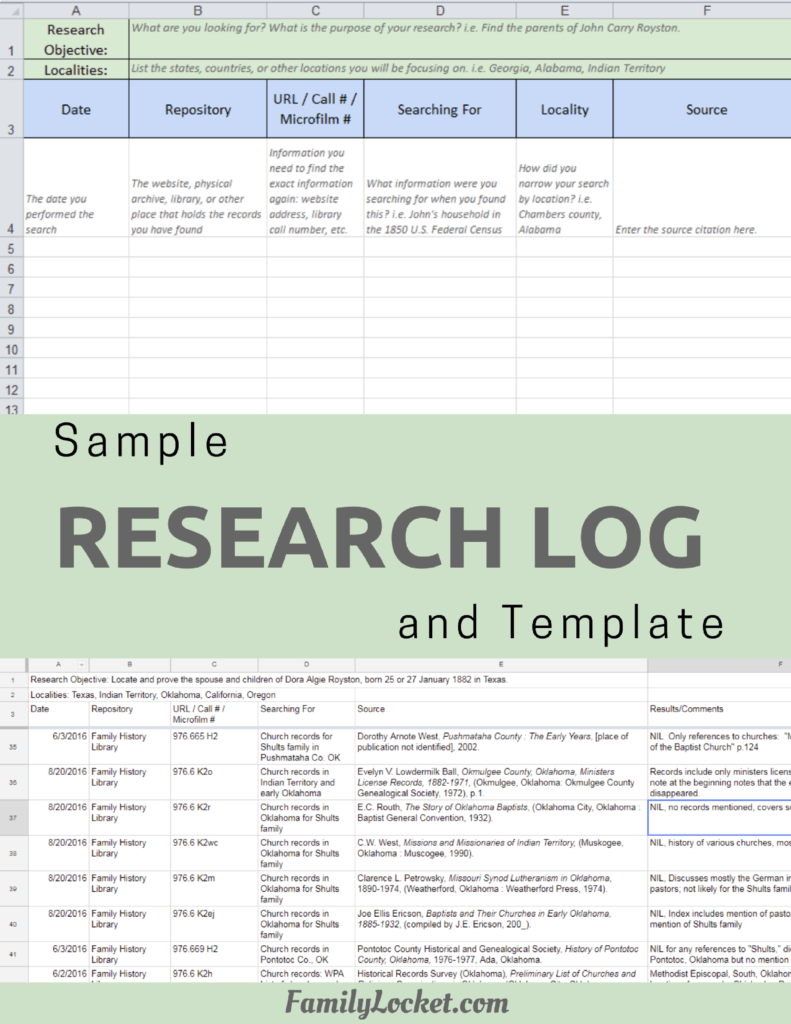
Claude.ai has been one of my favorite apps for genealogical writing for the past couple years. When I first started experimenting with Claude, I was curious if it could transform my spreadsheet research log into a research report. The process proved more challenging than I expected, requiring numerous chain-of-thought prompts and a good deal of fine-tuning. In April of 2024, I tested this task with a research log I created several years ago about Baldy...

The episode opens with Diana and Nicole catching up on their latest work, focusing on testing AI models for accuracy in handwritten-text transcription tasks. The hosts then discuss the novel TransAtlantic by Irish author Colum McCann and what family historians can learn from its structure to write better family narratives. Diana explains that the novel views the immigration story from the Irish perspective, following the fictional character Lily Duggan and three subsequent generations, with the...

This episode focuses on the exciting custom clustering feature now available in Ancestry’s Pro Tools. Diana introduces the tool, explaining how it allows for the strategic targeting of specific ancestral lines, offering more flexibility than the original clustering tool. She describes Ancestry’s process, which looks for matches sharing 65 cM to 1,300 cM with the user, and then finds those matches that also share at least 20 cM with each other. Nicole discusses the key...

Nicole and Diana open the episode by discussing what they are currently working on, including their projects for the 14-day challenge. They then turn to the challenge of family history research when conflicting dates appear for an ancestor. Diana explains that because original records may not exist, genealogists must rely on sources created later in a person’s life, which often do not agree. Diana uses a case study of her relative, Mary Elizabeth (Royston) Slagle,...

In this episode, Diana and Nicole discuss the crucial process of writing a formal research report for the ongoing case study to identify the father of Cynthia (Dillard) Royston. Diana explains that a report is essential for synthesizing details, bringing a research phase to a close, and providing next steps. She outlines the project’s objective—to find a candidate for Cynthia’s father in Cass County, Georgia, during the 1830s—and notes the constraints, particularly the missing early...

Welcome to the first of three blog posts about our upcoming Merging and Separating Identities course—where we tackle one of genealogy’s toughest challenges: distinguishing between same-named individuals—and today we’re starting with the single most essential technique taught in the course that transforms overwhelming chaos into clarity. One Technique That Transforms Chaos into Clarity: Organizing Your Merging and Separating Cases If you’ve ever stared at a mountain of records for multiple same-named individuals and felt completely...