Welcome to the Cynthia (Dillard) Royston DNA project. I’m Diana Elder, a third-great-granddaughter of Cynthia, and I need your help in determining her father. I’m looking for other descendants of Cynthia and her potential Dillard family to share information and participate in the DNA study. To date, the DNA research has identified a probable brother, Elijah Dillard, of Pike County, Alabama. Despite several focused research projects on both Cynthia and Elijah, no viable candidate for their father has yet emerged.
When the records simply do not state parentage, the DNA that each person carries can provide clues to an ancestor’s origins. We’re using two types of DNA for this project: autosomal DNA and Y-DNA. Each DNA test has a different inheritance pattern, explained below. The value from DNA testing comes from finding people whose DNA matches yours, then comparing family trees to find a common ancestor who contributed that portion of DNA.
I am looking for people who descend from either Cynthia or Elijah Dillard who are willing to either take a DNA test or share results from an existing test. Rest assured that if you do share your DNA results with me, I’ll only be looking for connections to the Dillard families. I won’t publish your name anywhere without your consent.
If you have information on Cynthia or Elijah through family stories or documents, please consider sharing those with me as well. Perhaps your branch of the family passed down information that would help in the search. The following diagrams show children of Cynthia and Elijah that have descendants. If you suspect you might belong to this family, please contact me and I can help you make the connection through genealogical research and/or DNA.
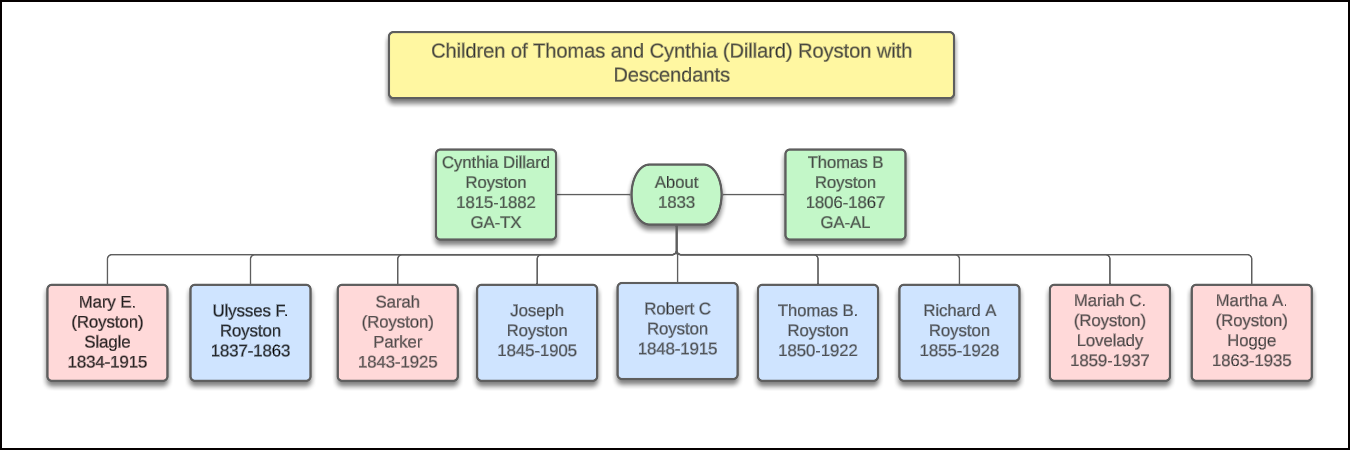
Nine of Cynthia’s fourteen children who have descendants
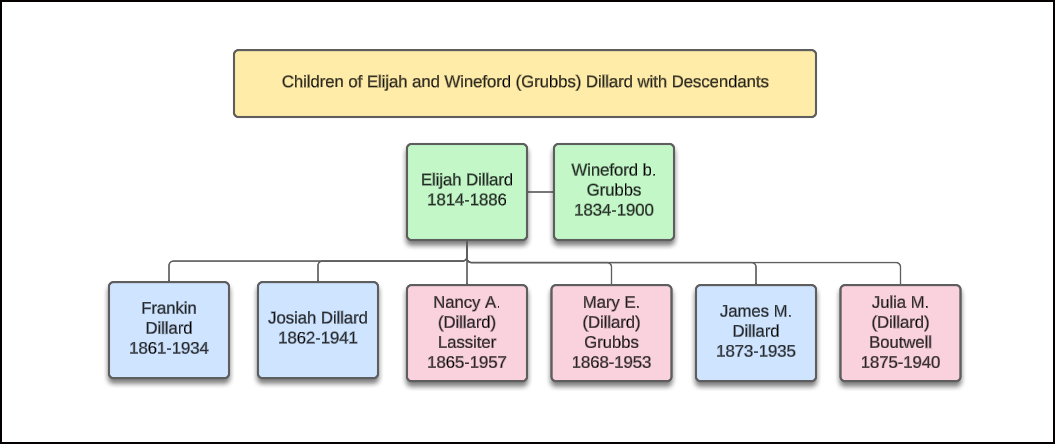
Six of Elijah’s ten children who have descendants
Autosomal DNA: All Descendants
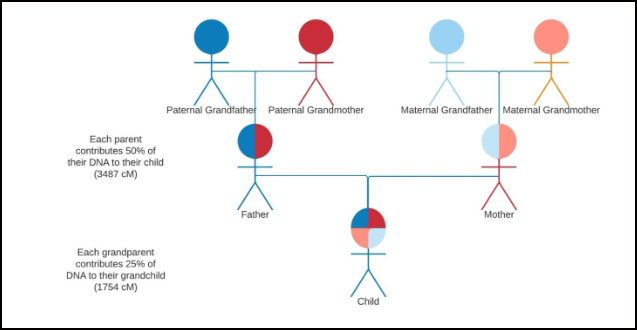
Autosomal DNA (atDNA) is made of twenty-two pairs of chromosomes. One of each pair comes from the subject’s mother, and the other comes from the subject’s father. Children inherit 50% of their DNA from each parent. This means that grandchildren carry approximately 25% of the DNA from each grandparent (see figure). With each successive generation, the amount of DNA an individual inherited continually decreases. The amount of DNA shared between individuals is measured in centimorgans (cM) or is expressed by a percentage. The amount of shared atDNA can predict the level of relationship between cousins by comparing the amount shared with statistical data about known cousin relationships. The amount of shared DNA between two individuals can confirm or disprove a relationship for up to approximately five to seven generations.
Consumer DNA testing companies like Ancestry.com compare the DNA between two people and determine if they share a small segment(s) of DNA somewhere on the 22 autosomes. If they do share DNA, they will appear as matches on the company’s match list. Then we seek to determine which ancestor the two matches have in common who could be the source of that shared DNA. By studying the family trees of both matches, we can find clues to unknown ancestors.
Many descendants of Cynthia Dillard have tested their DNA on Ancestry.com and share DNA with one another. Some of them also share DNA with descendants of Elijah Dillard, which shows a genetic connection between Cynthia and Elijah.
When working with ancestors born in the early 1800s, having more DNA available to analyze is very important. With each generation, some DNA from an ancestor is lost as a parent will only pass down 50% of their DNA. With more Dillard DNA testers in the pool, we have a better chance of finding a Dillard father for Cynthia and Elijah.
If you have already taken a DNA test through Ancestry.com, you can easily share your DNA results with me using Ancestry’s sharing option. As a viewer I’d only be able to view your DNA matches for analysis. You can share your DNA with me using my username: Diana Elder.
Y-DNA: Males Only
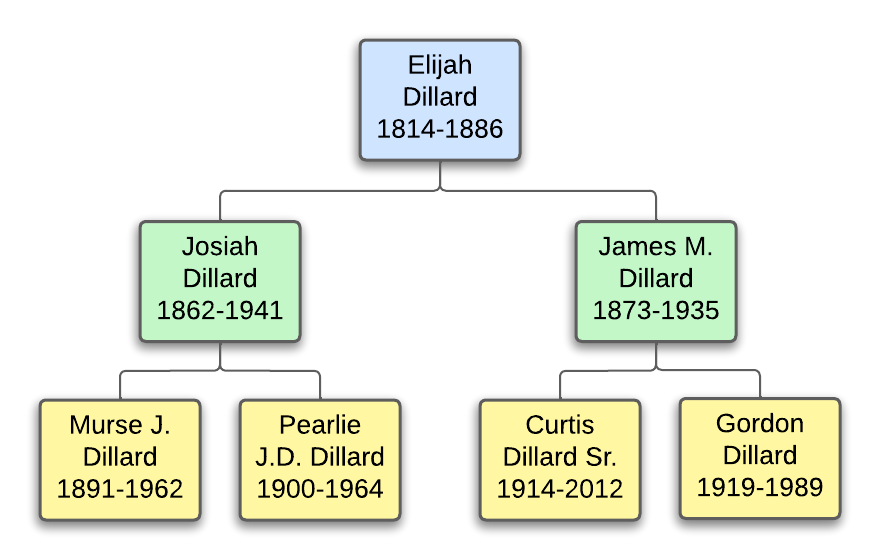
We’re looking for men who carry the Dillard surname who descend from Elijah Dillard through a direct paternal line – that means your father, your father’s father, and so on must have had this surname. Women cannot take a Y-DNA test because they lack a Y chromosome, but they can help by encouraging their fathers, brothers, uncles, or male cousins who qualify to participate. Even if you’re not actively researching your family history, your Y-DNA results could be the missing piece that helps connect multiple family branches.
Y-DNA testing offers a unique window into your direct paternal ancestry – the father’s father’s father’s line that typically follows your surname. Unlike other DNA tests, Y-DNA is passed down virtually unchanged from father to son, generation after generation. It is an incredibly powerful tool for confirming family connections and breaking through brick walls in your family tree.
The image below from the International Society of Genetic Genealogy Wiki shows the path of Y-DNA inheritance.
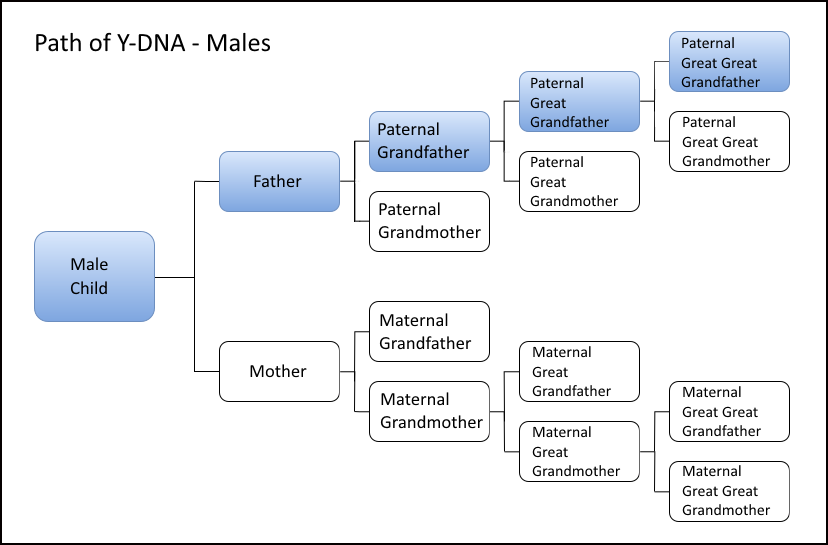
When you take a Y-DNA test, you’ll receive results that show your haplogroup (your ancient paternal ancestry) and a list of genetic matches – other men who share a common paternal ancestor with you. The test looks at specific markers on the Y chromosome, and the number of matching markers between two men can help estimate how recently they share a common ancestor. For example, if two men match on 37 out of 37 markers, they likely share a common ancestor within the past 6-10 generations. This makes Y-DNA testing particularly valuable for surname projects and for verifying paper-trail research.
The Dillard Y-DNA project is working to determine the common heritage of those with this surname through Y-DNA testing. By taking the test, you can contribute to a broader understanding of your family line. Many genealogists have knocked down decades-old brick walls through Y-DNA testing, discovering that their documented ancestor wasn’t who they thought or confirming family legends about their origins. Your DNA could be the key to solving these genealogical puzzles for yourself and others who share your paternal line.
Elijah Dillard has many living male descendants that qualify for taking the Y-DNA test through four of his grandsons shown in the diagram below. Not all of his male grandsons are shown as some of them only had daughters.
How To Get Involved
1) If you are a male line descendant of Elijah and have already taken a Y-DNA test, please consider sharing your results with us.
2) If you have not yet taken a Y-DNA test but are willing to do so, please contact me regarding funding. Testing will start at the 37-marker level; selected results may be upgraded later.
3) If you’re a female who knows of a potential candidate for Y-DNA testing for this project, please let me know his details or encourage him to contact me directly.
Your Y-DNA test results will not be published without your permission, and you may elect to participate in this project using a non-identifying pseudonym.
Please contact me at Diana@familylocket.com.
Previous research projects are summarized here: Summary of Dillard Research
Learn more about our research team at FamilyLocket.com.