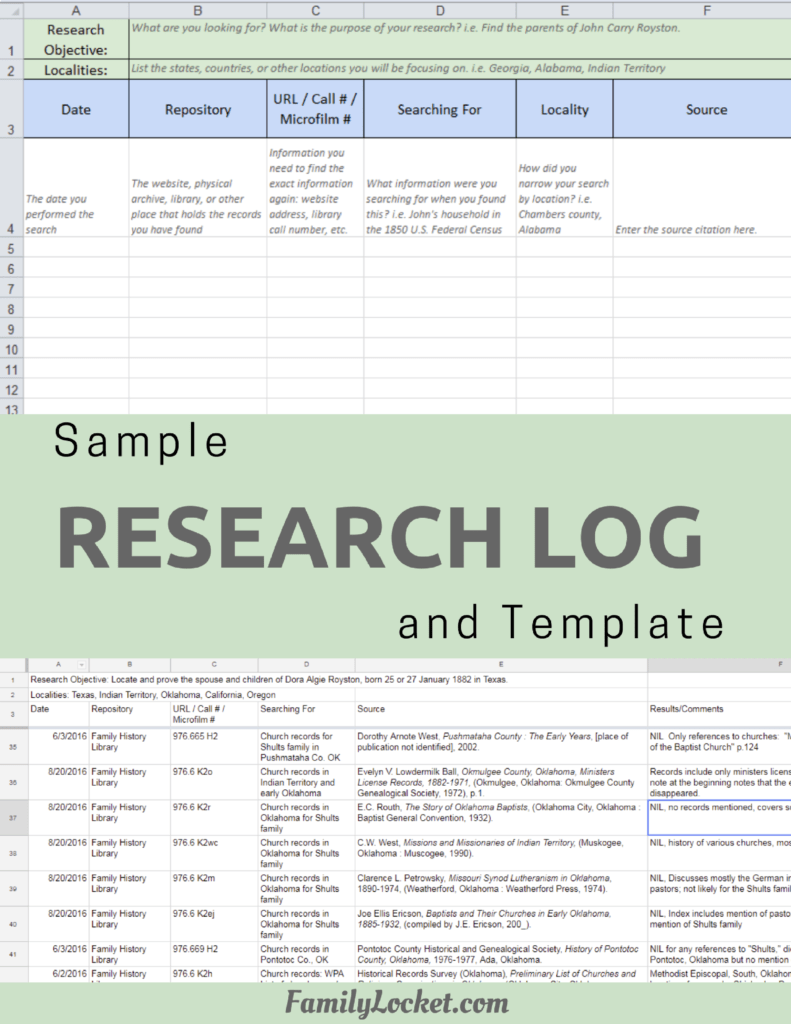
In this episode, Nicole and Diana discuss part 4 of Diana’s 5th project to search for the father of Cynthia (Dillard) Royston, focusing on research logging and source citations. Diana explains how she uses the Airtable template, “RLP with DNA 4.2 (2026),” to organize her project and enter data for key DNA matches. Nicole details the real-time logging process, noting how they enter data in either row or form views. To organize her research on...

In this episode, Diana and Nicole discuss Phase 5, Part 3 of the search for Cynthia (Dillard) Royston’s biological father. They review the known facts about Cynthia’s life using census, tax, and estate records, as well as death certificates of her children. Diana presents her hypothesis focusing on three Dillard men who drew lots in the 1832 Gold Lottery in Cass County, Georgia: James Dillard, Joseph B. Dillard, and Roliver Dillard. She explains how they...

Diana and Nicole interview Sam Morrison, a dedicated family historian who has researched his family lines for over two decades. Sam shares his motivation for creating TreeAlive, a free digital tool designed to transform static genealogical data into animated films that visualize family migration and historical context across maps. His extensive experience researching his roots in Ohio, Virginia, and abroad drives his interest in helping others see their ancestors’ journeys rather than just reading lists...

This episode explores the ongoing genealogical project to identify the biological father of Cynthia (Dillard) Royston, an ancestor who remains a mystery after years of research. Diana and Nicole focus on the fifth phase of this investigation, which involves utilizing DNA and documentary evidence to connect Cynthia to potential candidates among the Dillard men who drew lots in the 1832 Georgia Gold Lottery. Diana explains how she organizes this project using Airtable to track timelines...

Diana and Nicole examine the ongoing research project to identify the biological father of Cynthia (Dillard) Royston. Diana summarizes previous research phases conducted through the Research Like a Pro with DNA study group, which have systematically tested Dillard candidates and narrowed the search using documentary evidence. She explains the genealogical background of Cynthia, who was born about 1815 in Georgia, and details the elimination of various candidates from earlier research phases. The discussion also covers...

Diana Elder and Nicole Dyer explore the value of writing an ancestor’s military story by correlating multiple sources. Diana uses her father Bob Shults’s World War II Navy records as a case study. She demonstrates how to use AI to cross-reference personal oral histories with official documents like muster rolls and discharge papers. Listeners learn how to build a comprehensive timeline that bridges the gap between limited personal recollections and formal military service records. The...

In this episode of the Research Like a Pro Genealogy podcast, hosts Diana and Nicole discuss the features and effectiveness of FamilySearch’s new “Simple Search” tool. They explore how this experiment allows users to search billions of full-text records using natural language queries rather than traditional forms. Diana shares her experience testing the tool with her father’s name, Bobby Gene Shults, demonstrating how the artificial intelligence parses results and helps distinguish between individuals with similar...

Diana and Nicole discuss how genealogists use artificial intelligence to transcribe handwritten, foreign-language historical documents. They review feedback from a survey regarding experiences with various AI tools, including Transkribus, Gemini, ChatGPT, Claude, and Leo. The researchers report positive experiences, with average accuracy ratings between 7.5 and 8 out of 10. Listeners learn which languages, such as Spanish, German, French, Latin, and Scandinavian, are commonly processed through these tools. The discussion highlights that while AI excels...

Nicole Dyer and Diana Elder explore Leo, a powerful handwritten text recognition platform designed specifically for researchers. Nicole interviews the creator, Jon Cooper, a PhD candidate at Stanford who developed the tool with a machine learning expert to address the difficulty of transcribing complex Elizabethan manuscripts. Listeners learn how Leo differs from general AI models by prioritizing faithful, accurate transcriptions of handwritten text rather than guessing words. The platform offers specialized features for genealogists, including...

Diana Elder and Nicole Dyer discuss the evolution of AI Handwritten Text Recognition (HTR) tools, focusing on the platforms Nicole explored at RootsTech. They evaluate several key technologies used to decipher historical manuscripts. They discuss Kindex, which provides highly accurate transcriptions and a side-by-side editor for corrections. They also review Leo, an AI platform that handles secretary hand effectively and offers a side-by-side editor, though users should watch for minor hallucinations. Transkribus serves as a...