
Course Description
You are not a casual clicker. Nor do you settle for whatever Ancestry and FamilySearch hand back in a basic search. You are the researcher who stays up late wondering what you missed – whether another deed exists, if the probate file survived, and where the baptism record might be sitting in a box in a church basement. You are the kind of researcher who wants to identify each repository and find every record.
This Course is Built for You
Most genealogists search. We pursue. There is a difference, and it is the difference between spinning your wheels on the same familiar websites versus systematically uncovering records some researchers never knew existed. SEARCH is built around the first and most foundational element of the Genealogical Proof Standard: reasonably exhaustive reSEARCH. Without it, nothing else holds. We cannot correlate evidence we never found, and we cannot resolve conflicts in sources we didn’t look for.
Two Tracks. One Complete Strategy.
This course runs two parallel tracks. In the online track, we master the full spectrum of digital repositories – from familiar platforms to lesser-known collections. Here, we develop the search mechanics, platform-specific strategies, and AI-assisted discovery techniques that separate a casual browse from a thorough hunt. In the offline track, we work through small, medium, and large physical repositories that hold the records we seek. We plan requesting records from afar as well as in-person research at national archives, regional repositories, courthouses, genealogy societies, libraries, cemetery offices, and more.
Online to Offline and Back Again.
Together, the two tracks teach us to move fluidly between the digital and physical worlds. A name in an online index points us toward the courthouse, the society, or the archive that holds the original. And what we pull from those shelves often sends us back online with new names, dates, and leads to chase. Neither world is complete on its own. This teaches us to identify the right repository for any research problem – large or small, well-known or obscure – and arrive there knowing exactly what we’re after.
Prerequisites & Preparation
Come with an open mind and a willingness to try new methods. Active subscriptions to Ancestry and a few other major sites are recommended, since we’ll use them for demonstrations and live searching. Some familiarity with AI tools is also helpful. Experience in a word processing program, such as Microsoft Word or Google Docs, is expected.
Each student should also pick one research subject who is associated with a locale. The locale is an area where your subject lived, was documented, or may have ties – ideally one you have not researched thoroughly previously. It is a geographic area where you want to identify each repository and find every record. Course examples will focus on U.S. resources, but the techniques apply to research in any country. Instructional materials will be provided during the course and will not mimic a typical institute course style syllabus. Some precourse work may be provided.
Stop Wondering…Start Finding
It’s not that you haven’t searched – it’s that you sense there is more. This course shows you how to find it. SEARCH gives you the techniques, the frameworks, and the hands-on practice to close that gap. You are the kind of researcher who wants to identify each repository and find every record…let’s make it happen!
Schedule
| Session # | Tuesday Dates | Time (MT) | Instructor | Session Name | Session Description |
|---|---|---|---|---|---|
| Week 1 – February 23 | |||||
| 2/21/27 | Send pre-course work to Jan | ||||
| 2/23/27 | 9:00–9:30 | Jan Joyce | Course Introduction | ||
| 1 | 2/23/27 | 9:30–10:45 | Jan Joyce | Laying the Foundation: Why “Exhaustive” Comes First | We lay the groundwork and start with whether how we search affects being reasonably exhaustive. Meeting the Genealogical Proof Standard depends on it. We introduce the Repository Pyramid and play with Source Stacks, an on-tap hierarchical locality guide. Also, we review the Source Category List, a tool to help us identify a comprehensive list of source types. |
| 2 | 2/23/27 | 11:15–12:30 | Jan Joyce | Know Where We’re Looking: Profile the Locale | Exhaustive research is not possible until we know exactly where we are looking. Building a profile of the place itself comes first: its name variants, jurisdictional changes, settlement patterns, and more. Large-scale demographics matter too, because the ethnicities, religions, and topography helped shape a place. Everything is demonstrated with a common locale used throughout the course, then students build the same profile for a locale of their own culminating in a comprehensive Jurisdiction Jacket. |
| 3 | 2/23/27 | 12:45–2:00 | Jan Joyce | Know Who We’re Looking For: Profile the Research Subject | Knowing who we are looking for is what makes an exhaustive search possible. That starts with a profile of our research subject family including name variants, family composition, onomastics, dates and places, family and associates, and more. Every detail is captured in a research subject Identity Dossier. |
| Week 2 – March 2 | |||||
| 3/2/27 | 9:00–9:30 | Jan Joyce | Previous Week Review | ||
| 4 | 3/2/27 | 9:30–10:45 | Kristin Britanik | Record Discovery: When to Search | Thorough searching of indexed genealogy sites helps keep our work exhaustive across every type of collection in the repository pyramid. We’ll introduce a repeatable search process for preparing, searching, evaluating results, and adjusting our approach. We’ll cover practical strategies for selecting search terms, using search operators and wildcards, balancing broad and narrow searches, filtering results, and handling challenges such as name variations, uncertain dates, changing place names, and transcription errors. That includes saved and repeated searches, alerts for newly added collections, and how general web searches point us toward additional sources and repositories. |
| 5 | 3/2/27 | 11:15–12:30 | Kristin Britanik | Record Discovery: When to Browse | The search box is what the company gives us. It is not the whole collection, and some collections will never give up their records to a search box at all. Browsing is one way we get further in, so we’ll examine when browsing beats searching, how to recognize indexed and non-indexed collections, and how to work around poor image scanning and character recognition. Systematic browsing techniques come next, ensuring a thorough search even when indexes and search tools fall short. |
| 6 | 3/2/27 | 12:45–2:00 | Kristin Britanik | Pyramid Base Layer: The Major Platforms – Part 1 on Ancestry | Ancestry is often one of the first places genealogists search, but its familiar, easy-to-use interface can make a basic search feel more complete than it really is. We’ll focus on practical strategies for searching Ancestry more thoroughly, including filters, collection-specific searches, name and date variations, browsing, and other techniques for uncovering records that broad searches may miss. Along the way, participants will practice refining their searches and develop a more strategic approach to finding records in Ancestry. |
| Week 3 – March 9 | |||||
| 3/9/27 | 9:00–9:30 | Kristin Britanik | Previous Week Review | ||
| 7 | 3/9/27 | 9:30–10:45 | Kristin Britanik | Pyramid Base Layer: The Major Platforms – Part 2 on FamilySearch | FamilySearch is a key starting point for genealogical research, with far more capability than a basic search reveals. This session covers practical strategies for more thorough searching, including getting the most out of the standard search fields and operators, leveraging Full-Text Search, navigating the catalog, browsing image-only (unindexed) collections, and finding other lesser-known pathways to records. Through hands-on examples, participants will practice these techniques, avoid common search mistakes, and become more confident searchers. |
| 8 | 3/9/27 | 11:15–12:30 | Kristin Britanik | Pyramid Mid Layer: Well-Known but Underused Resources | Fold3, the National Archives, the Library of Congress, and the newspaper sites are familiar resources with more to offer than a quick peek reveals. We’ll look at what these collections actually contain, how to navigate their search tools and organizational quirks, and how to apply a consistent process when approaching any unfamiliar genealogy website. |
| 9 | 3/9/27 | 12:45–2:00 | Kristin Britanik | Pyramid Top Layer: What’s Out There Part 1 | Genealogy records are held in far more places than the major platforms. We’ll look at archives, libraries, government agencies, universities, museums, historical societies, genealogical societies, and other organizations that preserve historical materials, along with the types of records to find in each. |
| Week 4 – March 16 | |||||
| 3/16/27 | 9:00–9:30 | Kristin Britanik | Previous Week Review | ||
| 10 | 3/16/27 | 9:30–10:45 | Kristin Britanik | Pyramid Top Layer: What’s Out There Part 2 | Knowing that small collections exist is one thing. Finding the ones that matter to our own research question is another. We’ll work through a repeatable process for discovering new and relevant record sets, then practice using it to identify collections for our own research. |
| 11 | 3/16/27 | 11:15–12:30 | Kristin Britanik | Promises and Limits: Using Artificial Intelligence for Discovery | Artificial intelligence (AI) is a useful tool for identifying repositories, finding sources, conducting searches, and documenting research. We’ll take an objective look at where large language models and AI deep research tools help us discover sources and where limitations remain, so we can use AI deliberately and with appropriate caution as a critical discovery tool. |
| 12 | 3/16/27 | 12:45–2:00 | Kristin Britanik & Kelley Lear | From Screen to Shelf: Bridge to Offline Research | The gap between online discovery and in-person research is where a lot of research stalls. We’ll use digital catalogs, finding aids, ArchiveGrid, and AI tools to identify repositories and records that have not been digitized, the first step before taking our research offline and putting the finding aids to work. Finding aids exist to tell us what a repository holds, but most were not created with a genealogist in mind. Sometimes what they leave out is exactly what we need. A finding aid describes a collection at arm’s length and assumes we can read between the lines. Putting one to work means learning to understand what it implies, spot what it can’t or won’t tell us, and know when it’s time to pick up the phone and track down the staff member who does. |
| Week 5 – March 23 | |||||
| 3/23/27 | 9:00–9:30 | Kristin Britanik | Previous Week Review | ||
| 13 | 3/23/27 | 9:30–10:45 | Kelley Lear | Beyond the Screen: The Why of In-Person Research | Who doesn’t love finding evidence in their pajamas? The trouble is that what’s online is only a fraction of what’s possible. Millions of records are undigitized, sitting in dusty corners, and some haven’t been read since the day they were created. Those are the ones we have to get dressed for, and they usually make the effort worthwhile. We’ll talk about what kinds of records are least likely to appear on a major platform, or ever even be digitized, and why it’s easy to fall into the “I looked everywhere” digital dead end. We’ll see how offline work protects conclusions from being overturned by evidence lurking in a folder in a basement, and we’ll leave knowing how to figure out where those folders and basements are, because finding them isn’t luck. |
| 14 | 3/23/27 | 11:15–12:30 | Kelley Lear | How to Find What We Don’t Know Exists: Sizing Up Possibilities | We’ve identified a new locale for our research. Now, what’s actually there to find? We’ll survey it from the bottom of the pyramid up, starting with the big, well-documented repositories and working toward the small and the barely cataloged, identifying what exists at every level. Some seem to tell their complete stories. Others maintain nothing but a Facebook page that hasn’t been updated for years. By the end of this session, we’ll know how to evaluate an entire research area so nothing can hide from us and our tenacious curiosity. |
| 15 | 3/23/27 | 12:45–2:00 | Kelley Lear | Pyramid Base Layer: Working in National, Regional, and State Archives | NARA. The Library of Congress. Our state archives. We know the names, and we’ve searched the websites, but what’s online is a fraction of what’s there overall. Some of the best material is behind doors that stay closed, and a huge share of what these institutions hold has never been digitized. Some of it never will be. Searching the website isn’t the same as getting dusty (or finding someone else to). We’ll cover why it’s worth it, how these massive repositories are organized, how to read their finding aids, and how to work their access policies. Then we will discuss how to decide when a question calls for a visit, a targeted remote request, or a little of both. |
| Week 6 – March 30 | |||||
| 3/30/27 | 9:00–9:30 | Kelley Lear | Previous Week Review | ||
| 16 | 3/30/27 | 9:30–10:45 | Kelley Lear | Pyramid Mid Layer: Digging into Regional Destinations | County courthouses, regional genealogical societies, state historical societies, university libraries, and manuscript collections are destinations we don’t want to skip—each one holds tens of thousands of pages that will never be digitized. We’ll look at identifying each one and then determining strategies for what awaits us there and how accessing these records is essential to our reasonably exhaustive research. |
| 17 | 3/30/27 | 11:15–12:30 | Kelley Lear | Pyramid Top Layer: Records of Our Communities |
Like us, our ancestors lived great, big lives. They didn’t only pay taxes and file deeds, so the records they left behind sometimes require a bit more digging. The little historical society run out of a church basement, or the cemetery office that’s only open on Tuesdays—these aren’t wild goose chases, these are the places where we may win the genealogy lottery. We’ll look at how to systematically approach every locale for specialized repositories and collections that are rich, specific, and one-of-a-kind. We’ll also examine how records for our research area may be found on the other side of the country (and what to do about that). |
| 18 | 3/30/27 | 12:45–2:00 | Kelley Lear | Plan It Like We Mean It: Preparing for a Visit | You didn’t drive four hours or fly across the country to spend your first morning figuring out where to start. In-person research time is finite, and preparation is how we wring every minute out of it. But being ready isn’t just logistics. It’s knowing the repository and its context before we arrive…what it holds, how it’s arranged, and where the gaps are going to be, so they don’t surprise us once we get there. The researcher who walks in already knowing that spends the day pulling records, not scrambling for what’s next—and this session will provide the tools to make sure that doesn’t happen. |
| Week 7 – April 6 OR April 13 (final class date TBD) | |||||
| 4/6/27 or 4/13/27 |
9:00–9:30 | Kelley Lear | Previous Week Review | ||
| 19 | 4/6/27 or 4/13/27 |
9:30–10:45 | Kelley Lear | Don’t Miss Out: In-Person Research from Afar | We can’t always jet off to our dream repository. Travel is expensive, time is scarce, and life interferes with even the best reasonably exhaustive intentions. But not being able to walk through an archive’s door doesn’t mean the records inside are out of reach. Someone else can be our eyes and hands on site, but that only works if the request is right. Retrieving the good stuff instead of nothing depends on knowing precisely what we’re after, what to do when it’s not where it should be, and how to capture something that made it worthwhile. |
| 20 | 4/6/27 or 4/13/27 |
11:15–12:30 | Jan Joyce | Putting It All Together: One Method for Any Place | Every tool from the course comes together into one working system: the repository pyramid, the location and subject profiles, Source Stacks, the record category list, and more. We will see how they fit together on a single problem, from first question to documented conclusion, and where each one belongs in our process. We will leave with a repeatable method we can apply to any ancestor in any place, and the confidence that when a search comes up empty, the record really is not there. |
Cancellation Policy
If you need to cancel your registration, you may do so up to 14 days before the course start date for a refund, minus a small processing fee (to cover transaction costs).
Cancellations made within 14 days of the course start date are non-refundable.
If you are unable to attend, you are welcome to contact us, and we will do our best to accommodate your situation when possible.
Course Coordinator
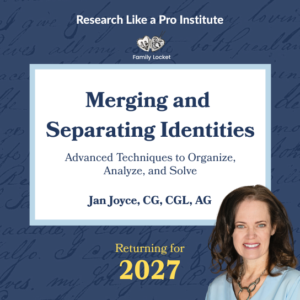
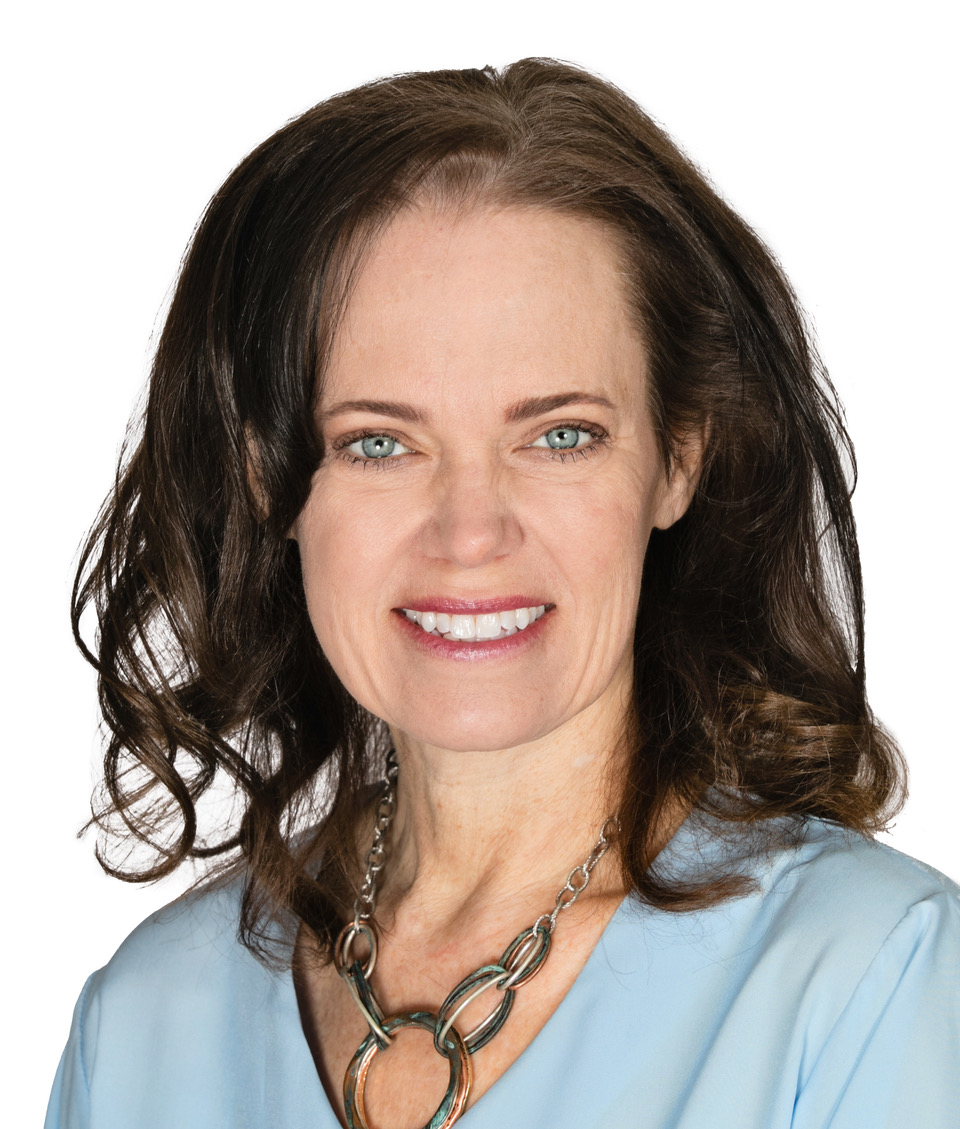 Jan Joyce is a board-certified genealogist whose journey began in 1998 while managing the marketing initiatives at Genealogy.com. Her personal research delves into ancestral roots across Iowa, Ohio, Pennsylvania, and Wisconsin, tracing lineages back to England, Germany, Ireland, and Norway. She holds the CG and CGL certifications from the Board for Certification of Genealogists (BCG) and the AG accreditation from ICAPGen.
Specializing in research methodology, Jan divides her time between personal research, writing, and education. She developed the comprehensive “Assemblage” course for the Salt Lake Institute of Genealogy (SLIG), which guides students through preparing, writing, and revising case studies and includes Artificial Intelligence. Her innovative Document Work Workshop helps aspiring genealogists prepare for BCG certification. And she pioneered the new institute course “Merging & Separating Identities: Strategies and Tactics to Solve” to advance the field’s research strategies and tactics.
Instructors
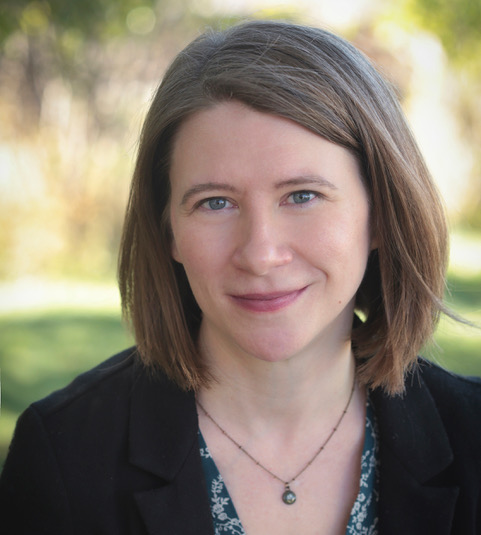 Kristin Britanik
Kristin is a Senior Researcher at Legacy Tree Genealogists with more than a decade of professional experience conducting genealogical research across North America. Before joining Legacy Tree, she worked in archival digitization at the University of Pittsburgh and managed the digitization of art and archival materials at the Andy Warhol Museum. She also served as a researcher at the New England Historic Genealogical Society, where she contributed to Dr. Henry Louis Gates Jr.’s website, The Root. Combining her expertise in research and digital preservation, Kristin continually explores how technology can enhance our understanding of the past.
Kelly Conner Lear, CG
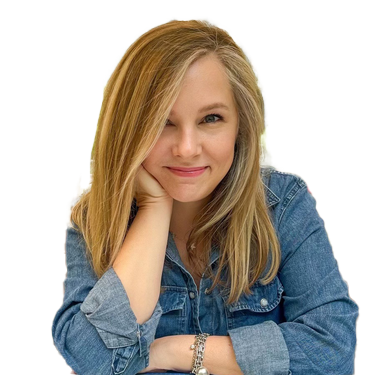 A West Virginia native and former advertising creative director, Kelley Conner Lear brings twenty years of communication experience to her genealogy practice. Her research in Central Appalachia and the surrounding regions focuses on the lives of often-overlooked ancestors. Kelley is a Certified Genealogist® and Trustee of the Board for Certification of Genealogists. She is president of the Virginia Genealogical Society and has served on its Board since 2022. She recently mentored ProGen 69 and chaired APG’s Professional Development Committee, serving on its board from 2023–25. She holds a B.A. in Communications, a Professional Learning Certificate from the International Institute of Genealogical Studies, and is an alumna of ProGen 52, Certification Practicum 2, and GenFed. Kelley is committed to supporting high-quality genealogical work and education guided by Genealogy Standards.
Reviews
There are no reviews yet.