
This episode features listener takeaways from the recent RootsTech 2026 conference. Diana discusses the overall positive impressions of the event, noting the high quality of the presentations and the unanimous message about disclosing the use of AI and double-checking its work. Nicole and Diana review several classes on AI, including transforming family history into song, understanding AI’s role in archival stewardship, and mastering the basics of AI for genealogy. They share lessons on using AI to abstract information from records, create citations, and analyze research logs to identify gaps. Diana also discusses her class on using AI to clarify complex court records by translating obsolete terms and organizing chronological data.
The hosts share insights on specialized research areas, methodology, and records. Diana highlights classes on DNA, including using shared-match grids to analyze and group DNA matches and a methodology to defeat the “Genealogy Gremlin” by evaluating match pedigrees and mitigating confirmation bias. They share a listener’s review of Michael Lacopo’s session on how to successfully approach non-responsive cousins to encourage them to share their DNA. The hosts discuss classes on research methodology, such as resolving same-name issues by building identity profiles and constructing timelines, and using genealogical analysis to solve conflicting birth dates. Diana notes that a class on probate files reveals that these records contain many rich documents beyond the will, offering clues about an ancestor’s associates and lifestyle. They also share Sue Taylor’s review of a class on Italian records that explains the Latin grammatical forms—nominative, genitive, and accusative—found in civil and parish records. Listeners learn how to access recordings and handouts from RootsTech to apply new AI tools to their research, master advanced DNA analysis techniques, and apply genealogical proof standards to complex records and challenging research questions.
This summary was generated by Google Gemini.
Transcript
Nicole (1s):
This is Research Like a Pro episode 404: RootsTech 2026 Class Takeaways. Welcome to Research Like a Pro a Genealogy Podcast about taking your research to the next level, hosted by Nicole Dyer and Diana Elder accredited genealogy professional. Diana and Nicole are the mother-daughter team at FamilyLocket.com and the authors of Research Like a Pro A Genealogist Guide. With Robin Wirthlin they also co-authored the companion volume, Research Like a Pro with DNA. Join Diana and Nicole as they discuss how to stay organized, make progress in their research and solve difficult cases. Let’s go.
Nicole (41s):
This episode is sponsored by Newspapers.com. Hi everyone, welcome to Research Like a Pro.
Diana (48s):
Hi Nicole. How are you doing today?
Nicole (51s):
Hey mom, doing great. It’s been fun watching RootsTech classes.
Diana (55s):
Oh yeah. Isn’t it fun after the conference to relax and just sit down and I have been doing weeding all week, as I’ve been listening or watching classes, so it’s been a great way to work in my yard as well as see what everybody was talking about at RootsTech.
Nicole (1m 11s):
Yeah, it’s fun ’cause we’ve been home from RootsTech for a couple weeks, but we got the great idea to have a podcast episode about favorite Rootstech classes. So we got some listeners to share their favorites and we’re gonna share some and it’ll be a fun episode.
Diana (1m 28s):
Absolutely.
Nicole (1m 28s):
Alright, well our announcements today are that our next Research Like a Pro webinar is going to be April 21st by Scott Dickson, Finding a Father for Elizabeth Adcock. And he’s going to be focusing on Elizabeth, born 1786 in Granville County, North Carolina and in 1805 she married Henry Vincent and they migrated to Rutherford County, Tennessee along with a whole bunch of other associates. So she doesn’t really have direct evidence linking her to her family of origin, but he’s found a lot of indirect evidence to link her within the broader family network. So he identifies her father. So that’s a really fun case study and we hope you’ll join us for that. If you haven’t registered yet for the 2026 webinar series, you can still do so and you’ll have access to all the past webinars for this year.
Nicole (2m 15s):
And Scott is a graduate of the Research Like a Pro study groups and he lives in Charleston, South Carolina. So he is a great speaker. He’s done our webinar series before and you’ll really enjoy it. Our next study group is August of 2026. So if you want to be part of the Research Like a Pro study group and work on your own project, you can think about registering that registration will begin in May. And if you’re not a member of our newsletter email list, make sure to sign up so you can get our newsletter that comes out every Monday with new blog posts, videos and upcoming classes we’re teaching in coupon codes. Speaking of upcoming conferences, we have the National Genealogical Society Conference on May 27th through the 30th in Fort Wayne, Indiana.
Nicole (2m 59s):
And we’ll be presenting on a couple of topics and enjoying some trips around the area. One of them will be to the genealogy center at the Allen County Public Library, which we’ve never been to. So it’ll, it’ll be fun to visit that. The theme for the conference is America at 250. So it’s a really fun and exciting year to be celebrating the 250 year anniversary of our country. And mom, you’re speaking about females and court records, so 1. Reconstructing Female Networks Through Antebellum Court Records and Property Transfers and then 2. Uncovering Family Stories Through American Court Records: Research Strategies. So it’s fun that you’ll be teaching about that. And I’ll be teaching about AI in my first lecture, Decoding America’s Past: Using AI to Understand 250 Years of Historical Terminology.
Nicole (3m 47s):
And then I’m going to do a case study using DNA to find Barsheba Tharp’s Ancestry in America’s Westward Migration from Colonial Virginia to Tennessee. And then I’m doing a workshop called 3. Deciphering Script & Scrawl: A Practical Workshop for Early Handwriting. So that will be fun. Well today we do get to talk about RootsTech classes that we’ve enjoyed and that our listeners have enjoyed. So some of you have submitted your thoughts so we’re excited to get to read those today and that should be fun to go through them and read what you’ve shared and share our thoughts about classes we’ve been watching and just talk about RootsTech.
Diana (4m 23s):
Right. Well I am excited to do this because it’s fun to kind of decompress after a big conference. RootsTech is so exciting and there’s so much going on, it’s also kind of exhausting and it’s fun to relive it this way. So we’ve got some general RootsTech impression comments and Natalie says, “Such a great event. This was my first time and I was blown away. I was so impressed with the quality of every presentation I saw learned so much my head is spinning! Loved all the AI info and the unanimous messages of double check its work and disclose its use in your work. As a relatively new genealogist, (I’ve never referred to myself as a genealogist before!) in addition to your presentations, I loved the overviews of major suppliers like FamilySearch Wiki, FamilySearch, Full Text Search, Ancestry tools, My Heritage Capability.
Diana (5m 14s):
So helpful. You all do so much work for this. Please know it’s much appreciated. Can’t wait for next year.” And then Debbie said, “Love the way you and your mom thoroughly explain AI in terms we can understand and use in our research logs and timelines. Can’t wait to put these methods to use on our family tree.”
Nicole (5m 31s):
Yeah, that was nice of Debbie to send that to me and mentioning you as my mom.
Diana (5m 37s):
I was gonna say this was to Nicole, not to me ’cause my mom was not there. So that was very, very nice.
Nicole (5m 44s):
Right. And it’s so true that RootsTech does blow you away with all of the new information and it’s so fun and exciting but also can be overwhelming. So I like to just have a little Google doc where I put notes and I have one from every year of RootsTech for whatever classes I was able to watch or go to. And I put a couple notes in there of things that I learned so I can remember, oh I went to that class and here’s a takeaway from it. I used to take really copious notes and now I kind of do more of the general takeaways.
Diana (6m 14s):
Yeah, well and it now we have so many recorded and that is really, really nice. And even if you don’t go to the in-person session or or watch the online one, you can still see the syllabus and get that presenter’s ideas, you know really put nice and cleanly there into the syllabus or handouts. So we just have a lot of information for whatever topic you’re interested in.
Nicole (6m 41s):
That’s so true. Well speaking of topics, we’re gonna go through different topics and read some of the comments that people sent in about their favorite classes and some of the ones we watched. So first, AI and Genealogy, that was one of the unofficial themes of the conference, and so many sessions talked about it, so I’ll just hit on a couple. So Doug, Douglas, sent in a comment that he really liked your class, Mom, From Complex to Clear about court records and he just really learned a lot about how to use AI better.
Diana (7m 11s):
Oh that’s nice. That was such a fun class. I love doing that class. That one sadly was not recorded. So you can look at my syllabus but we talk a lot about the same concepts on the podcast so you know, it’s almost like you were there.
Nicole (7m 28s):
Right. Another AI class that I really enjoyed that’s a little different was called “Musical Memories – Transforming Family History Into Song with AI.” And that one was so fun, it caught my eye, and I thought oh my gosh, I want to do that. It was by Brandon Camp of Storied, and Storied is a, one of the bigger genealogy companies that helps you preserve your stories. And he talked a lot about just some of the fun songs that he’s made with his kids using this app called Suno. And so right away my son and I tried it out and we generated a story about your dad, Grandpa Bob getting shot when he was a kid from his Aunt Christine when they were playing Cowboys and Indians and they found a gun that they thought was a toy but it wasn’t.
Nicole (8m 14s):
And it was the funnest. We made several different versions of the song and played with AI to help write the lyrics and then putting it into Suno, which then generated the actual song with the instruments and the singer and you can put in different styles. So we made one that was kind of more of like a Walker Hayes like pop country with a little bit of R and B and then we tried one that was kind of more of a bluegrass with like a lot of guitars and really fast. It was just so fun. So if you want to try doing something crazy and fun, you should definitely watch that one. It’s online, Musical Memories – Transforming Family History into Song with AI.
Diana (8m 53s):
Oh my word. And I love that so much. You emailed me the song and I played it and it was just so fun And I sent it to my sister and brother who also loved it. You know, just fun to have that story that we have heard from the time we were tiny little kids brought to life with music and poetry actually, you know, ’cause it really did put it into a poem for the lyrics so it was very fun.
Nicole (9m 16s):
Yeah and what he said, Brandon Camp, in the class is that his kids like remember the songs and they sing them and they’re fun songs for them, you know, that they remember and and so I did create another version of the song that was shorter that was more for kids that had like some more memorable lyrics. ’cause the original one that it made was kind of lengthy with longer verses. So it was fun to play with that. And if you do all the challenges on the Suno web app within 24 hours you get 250 credits. So I did all of those. You have to like add something to a playlist and share a song and create 10 songs and then you get more credits to make more songs. So it was great.
Diana (9m 57s):
How awesome and what a fun way to get people involved, children and teenagers in transferring a story to a song.
Nicole (10m 4s):
Yeah, it was actually Jacob, my son’s idea to put that story in as the first one we made since you remembered the fun little storybook we have of it.
Diana (10m 16s):
It’s a memorable story.
Nicole (10m 17s):
So true. I watched another AI class, it was a panel called “Preserving the Past with Emerging Tech AI’s role in Archival Stewardship.” And that one was a panel with some people from FamilySearch who were like project, product managers, director of technology and like integrations with other genealogy companies and record access. And they were talking kind of at a high level about the ethics of AI and archival usage and some of the benefits of AI helping archives make their documents searchable and just talking about the importance of provenance and important, how important it’s to have correct transcriptions so errors are not perpetuated in summaries and conclusions and things like that.
Nicole (11m 9s):
So that was an interesting one. I wouldn’t say there was a lot that I took away from my own research but it was kind of more of like a, if you’re interested in the technology and like kind of idea of where it’s going and what the directors of FamilySearch are thinking about it a high level as far as AI and archives.
Diana (11m 28s):
I think it’s valuable to watch something like that because we just enjoy the benefits of all their hard work behind the scenes. So it’s nice to know what they’re worried about, what they’re thinking of.
Nicole (11m 40s):
Yeah. Another AI class I listened to or watched was “Your AI Toolkit, Essential Tools for Family History Success” by Laryn Brown and sponsored by Storied. And he was showing using Claude Cowork, which he really kind of just scratched the surface of what you can do with Cowork. I think Cowork is like one that you download and use in your computer, it can generate files, you can have it organize your files. He kind of just showed using it as a chat bot and you know, uploading a photo and anyway, he had some great principles there and showed some ideas of things you can learn about your ancestors from starting with a photo. So that was fun. And then I also watched Steve Little’s class, “AI and Family History Foundations & First Steps: Mastering AI Basics for Genealogy.”
Nicole (12m 26s):
And I think this was an essential class that everyone should watch. It’s really good for beginners but it’s also good for people who’ve been using it for a while but maybe need a refresher on some of the basics and just really important principles. And he mentioned Notebook LM is a really good place for people to start because it has less hallucinations. But I also wanna say that in my experience Notebook LM still can have hallucinations, especially with anything complex like genetic genealogy and stuff like that. So it has really good privacy but then it doesn’t always understand everything within genetic genealogy. So we just have to be aware that there still could be hallucinations even with Notebook LM.
Diana (13m 13s):
It doesn’t replace us yet.
Nicole (13m 14s):
No, not yet. I really liked that Steve gave homework in his handout for that session too, so that it gives you something to do when you’re done watching.
Diana (13m 21s):
That is typical Steve, he’s very good at doing that. And I am going to put this in all my handouts on AI so that people have, you know, another resource to learn. And I love how we teach AI a little bit differently than Steve does. We all have the same basic principles but different analogies, different use cases resonate differently with different people. So it’s so good to have many people teaching.
Nicole (13m 48s):
Yeah, it is, it’s really good. It’s been fun to listen to all these different presenters on the topic. Another one that was different was Ada Luque Nelson, “FamilySearch for Latinos: Using AI to Grow Your Tree.” And she really went over a bunch of the lesser known AI features within the FamilySearch tree. I really enjoyed how she talked about the Computer-Generated trees and how AI behind the scenes is getting better record hints for people by using the record hints to like build a tree in the background and then see if the things kind of work out when they, when it builds the tree. So it’s like doing a lot of analysis behind the scenes to then give better record hits.
Diana (14m 33s):
Oh interesting. You know, that’s just a good example of taking a class that maybe I wouldn’t look at or be interested in and then you can learn something from everybody. So that’s neat.
Nicole (14m 45s):
Right. And I remember Ada because she came by our booth and she talks, she has talked to us at both conferences this year and last year and so I’ve seen her before I met her, and so I wanted to watch her class about AI and she just had a completely different take ’cause she was so focused on FamilySearch AI and that’s not something that I have really dived into very far. And so it was really great to see how that’s helping. And she talked a lot about how like records for Latinos often have a lot of relationships in them because of all of the like godparents and things and like the baptisms will include parents and grandparents on both sides. And so the building of the computer generated trees really makes sense for that particular type of genealogy.
Diana (15m 34s):
Hmm. Yeah.
Nicole (15m 36s):
Well another class that a lot of people liked was the FamilySearch Full-Text Search class by David Ouimette, “Your Golden Path to Ancestral Discovery.” So that was a popular one. A lot of people mentioned it And I enjoyed it too. It was really good and just some really solid ideas for how to search better within the Full-Text Search.
Diana (15m 55s):
Okay. I definitely need to watch that ’cause I’ve developed my own system but I want to pick David’s brain ’cause he’s so brilliant. So that will be a one to definitely watch and I would say everybody listening should make sure they watch it. We’ve been playing with Full-Text Search here at my household because my husband just recently decided to get back into some old research and is wanted me to demonstrate how to use it and he’s just so excited to now go find all those harder records. So you know, whenever you come to the party it’s all good to learn about Full-Text Search. Well let’s do some topics about DNA. DNA’s been around a while in RootsTech, I remember when DNA was the, the popular kid and all the classes were about DNA and it’s still there.
Diana (16m 42s):
You know we had lots of fun AI classes but we still have good DNA classes. So Kira said that she heard Johnny Pearl speak on Using Shared Match Grids and Matrices In Your Family History Research. He is talking all about those tools and he said he also struggles with the learning curve of network graphs like Gephi and he showed how spreadsheets of data and cluster charts allow him to analyze and group his DNA matches easier. So again, you know, there’s not one size that fits all for all the different tools for DNA and so, so good to watch some of these presentations and see how other people are using tools, things that work for them that might work for us.
Diana (17m 31s):
So that’s great.
Nicole (17m 32s):
Yeah, I love that Kira watched that it’s in person only but I’m glad to hear that she was able to go to his class and that he talked about, you know, his preferences for using spreadsheets over network graphs and it’s just interesting to hear what people are talking about in all these in-person classes that we couldn’t go to.
Diana (17m 51s):
Right. And his handout is there, you know, you can go download his handout and I’m sure it’s got some good ideas in it. Well Douglas attended the DNA Swim School. This is three sessions by Diahan Southard where she really leads you through how to work with your matches and so that’s great. You know, Diahan generally does something like that every RootsTech where she’s really helping people who are just getting started don’t know what to do with DNA. So that’s neat. And those are online so if you are just beginning with your DNA journey, that’s a good place to start.
Diana (18m 31s):
And then Meredith said that she really liked Alice Child’s class “Using Autosomal DNA Analysis to Identify an Ancestor’s Likely Parents.” So this class was part of the advanced professional track And I know this case because it was one of our client projects that was really tricky and difficult and Alice just made some amazing discoveries for the clients using DNA. So Meredith said this was very relevant to my current and longtime project, inspired me to go and buy Nicole’s book. Next day I heard Nicole speak and went back to enroll in the Research Like a Pro DNA e-Course. So that’s great. We’re we’re happy to learn that. And then one of the ones that I watched, I always like to hear what Karen Stanbary has to say about DNA, she’s just such an expert in the field and is such a good genealogist as well and really, really good at blending the two.
Diana (19m 27s):
So her class is online, it was also part of the professional advanced track and it’s, “DNA Analysis Methodology: Defeat the Genealogy Gremlin.” So it’s so fun to hear Karen do those class because she has a little image of a gremlin and you know, anytime she’s talking about something that we might need to watch out for she’ll, she’ll pop that guy up. So it’s really good. And she really talks a lot about good solid methodology in using your DNA for genealogy and tells you how to evaluate your matches’ pedigrees, one of the things we don’t think about is how people might be related to us through DNA on a different line than we, than we thought and that is such a major gremlin.
Diana (20m 16s):
And she talked a lot about confirmation bias, how we pick out that one match, she calls it cherry picking, and then decide that’s proving our whole line. So it’s really good to make you kind of question your assumptions and think twice about how you’re using your DNA.
Nicole (20m 31s):
That is so good. And I’ve heard the gremlin talk as well and I, I really like it, and sometimes like this week I was analyzing a cluster of matches and I looked at one of the trees and saw the surname that I was hoping to see and followed that and put it into my lucid chart and I was like, oh who is this person? You know, going back to South Carolina and the Welch line, they must be related. And then later I was like, I should build this other branch of the match’s tree and see what they have on this branch because it’s kind of a small branch. Sure enough, when I built the branch they were related much closer to me And it was kind of like a duh moment like, oh I should have looked at this branch too because they’re like a third cousin.
Nicole (21m 19s):
And I thought, ooh, this is like a fifth cousin on this unknown Welch line. But really it was just a third cousin from a known common ancestor that I just didn’t recognize the grandparent or great-grandparent in their tree that they hadn’t built out that branch. And so it’s just funny when you see something that you’re looking for, but you don’t look for all the other lines too.
Diana (21m 42s):
Yep. It, we have to be careful, don’t we?
Nicole (21m 44s):
Yeah. Now let’s have a word from our Sponsor. Are you ready to take your family history research beyond names and dates? If so, Newspapers.com is a game changer for genealogists of all levels. With access to over a billion pages of historical newspapers, you can uncover rich untold stories about your ancestors that you won’t find anywhere else. Imagine discovering a detailed obituary that reveals the extended family, or a local news story that highlights your great-grandmother’s role in the community. Maybe you’ll come across a photo capturing a moment in your ancestors’ life, something that brings their story vividly to life. Newspapers captured the everyday details: announcements, happenings, achievements and challenges that paint a fuller picture of who your ancestors were and what their world was like. These primary sources reveal the social history behind the names on your family tree and help you connect with your past in a personal, meaningful way.
Nicole (22m 31s):
Searching is simple and intuitive, letting you explore by name, location, or date to unearth those hidden gems. Ready to enrich your research with stories you won’t find in traditional records? Visit Newspapers.com/FamilyLocket today and get 20% off a subscription. Start turning your family tree into a family story. Alright, now we’ll go into some classes on FamilySearch and both of these comments are actually about David Ouimette’s class. So Judith says, “one of my favorites was FamilySearch Full-Text Search – Your Golden Path to Ancestral Discovery by David Ouimette. I used some of his techniques the next day and found a number of records I had not seen before and that are critical to my research.” And then Meredith said that she really liked the class too because there’s “some very creative search ideas here”
Nicole (23m 18s):
and sometimes we do have to be creative with how we’re searching, right?
Diana (23m 23s):
Yes. So okay, so we’re getting verification that this is a must see class. Well there were several classes that focus on research methodology and the genealogy proof standard. So Natalie said that the class that Joshua Taylor gave, which is in person only, but you can look at his handout, and it was titled “Genealogical Proof in Practice: Resolving Conflicts and Building Sound Conclusions”. So Josh always does really, really good classes, so sadly that’s not available for us to watch, but we can go look at his handout. And then Wendy mentioned that Angela McGhie’s class, which was “The GPS in Practice: Examples of Reasonably Exhaustive Research”
Diana (24m 5s):
was really helpful to see examples of reasonably exhaustive research outside the context of this community. It helps me connect the dots.’ So Angela’s class is part of the advanced track and so that is online and I watched that myself and really enjoyed it. I think so often we wonder have we done enough, have we done reasonably exhaustive research? And the great thing about Angela’s class was that she took three different scenarios and talked about what that would look like for each scenario. And I think having multiple examples was very, very helpful. So I would recommend that one as well. Well Leona said, “I also like this one and the others in the same series.”
Diana (24m 50s):
So she was referring to the full advanced track, which is all online and I’m so excited that RootsTech chose to put all those lectures online. Last year there are only four of the 14 and this year all of them are now available to watch. So that’s awesome. Nancy said, When Nothing Found Means Something, nothing, Means Something: Negative Search Results vs Negative Evidence, which was my class. And I had so much fun presenting that. Nancy said, “it inspired me to work on a family’s family tree again, in which I was trying to see if two people with the same name from the same county and timeframe were the same person or different people.
Diana (25m 32s):
I previously couldn’t prove if they were the same person or different people. I took what Diana taught in that session to work on it. I ended up proving the two names I had researched were indeed the same person. The final piece was found in War of 1812 records of the sister in which the person I was researching filled out a statement using her married name and address. That address also matched in 1880 US census records I had.” So I’m so glad that my class inspired someone to go do some more research and figure something out. That’s so great.
Nicole (26m 7s):
Yay. Is that class online?
Diana (26m 9s):
Yes it is.
Nicole (26m 10s):
Great.
Diana (26m 10s):
And it’s online and we’ve talked about it, some of the concepts here before, it’s on my Henderson Weatherford case study. But you know, for Henderson I just thought for so long I would never solve him ’cause it was just so gnarly that whole case and when I figured it out I was just thrilled to be able to put it together in a presentation and share so the ideas. All right, so a couple of my favorites that I watched, these are all under that same heading of research methodology and proof standards. One was by Bonnie Wade Mucia, “Untangling the Darling Web: Advanced Strategies for Same Name Resolution”.
Diana (26m 54s):
And this was again in the advanced track, so it’s online and Bonnie goes through how to untangle five men named Peter Darling who all lived in the same area at the same time with overlapping families. And she had actually written this for the Rhode Island Roots Journal in 2024. It’s a published case study. So I really enjoyed this case study and it’s fun because it all began when she found a really interesting person in a cemetery with a really interesting name, not even her family. And she decided to research ’em and then discovered that there were like five men of the same name. That was a great lecture.
Diana (27m 34s):
And then another one I really enjoyed was by Carolyn Ladd, “Which Date Is Right? Solving Birthdate Conflicts Through Genealogical Analysis”, also online a part of the advance track. And this one was so interesting, I wasn’t sure if I would learn anything. You know we do a lot of resolution of birth dates, but this one was a case study again of an African American woman born in the late 19th century, so 1890-ish and there was no original birth record and Carolyn was using this for her four generation project for accreditation and she was trying to nail down an actual birth date and there were so many different dates that ranged 14 year range.
Diana (28m 19s):
So I really enjoyed hearing her methodology and seeing some of her tools and just following the case study it was really delightful.
Nicole (28m 28s):
Yay. I’m excited to watch that one. It’s going be really fun to make a little playlist of these ones I haven’t watched yet.
Diana (28m 40s):
Right.
Nicole (28m 41s):
Another category of classes is records and Sources and Kira, one of our listeners, gave another great comment about a class in this category. She says that from Orice Jenkins’ class on “Taxes & Tithes: Researching Enslaved Communities in Colonial Virginia”, she learned that while enslaved individuals are not named on tax records, they are typically named on tithe records once they’re over the age of 16, both male and female, in Virginia. And so Kira says, I got a more full backstory on the switch from the Julian calendar to the Gregorian calendar in the colonies, as well as other parts of the world, in Seema Kenney’s “Double Dates and Lost Days”.
Nicole (29m 23s):
So Kira had kinda two fun classes there, Orice Jenkins class on taxes and tithes and Seema Kenney’s class on Double Dates and Lost Days. Then Douglas said that he liked the class about Indentured Servitude by Michael Brophy and it had a lot of great information about where to look for sources on Indentured Servitude.
Diana (29m 46s):
Oh, interesting. I love both of those classes. I love it when you can get some real deep dives into some of these types of records. Well, and that’s one that I watched by Nancy Peters called “Cards, Clevises, and Calomel: What Probate Files Can Reveal about Our Ancestors”. So Nancy Peters is one of my favorites to listen to. She’s a certified genealogist and she’s just done so much amazing research. So this is part of the online advanced track and those things, cards, clevises, and calomel, all refer to interesting things found in people’s probate records that can teach us about our ancestor.
Diana (30m 30s):
So she really goes deep into probate records, how to find them, what they can have in them, how to use them, and how to use them to really give us clues about an ancestor’s lifestyle, occupation, relationships, residence, social economic status, and more. So if you’ve just found a will and you thought, well this is great and you haven’t really examined all the other pieces of a probate file, you want to really learn more from Nancy.
Nicole (30m 60s):
That’s awesome. I love Nancy Peters as well. I forgot to say that those first three classes I mentioned in this category are all in-person only, but you can get their handouts. So the Taxes and Tithes, Double Dates and Indentured Servitude classes, you can get the handouts, just can’t watch them online.
Diana (31m 16s):
Okay, good to know, good to know. And a good reason just to go scroll through classes and see what handouts you might want to put into your files. So the final one in this category of Records and Sources is one on manuscripts. And this was by Kelly Richardson, “Provenance & Proof: Advanced Strategies for Finding and Using Manuscripts In Your Research”. So I wasn’t sure what Kelly was going to talk about in this one and it was really interesting to hear some of her examples and case studies about the approach to manuscripts. So she taught how to locate and analyze these valuable manuscripts, and some of the ones that she showed were like a minister journal, a lawyer’s notebook, personal papers, unpublished family histories.
Diana (32m 5s):
And these were sometimes just in major repositories but often in very local collections. I think sometimes we shy away a bit from manuscripts ’cause it sounds hard, but a manuscript collection could be sitting in your own files. So, you know, it’s really good to think about all of the tips of using them. So I I really appreciated Kelly’s take on that.
Nicole (32m 31s):
Oh, that’s so cool.
Diana (32m 33s):
All right, so our next category is Geographic and Ethnic Research and Sue says, ‘My favorite this year was on Thursday, “Civil and Parish Records in Italy: From the Council of Trent to the 20th Century,” and this is online,” yay. So “for a broader audience, the speaker explained Latin grammatical forms in records and he said that transcriptions must match the Latin, but name entries in a family tree should be translated to the language of the family and should all be in the nominative form.”
Diana (33m 15s):
Okay, well I’m, apparently I need to watch that because I don’t even know what that means. So there are some great examples she said on slides 23 and 25 and his presentation included a chart of the grammatical forms and the presenter is Daniel Taddone. Not sure how to say that, but that’s really interesting. Yeah, Civil and Parish Records in Italy. Wow. Deep dive in some area that I am not familiar with.
Nicole (33m 42s):
That’s cool. I wonder if it’s, Ta-do-ni, I feel like, Italian…
Diana (33m 44s):
That sounds more Italian, doesn’t it? I always wanna say something with kinda like a French pronunciation, but yeah, that sounds better. Ruth said that ‘my all-time favorite class and most inspiring was “Colonial American Research: Getting Started”, taught by Kristi W. Lee. Kristi started out with a seduction case she researched from the 1700s in Massachusetts and how the father sued the seducer of his 18-year-old daughter who became pregnant.’ And then Ruth said that ‘it jogged my memory of my third grandparent in Canada and how her mother was seduced by a marriage prospect from the neighboring farmer boy. After she found out she was pregnant, he refused to marry her and the result was my third great grandfather who was an illegitimate child.
Diana (34m 33s):
This has been confirmed by well-known court case in Canada, written in several books and the grandfather included my third great-grandparent in his will, a distant cousin’s mother’s, DNA points possible DNA cousins to the seducer, which needs to be pursued further. And the research has begun using Airtable and collecting records in the original court records plus on these lines they were United Empire Loyalists and inspired me to prove my descendancy to join the UELAC.’ Oh wow. That is so fun. And I love how Ruth pointed out that often when we are listening to a case study or learning something, it helps us to think about how we can apply it to our own Family History, which of course is why we are going and attending these classes.
Diana (35m 22s):
All right. And then Meredith said that she really enjoyed Michael D. Lacopo’s “Mastering the Four Prongs of Onsite Genealogy Research” and thought that maybe she should go to Vermont and find something new for her brick wall. So that sounds fun. And I’ve heard Michael speak many times and he always has very entertaining lectures. So really neat to hear about everybody’s ideas and things that they loved in this category.
Nicole (35m 48s):
Okay, great. Well we just have a couple of other categories. This one is a one comment for this category, which is Connecting with Relatives. Douglas liked the class, “Hi We’re Related” by Michael Lacopo. And ‘it was all about how to approach those non-responsive cousins. And if you email a DNA match, do they respond? Are you enticing them with your knowledge or driving them away with gibberish?’ Which is so true. Like I think when I message DNA matches, I tend to put in more information that will sound like gibberish to them then what they will be able to understand or connect with, like my line to the common ancestors is gibberish to them, right? Their line to the common ancestor is probably more valuable.
Nicole (36m 29s):
So anyway, I thought this was a an interesting class idea and Douglas said it was really good and Michael Lacopo is a great presenter. Basically the idea here is to get strangers on board with your genealogical endeavors by sharing their DNA. So that would be a good one to go and get the handout for. It’s not online to watch but you can get the handout.
Diana (36m 50s):
Yes. I’m right in the middle of this DNA project I’m working on and I need to have a bunch of people share. So I need to go look at that and get some new techniques, ’cause whatever I’m doing is not working very well. So we’ll see. Well our next category is titled Shout Outs and Mentions of Research Like a Pro. So we had a fun comment from Mckell Keeney who said, “I gave a shout out to you, your mom and Research Like aWinning with Family History Research when you have ADHD, Anxiety and other challenges.” And she says, “in my syllabus and slides, I listed your first Research Like a Pro book as it is a good approach for many family historians with ADHD, I told them they could go to your booth for more information.”
Diana (37m 39s):
And yes, that was so fun because we did have several people stop by and mention the class, so we appreciate the shout out.
Nicole (37m 41s):
Yeah, that was really fun. On the day when she presented that, a lot of people came by our booth and were saying that, you know, it’s hard to do Family History research when you have ADHD, and I think even without ADHD, it’s hard to not wanna go down all the rabbit holes, you know? And like sometimes I do feel like, oh my gosh, there’s all these things I’m doing at once. And it is so helpful to have a process and to to use the steps as like, okay, I’m gonna do all of the things I want to, but I’m just gonna do them in this order while I stay organized.
Diana (38m 16s):
Right, right. And then of course we had Meredith, who we already talked about, who was inspired to go and buy our DNA book and then has also enrolled in the Research Like a Pro DNA eCourse. So you know, one thing that we really love about RootsTech is having our booth. So after we talk we can say well come to our booth and we’ll give you more resources. Because a lot of times people want to know more, you know, where do I learn about Airtable that, that sounds so cool and you taught that in your lecture or you know, you showed this research process and I’ve never heard that I wanna learn more. So it’s really nice to have the opportunity to chat with people and you know, give them more resources.
Nicole (38m 55s):
Yeah, I thought it was fun. You had the idea to put the computer monitor out there so we could show Airtable at our booth because sometimes people have seen it in a slide, but they kind of want to know what it looks like and our Airtable templates are obviously free for anyone to try. And so it was just kind of a fun thing to put out at our booth.
Diana (39m 16s):
It was nice too because I taught a class on AI Powered Research Logs and I was able to tell people to come by the booth and they could look at it and see a demo. So that was really nice because we did, a lot of people come by and want to do that. And that class they did record my voice and my slides. So hopefully that will show up someday on RootsTech, it wasn’t live stream so it’s not there yet. But you know, you can keep checking back for, for my class on AI Powered Research Logs From Chaos to Clarity in Your Genealogy Data.
Nicole (39m 48s):
Yeah, you had three classes and each one was a little bit different in it’s recording status so I know. So the first one was your Negative Evidence class, which we’ve already mentioned a little bit. And that one was recorded and it’s online right now and you talk about Henderson Weatherford and then the second one, AI Powered Research Logs. That one was recorded but it’s not online yet. And they recorded your voice and your slides and that one talks about all kinds of things you can do with AI within research logging in Airtable. And Airtable has some really cool tools to help you within their system.
Nicole (40m 29s):
And then your last one was in-person only From Complex to Clear: Transform Court Records with AI Tools, and that was a really popular one too. You were in the panel called The Future of AI in Genealogy and that one’s online and so anyone can go watch that and we’ll put the link in the show notes. So that’s exciting. So which one of these was your favorite one to teach?
Diana (40m 51s):
Oh that is, I don’t think I can pick a favorite. I love doing all of them. I really like case studies though. So it was really fun for me to teach about Henderson Weatherford and Negative Evidence. But I also really loved the court records one because that’s where I shared the whole story about the apprentice runaway, John Royston and Samuel Daniel and the court case. And that was really fun too. So the research logs class was great, but that day I had lost my voice and so I was a little stressed out about trying to keep my voice so, and then knowing that it was being recorded as well, it’s like, oh gosh, I just need to get through this. But the other two, I had a lot of fun teaching.
Diana (41m 32s):
So you know, I, I like teaching the best when I have a voice and, and I can talk well
Nicole (41m 39s):
That is handy. Yeah, well my two classes this year were DNA Evidence Analysis with AI, which is online and AI Powered Transcription: What’s New in 2026, which is not online, but the 2025 version of that class is online. And I actually presented that again as a workshop though in the like week after for the NGS Gentech Toolbox. So you can, you can still purchase access to that online, but it’s interesting how much changed over one year. Looking back at the 2025 lecture, I talked a lot about Transcribus and then in 2026 there were so many other new tools and Transcribus, you know, didn’t take as long to talk about because what I’m using now is mostly just Gemini and some of the new tools like Leo, or Kindex, and handwriting OCR.
Nicole (42m 35s):
So it’s just interesting how much can change in a year. But yeah, I, I wished my transcription one was recorded and not the DNA one because the DNA Evidence Analysis with AI really stressed me out having to talk about the privacy and all that and knowing that it would be recorded, it just made it feel like, oh no, like it’s really a lot of pressure to make sure it’s good ’cause it’ll be there for a long time. It’s not just like one and done type of thing.
Diana (43m 1s):
Right. And those are two sensitive topics, DNA and AI and privacy, all of that together. That’s tricky.
Nicole (43m 7s):
Yeah. So it forced me to really get confident about that topic and then I guess I learned a lot. So that’s good.
Diana (43m 13s):
Well, And I think that’s a good one to have out there. That’s, that’s an important thing. So people aren’t just willy-nilly putting DNA information in on living people into AI. So it’s a, that was a good choice I think by RootsTech to have that one recorded and online.
Nicole (43m 30s):
Yeah, I had like a flash of inspiration the morning of that I should do a demonstration of exactly how to turn off data training within Claude. And so I did that and you can turn off data training in Gemini and ChatGPT as well. I just focused on Claude. But yeah, I think that it’s important to know where that setting is and how to turn it off. And so if you do want to work with your DNA results, you can feel a little bit more confident that that’s staying within the conversation and not going out and being trained and to the model and spitting back out somewhere else where you’re not aware of.
Diana (44m 6s):
Absolutely.
Nicole (44m 6s):
Well this was really fun to go through all of these classes with you.
Diana (44m 10s):
Oh, I know, I agree. And I have several that I want to go watch now. I think it’s really helpful to do two approaches to a conference like this where you have so many available online. I think one thing is to just pick out the things that really apply to your research. You know, maybe you have a topic or a location or methodology or whatever. And the other is just to go pick some random classes that you maybe wouldn’t have done otherwise. And see what you can learn from people. Because often sometimes those are the ones that are the best. You’ve never heard of this person and the topic sounds kind of weird, but let’s give it a shot. So, you know, there’s so many fun approaches to taking a conference like RootsTech and then assimilating it into your actual research education.
Nicole (44m 57s):
That’s so true. I love the idea to pick some random ones that you maybe wouldn’t have picked, just ’cause you never know what you’ll learn and people, the presenters put in so much time to researching their topic, trying to show really cool examples. So I think I’m always impressed by what I see from these presenters. You know, even the ones where I’m like, oh, like this isn’t a topic that I need to know about, or like you don’t think you might be interested. But then once you watch the class, like, oh, I have some cool takeaways from this that I didn’t know I would learn. Which is why we want to learn to know things we didn’t know before.
Diana (45m 35s):
Well, you usually present a topic that you’re an expert on or you have a really interesting case study or you’ve just learned something amazing and you want to share it. And so if you think about that, why is this, why did this person present this idea? Well there’s usually something behind that and it’s fun to see what it is.
Nicole (45m 55s):
I love that. Well thanks everyone who submitted the comments and the ideas about what your favorite classes were, and this is just a small sampling of all of the classes you can watch in the RootsTech on demand library. There’s over 1500 sessions on 185 topics in over 30 languages. And it’s not just from this year. There’s some from last year or two and some older ones as well for keynotes. So there’s really a lot to entertain us here and help us learn for free. So we really appreciate Family Search and RootsTech for providing this conference and bringing in so many expert speakers on so many topics.
Diana (46m 32s):
All right. Well thanks everyone for listening and we will talk to you next time. Bye-bye.
Nicole (46m 38s):
Bye-bye. Thank you for listening. We hope that something you heard today will help you make progress in your research. If you want to learn more, purchase our books, Research Like a Pro and Research Like a Pro with DNA on Amazon.com and other booksellers. You can also register for our online courses or study groups of the same names. Learn more at FamilyLocket.com/services. To share your progress and ask questions, join our private Facebook group by sending us your book receipt or joining our courses to get updates in your email inbox each Monday, subscribe to our newsletter at FamilyLocket.com/newsletter. Please subscribe, rate and review our podcast. We read each review and are so thankful for them. We hope you’ll start now to Research Like a Pro.
Links to RootsTech Classes
RootsTech Classes in the On-Demand Library – https://www.familysearch.org/en/rootstech/library
Even if there’s no recording, you can always review the handout!
AI and Genealogy
- Musical Memories – Transforming Family History into Song with AI (recorded) by Brandon Camp of Storied – https://www.familysearch.org/en/rootstech/session/musical-memories-transforming-family-history-into-song-with-ai
- Preserving the Past with Emerging Tech: AI’s Role in Archival Stewardship (recorded) by Bret Weekes, John Morrey, John Alexander, Jimmy Zimmerman – https://www.familysearch.org/en/rootstech/session/preserving-the-past-with-emerging-tech-ais-role-in-archival-stewardship
- Your AI Toolkit: Essential Tools for Family History Success (recorded) by Laryn Brown – https://www.familysearch.org/en/rootstech/session/your-ai-toolkit-essential-tools-for-family-history-success
- AI & Family History: Foundations & First Steps: Mastering AI Basics for Genealogy (recorded) by Steve Little – https://www.familysearch.org/en/rootstech/session/ai-family-history-foundations-first-steps-mastering-ai-basics-for-genealogy
- FamilySearch for Latinos: Using AI to Grow Your Tree (recorded) by Ada Luque Nelson – https://www.familysearch.org/en/rootstech/session/familysearch-for-latinos-using-ai-to-grow-your-tree
- FamilySearch Full-Text Search – Your Golden Path to Ancestral Discovery (recorded) by David Ouimette – https://www.familysearch.org/en/rootstech/session/familysearch-full-text-search-your-golden-path-to-ancestral-discovery
- AI-Powered Research Logs: From Chaos to Clarity in Your Genealogy Data (recorded – not online yet) by Diana Elder – https://www.familysearch.org/en/rootstech/session/ai-powered-research-logs-from-chaos-to-clarity-in-your-genealogy-data
- From Complex to Clear: Transform Court Records with AI Tools [in-person only] by Diana Elder – https://www.familysearch.org/en/rootstech/session/from-complex-to-clear-transform-court-records-with-ai-tools
- The Future of AI in Genealogy (recorded) by David Ouimette, Steve Little, Diana Elder, Mark Thompson, Dave Vance – https://www.familysearch.org/en/rootstech/session/the-future-of-ai-in-genealogy
- DNA Evidence Analysis with AI (recorded) by Nicole Dyer – https://www.familysearch.org/en/rootstech/session/dna-evidence-analysis-with-ai
DNA
- Using Shared-Match Grids and Matrices In Your Family History Research [in-person only] by Jonny Perl – https://www.familysearch.org/en/rootstech/session/using-shared-match-grids-and-matrices-in-your-family-history-research
- DNA Swim School: 1-3. Diahan Southard. Shared matches. (recorded) by Diahan Southard – https://www.familysearch.org/en/rootstech/session/dna-swim-school-part-1-floating-with-one-dna-match
- Using Autosomal DNA Analysis to Identify an Ancestor’s Likely Parents (recorded) by Alice Childs – https://www.familysearch.org/en/rootstech/session/using-autosomal-dna-analysis-to-identify-an-ancestors-likely-parents
- DNA Analysis Methodology: Defeat the Genealogy Gremlin (recorded) by Karen Stanbary – https://www.familysearch.org/en/rootstech/session/dna-analysis-methodology-defeat-the-genealogy-gremlin
- Hi, We’re Related! Successful Communication With Your DNA Matches [in-person only] by Michael Lacopo – https://www.familysearch.org/en/rootstech/session/hi-were-related-successful-communication-with-your-dna-matches
Methodology
- Genealogical Proof in Practice: Resolving Conflicts and Building Sound Conclusions [in-person only] by D. Joshua Taylor – https://www.familysearch.org/en/rootstech/session/genealogical-proof-in-practice-resolving-conflicts-and-building-sound-conclusions
- The GPS in Practice: Examples of Reasonably Exhaustive Research (recorded) by Angela Packer McGhie – https://www.familysearch.org/en/rootstech/session/the-gps-in-practice-examples-of-reasonably-exhaustive-research
- When Nothing Found Means Something: Negative Search Results vs. Negative Evidence (recorded) by Diana Elder – https://www.familysearch.org/en/rootstech/session/when-nothing-found-means-something-negative-search-results-vs-negative-evidence
- Untangling the Darling Web: Advanced Strategies for Same Name Resolution (recorded) by Bonnie Wade Mucia – https://www.familysearch.org/en/rootstech/session/untangling-the-darling-web-advanced-strategies-for-same-name-resolution
- Which Date Is Right? Solving Birthdate Conflicts Through Genealogical Analysis (recorded) by Carolynn Ladd – https://www.familysearch.org/en/rootstech/session/which-date-is-right-solving-birthdate-conflicts-through-genealogical-analysis
Records and Sources
- Taxes & Tithes: Researching Enslaved Communities in Colonial Virginia [in-person only] by Orice Jenkins – https://www.familysearch.org/en/rootstech/session/taxes-and-tithes-researching-enslaved-communities-in-colonial-virginia
- Double Dates and Lost Days: Making Sense of the Calendar Switch [in-person only] by Seema Kenney – https://www.familysearch.org/en/rootstech/session/double-dates-and-lost-days-making-sense-of-the-calendar-switch
- Indentured Servitude: Michael Brophy. Where to search for information. [in-person only] by Michael Brophy – [URL is missing]
- Cards, Clevises, and Calomel: What Probate Files Can Reveal about Our Ancestors (recorded) by Nancy Peters – https://www.familysearch.org/en/rootstech/session/cards-clevises-and-calomel-what-probate-files-can-reveal-about-our-ancestors
- Provenance & Proof: Advanced Strategies for Finding and Using Manuscripts In Your Research (recorded) by Kelly Richardson – https://www.familysearch.org/en/rootstech/session/provenance-proof-advanced-strategies-for-finding-and-using-manuscripts-in-your-research
Geographic & Ethnic Research
- Civil and Parish Records in Italy: From the Council of Trent to the 20th Century. (recorded) by Daniel Taddone – https://www.familysearch.org/en/rootstech/session/civil-and-parish-records-in-italy-from-the-council-of-trent-to-the-20th-century
- New Adventures in the Americas: Colonial research like never before [in-person only] by Kristilee J. Manuel – https://www.familysearch.org/en/rootstech/session/new-adventures-in-the-americas-colonial-research-like-never-before
- Mastering the Four Prongs of Onsite Genealogy Research [in-person only] by Michael D. Lacopo – https://www.familysearch.org/en/rootstech/session/mastering-the-four-prongs-of-onsite-genealogy-research
Sponsor – Newspapers.com
For listeners of this podcast, Newspapers.com is offering new subscribers 20% off a Publisher Extra subscription so you can start exploring today. Just use the code “FamilyLocket” at checkout.
Research Like a Pro Resources
Airtable Universe – Nicole’s Airtable Templates – https://www.airtable.com/universe/creator/usrsBSDhwHyLNnP4O/nicole-dyer
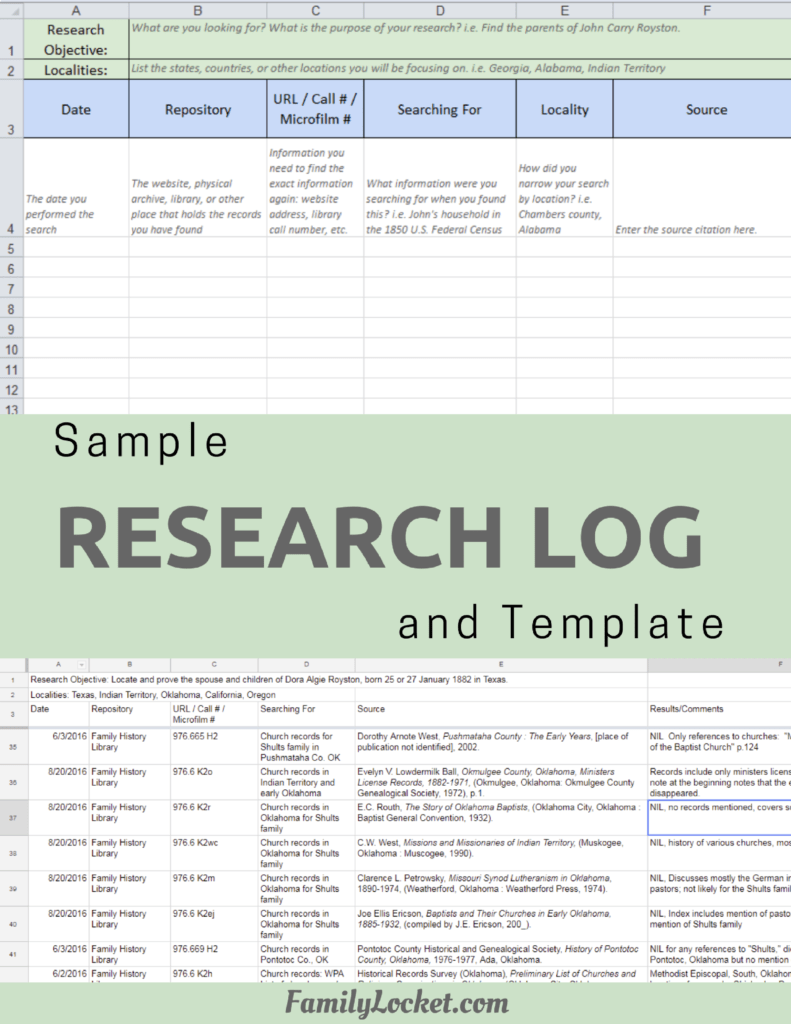
Airtable Research Logs Quick Reference – by Nicole Dyer – https://familylocket.com/product-tag/airtable/
Research Like a Pro: A Genealogist’s Guide book by Diana Elder with Nicole Dyer on Amazon.com – https://amzn.to/2x0ku3d
14-Day Research Like a Pro Challenge Workbook – digital – https://familylocket.com/product/14-day-research-like-a-pro-challenge-workbook-digital-only/ and spiral bound – https://familylocket.com/product/14-day-research-like-a-pro-challenge-workbook-spiral-bound/
Research Like a Pro Webinar Series – monthly case study webinars including documentary evidence and many with DNA evidence – https://familylocket.com/product-category/webinars/
Research Like a Pro eCourse – independent study course – https://familylocket.com/product/research-like-a-pro-e-course/
RLP Study Group – upcoming group and email notification list – https://familylocket.com/services/research-like-a-pro-study-group/
Research Like a Pro Institute Courses – https://familylocket.com/product-category/institute-course/
Research Like a Pro with DNA Resources
Research Like a Pro with DNA: A Genealogist’s Guide to Finding and Confirming Ancestors with DNA Evidence book by Diana Elder, Nicole Dyer, and Robin Wirthlin – https://amzn.to/3gn0hKx
Research Like a Pro with DNA eCourse – independent study course – https://familylocket.com/product/research-like-a-pro-with-dna-ecourse/
RLP with DNA Study Group – upcoming group and email notification list – https://familylocket.com/services/research-like-a-pro-with-dna-study-group/
Thank you
Thanks for listening! We hope that you will share your thoughts about our podcast and help us out by doing the following:
Write a review on iTunes or Apple Podcasts. If you leave a review, we will read it on the podcast and answer any questions that you bring up in your review. Thank you!
Leave a comment in the comment or question in the comment section below.
Share the episode on Twitter, Facebook, or Pinterest.
Subscribe on iTunes or your favorite podcast app.
Sign up for our newsletter to receive notifications of new episodes – https://familylocket.com/sign-up/
Check out this list of genealogy podcasts from Feedspot: Best Genealogy Podcasts – https://blog.feedspot.com/genealogy_podcasts/


Leave a Reply
Thanks for the note!