
Today’s episode of Research Like a Pro is about how to focus your DNA research with an objective. If you feel overwhelmed by all the matches and all the test results you have, perhaps focusing on one research question could help. Maybe you want to confirm a relationship or focus on a brick wall ancestor. We discuss how to create an objective with genetic genealogist Robin Wirthlin.
Transcript
Nicole (0s):
This is Research Like a Pro, Episode 57: Three Steps to Focus Your DNA Research with an Objective. Welcome to Research Like a Pro a Genealogy Podcast about taking your research to the next level, hosted by Nicole Dyer and Diana Elder accredited genealogy professional. Diana and Nicole are the mother-daughter team at FamilyLocket.com and the creators of the Amazon bestselling book, Research Like a Pro a Genealogists Guide. I’m Nicole co-host of the podcast join Diana and me as we discuss how to stay organized, make progress in our research and solve difficult cases.
Nicole (41s):
Let’s go. Hi everyone, welcome to the show today. I’m Nicole Dyer co-host of The Research Like a Pro Genealogy Podcast. I’m here with accredited genealogist, Diana Elder. Hi Diana, How are you?
Diana (57s):
I’m doing great, Thank you.
Nicole (59s):
We’re also here with Robin Wirthlin. Hi Robin.
Robin Wirthlin (1m 2s):
Hi.
Nicole (1m 2s):
Welcome, welcome. We’re excited to be talking again today about DNA and genetic genealogy. But first let me read a review. Our listener spotlight today is from Eliza H. Eliza says, “I started listening in January and I’m also listening to all episodes starting from number one. Just listen to Lucinda Keaton case study, which is great. Suggestion: share more case studies. So helpful to learn from.” Thank you Eliza and thank you for the suggestion and we love doing case studies, so have to schedule a few more of those in the future. And be sure that if you’d like to leave us a review or give us a question or comment or a suggestion, go ahead and leave us a review and write a review at Stitcher or at Apple Podcasts or whatever way that you listen to your podcast.
Nicole (1m 49s):
Alright, so back in episode 54 we talked about organizing your DNA matches through several different methods of charting or diagramming. Today we’re going to talk about the next step in doing a DNA research project and that is creating an objective for your DNA project. So DNA research cannot be done without traditional genealogy research to back it up, they go hand in hand. There’s a lot of indirect evidence available to us from DNA test results, but as you know, indirect evidence doesn’t prove anything on its own because it’s not directly stating anything. So it needs to be combined with other evidence from other sources as well.
Nicole (2m 34s):
And those can be found through traditional genealogy research. So just remember that the DNA results that we have are meaningless without genealogy records. So let’s dive in today as we talk about how to start your project by creating an objective.
Robin Wirthlin (2m 51s):
So the first thing that you need to do in using DNA and genealogy in your project is to examine your family tree and think about which brick wall could be overcome with DNA evidence. So there are a couple of different ways that you can use DNA. One of them is to identify an individual or discern between two or more people with the same name in the same location. In this objective you need to include key identifying information in your research question to stay focused on finding information about that specific individual. So include birth, marriage, and death dates and locations and identifiable relationships will help narrow down that search to a unique person during a specific point in time.
Robin Wirthlin (3m 40s):
When I very first heard a lecture about using DNA in your research, it was way back in 1998 or 99 and it was a program where a man spoke about Using YDNA to Discern Which John Smith was Your Ancestor in England. And he talked about being able to pinpoint it down to which county in England depending on what the DNA haplogroup was. So it was pretty fascinating and those, DNA can definitely be used to discern between different people with the same name in a same location.
Diana (4m 20s):
Right? And I think that another way we can use DNA, which a lot of us want to use, is to prove a family relationship. So you know, in an adoptee case or trying to find birth parents, but for a lot of us with brick walls, we have done a lot of research and we want to try to prove that this distant ancestor is really who we think it is. Sometimes the records are just not in existence to help us with that. And we’ve proven it through a bunch of indirect evidence. We think we’ve proven it and we’re hoping that DNA will give us that final little bit of proof that we can say for sure this individual is my ancestor and I’m gonna share in this podcast as we go through a little bit about the project that I’m working on right now in that exact kind of scenario.
Diana (5m 15s):
And it is about my proposed hypothesized ancestor, Benjamin Cox and his, who I hope is his, daughter Rachel Cox, who is my proven ancestor. So what do we do first Robin?
Robin Wirthlin (5m 29s):
Well, the first thing to do is to choose an ancestor or an ancestral couple at the end of the line of your research or a brick wall to research using DNA evidence. And the first thing that we need to do is to understand some basics of DNA inheritance. So a child inherits 50% of its DNA from his mother and 50% of its DNA from its father. And that 50% inherited from either mom or dad is an average mixture of about 25% of each grandparent’s DNA. Now they might get 23% from one grandparent and 27% from another grandparent, but the average is 25%.
Robin Wirthlin (6m 18s):
And then each succeeding generation inherits about half of the previous generation’s DNA. There are charts out there and there’s one in our blog post about research objectives that gives a good diagram about how the parent gives 50% and then down to the grandchild gets 25% great-grandchild gets 12.5%. Great-great gets 6.25%. So the other really interesting thing is that DNA is inherited randomly. So a person might inherit more or less than the average expected amount of DNA from an ancestor and each sibling inherits a different portion of each parent’s DNA.
Robin Wirthlin (7m 4s):
There’s another chart that is done by Blaine Bettinger using his Shared cM Project. You can find this chart on DNApainter.com. It’s a really good interactive program where you can type in the amount of DNA that you share with a person and it will predict a relationship. He’s observed the ranges of DNA in thousands of known family relationships due to the recombination and the random nature of DNA inheritance there’s a range of people. So you have to be really careful when you get a result from someone. In fact, recently I got a result from 23andMe and it predicted that I had a half sibling, which was a real surprise to me.
Robin Wirthlin (7m 48s):
I thought and thought about this and then I realized, oh this person is my niece who got married and her name was changed. You know, when you look at the amount of DNA shared by a half sibling, it’s also the same amount of DNA that can be shared in a niece or a nephew or a grandparent. So don’t be alarmed when you first look at A DNA result. Think about all the different relationships that could be identified by using that amount of shared DNA. And then we need to talk about the limitations of DNA. When you’re looking at your family tree to formulate a research objective, it’s important to consider the limitations of DNA evidence.
Robin Wirthlin (8m 33s):
It can’t be used to do everything. When it can answer a question, it can be very, very powerful. So with autosomal DNA, you can use that back to about six to eight generations. If you’re trying to identify someone who is more than eight generations, the amount of DNA that’s inherited from a specific ancestor may be too small to definitively identify who it came from. And then with YDNA, it is inherited from father to son to grandson all down that patrilineal line. And that test can show inheritance for a range of one generation to thousands of generations.
Robin Wirthlin (9m 18s):
And if you’re trying to discern which George Martin is your ancestor, you’ll need to find a descendant of a direct father to son to grandson family line in order to get that YDNA haplogroup that’s unique to each patrilineal line. Now if you’re a woman, you don’t have a Y chromosome. And for YDNA to be useful in your family history research, you need to find a direct patrilineal male descendant of the family you’re trying to prove. And if you can find that person and get them to agree to DNA test, then you can use those results to prove that paternal line.
Robin Wirthlin (10m 3s):
And the third type of DNA that can be used is mitochondrial DNA. And that DNA is inherited from a mother to a child down a matrilineal line. So each mother passes on her mitochondrial DNA, unchanged to both her sons and her daughters, but only daughters pass their mitochondrial DNA onto their children. So if you’re trying to trace a maternal line in your family, you need to find a direct female descendant of the ancestor that you’re researching. And if you’re not a direct, you know, matrilineal descendant, you can still use it if you find a cousin who is directly descended from that matrilineally, descendant from that ancestor.
Nicole (10m 48s):
Robin, I have a question on that. So does that mean that you can choose either a male or a female as your target ancestor to research through mitochondrial DNA as long as you just follow one of his daughters?
Robin Wirthlin (11m 3s):
Actually soldiers are discovered this way. So yes, you can. Like if there’s remains of a soldier, they test their mitochondrial DNA and then they find a matrilineal descendant that can confirm that DNA.
Nicole (11m 19s):
If you take an ancestor whose male and then chase his daughters down, would would they have his mitochondrial DNA?
Robin Wirthlin (11m 28s):
No, they won’t have his mitochondrial DNA, they’ll have the mitochondrial DNA from their mother. But a key identifying factor in soldiers who have fought and died and their remains have stayed in the area and not been recovered, this key identifier is that they look at the mitochondrial DNA that is more apt to be preserved in soldiers’ remains. And the reason why it’s more apt to be preserved is that there are more copies of mitochondria in a cell and also because they can drill into the teeth or the bones of someone to make sure they get an uncontaminated sample that will show the true DNA that’s in, in that soldier’s remains.
Robin Wirthlin (12m 20s):
And then they trace down through the soldier’s sisters and find a living descendant of the soldier and test the living person’s DNA and the deceased person’s DNA and then they can reunite the family with the soldier’s remains and they can be repatriated and brought to a cemetery and buried with their full military honors.
Nicole (12m 49s):
Wow, that’s amazing. I love that. Thank you. So basically it sounds like a man or a woman could be tested for mitochondrial DNA, but only the women will pass it on to their children.
Robin Wirthlin (13m 2s):
That’s exactly right.
Nicole (13m 4s):
Okay.
Diana (13m 4s):
Okay, great. So thank you so much Robin for that really informative reminder of how we can use the different tests. And this just reminds me that if we don’t understand at least the basics of how DNA is inherited, we’re not going to know what kind of problems we can solve in our family tree. I decided to use autosomal DNA for my Benjamin Cox project because I do not have a male descendant of his. In fact, in the traditional research I’ve only discovered one possible male descendant. He had all daughters and I can’t use mitochondrial ’cause he would not have passed down his mitochondrial DNA to all of his daughters.
Diana (13m 45s):
So really I am only left with autosomal in this specific case, unless I’ve found a Cox descendant. But I figured autosomal will work. He’s not, you know, as far back that it would be impossible. It is small amounts of DNA and so that’s why I’m having to go really broad. So anyway, let’s talk about how to create your objectives. So you know, the first step that we talked about was looking at the family tree, thinking about what brick wall could be overcome with DNA and then we have to figure out what kind of test were we using and choose that couple that we’re going to try to to figure something out about.
Diana (14m 25s):
And then we have to actually create a research objective for all of our listeners. You know that that is the first step of the Research Like a Pro process to actually write down a research objective. This is coming from a question that you have had and you’re going to in a DNA project, combine information about your ancestor and the question that will further your research doing your research objective. You’re going to combine your DNA research question with those key identifying information that we use for our traditional objectives such as birth, marriage, death, and location. And that’s going to help us focus on something that we can actually answer.
Diana (15m 6s):
This makes our DNA work so much more productive because we’re focusing on something. We’re not just clicking around on our results trying to figure out who belongs to who we’re going to actually use it to focus in our research. Objectives can be concise or complex, it just all depends what we’re trying to learn. One of the things that I have noticed is that it’s much better to have a more simple objective. So if we have a very complicated project, we don’t wanna put it all into one objective on one project because that might be hours and hours and hours of work. And if we break it up, it can be easier to focus on that simpler objective and come to a conclusion about that your research objective is going to guide you through working with your DNA results to answer questions about your ancestors and help you move ahead on this focus path to overcome those brick walls or dead ends.
Diana (16m 1s):
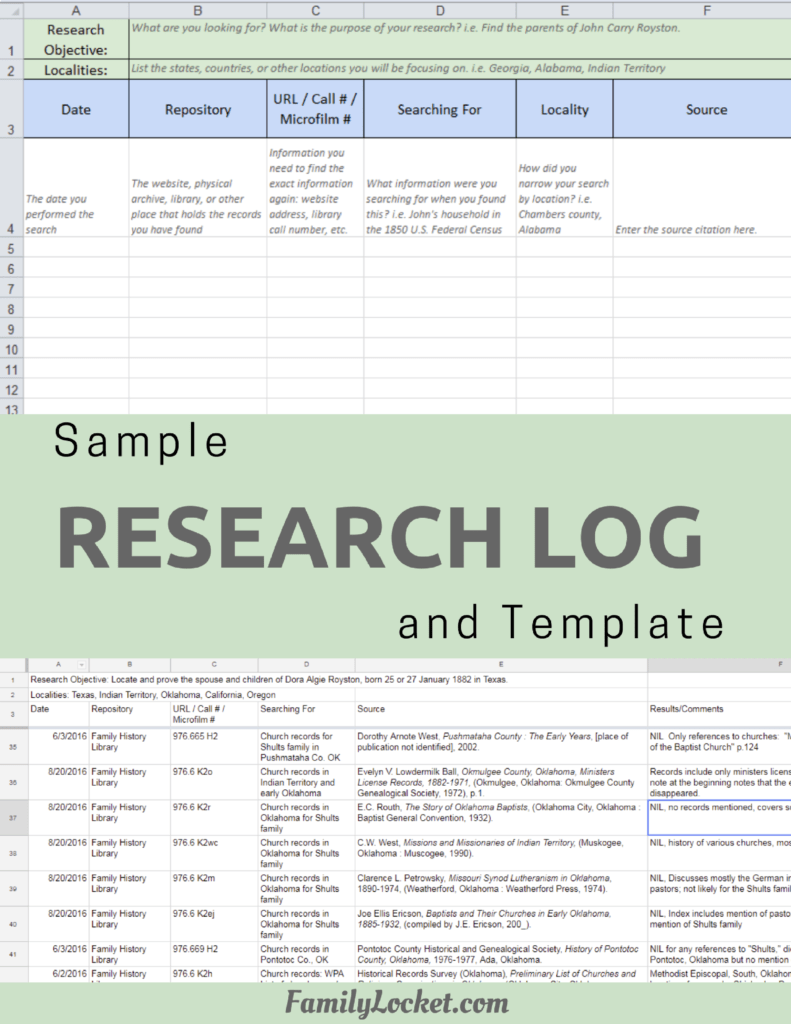
So let me read you my research objective that I chose for the last study group project. So just a little bit of background. I have done a lot of traditional research on trying to find the father of my Rachel Cox, she’s my third great-grandmother. She married Hickman Monroe Shults in Navarro County, Texas in 1848. And so I have that marriage record, I have all of her children and their descendants and I’ve traced that line and feel really good about all of that research. So the big brick wall is who is Rachel Cox’s father, and of course I’m starting there in Texas where she got married, and I’ve identified Benjamin Cox and the traditional research, everything points to him being the father, but I have no record that actually states it.
Diana (16m 52s):
So I just want that final bit of DNA evidence to say yes you are right, you did the right research. And so I created an objective that says the objective of this research project is to test the hypothesis that Benjamin Cox is the father of Rachel Cox through DNA evidence and traditional genealogy research. Benjamin Cox was born about 1791 in Ohio and died between 1870 and 1880 in Bell County, Texas. Rachel Cox was born about 1828 in Indiana and died between 1870 and 1880 in Falls County, Texas. Rachel married Hickman Monroe Shults on four July, 1848 in Navarro County, Texas.
Diana (17m 33s):
You’ll notice I have complete identifiers for both Benjamin and for Rachel because I’m trying to prove this hypothesized relationship and I just changed my wording a little bit that I want to test it through DNA evidence and traditional genealogy research.
Nicole (17m 50s):
I have a question for you about Benjamin Cox. How did you originally find him as a candidate for Rachel’s father?
Diana (17m 58s):
I found him when I was searching the Navarro County records. We had gone up to the Family History Library and I’d looked through all the books of Navarro County for Cox’s and for Shults’s. You know, I was looking at both and I found him in a record where he was surveying the road along with Monroe Shults, who was Rachel’s husband. And I thought, okay, we’re in Texas 1848, two men working on the same road there in the county. This puts them in proximity that he could be a possible father. And there was another man I followed for a long time, James Cox, and doing further research on him things just were not panning out.
Diana (18m 40s):
The traditional research did not point to him. So then I came back to Benjamin and started tracing him back through time. Found out there was a place for Rachel in the family on those early censuses of 1830 and 1840 for a female of her age. And that’s basically what I did, put him in the time and place and traced back a bit.
Nicole (19m 1s):
Wow. So you could probably build a case all on indirect evidence that she was the daughter of Benjamin and now you get to add this additional piece of evidence, this DNA evidence that you found. Hopefully it will prove what you’re hoping. But I love that you already have the hypothesis that you’ve researched with traditional genealogy records and now you’re just adding another piece of evidence from the DNA. You know, it sounds like you’re pretty close to proving it to me with that indirect evidence when you combine it all together.
Diana (19m 31s):
That’s absolutely true. And you said something really important there that I had done this traditional genealogy research because these are smaller segments. They are at the like end of my results on ancestry DNA. I would never have figured out that any of these possible matches linked to Benjamin Cox if I hadn’t done real genealogy research, if that makes sense. We have so many matches and until we have done some research through traditional methods, we’re not gonna know what we don’t know. So it really goes hand in hand.
Nicole (20m 4s):
Right, having your hypothesis, you could look in your ThruLines and then see somebody you had already hypothesized as the father and then here’s some more DNA evidence that you could use to confirm it.
Robin Wirthlin (20m 16s):
Another thing I love about DNA evidence is you can confirm each generation back as you’re going back up to Benjamin Cox. You know, you can find descendants of each generation, maybe siblings of your direct ancestor and you could confirm the ancestral couple for each line of your family on back. So once you get that proved up through Rachel, then it’s just gonna take a little bit more to prove it back to Benjamin.
Diana (20m 43s):
I love that idea. So someone just starting out with DNA, it probably would be best for them to start using DNA to prove they’re closer in people on the tree to see if they have matches that connect them to grandpa and grandma. Right?
Robin Wirthlin (21m 1s):
Exactly. And if they don’t, you know, take a step back and breathe and take it from there. But yes, it this can confirm the lines of your family back to each grandparent and great-grandparent and so on, depending on if people from that line of the family have tested their DNA, that’s the other caveat. If they haven’t, then maybe you just need to wait a little longer and watch and see what new DNA matches come into the testing database.
Nicole (21m 32s):
Well that was great. Thank you Robin. You know, we always want to confirm that our research has been accurate and as a professional genealogist, well all of us have probably had clients come and say, can you just look at my family tree and and verify that it’s all accurate? So this is kind of something that we can do to verify our own research through using genetic resources and evidence to confirm that what we’ve already found is true and accurate. If you are wondering if your genealogy research that you did 20 years ago is accurate and you have some DNA test results, you can try and confirm each generation by finding your cousins and having them test and seeing if your DNA matches, even if you don’t have anybody already in the testing pool that’s that’s done the test, you can go out and get your cousins to do it and have them take a test and then confirm that you have that same great grandparent that you thought you did and then go back each generation until you’ve proven a lot more.
Nicole (22m 37s):
So let’s review what we’ve talked about today. Our first step to focusing our DNA research with an objective was, to examine your family tree and think about which brick wall could be overcome with DNA evidence. Then the second step was to choose an ancestor or ancestral couple with that brick wall to research using DNA evidence. So pick somebody that you think would be great, and if you already have researched that person a lot and maybe have a hypothesis, that’s a really good person to start with. And then for number three, the third step, create your research objective and combine the information about your ancestor with all of the identifying information you have about them and combine that with the question that you want to research that will further your family tree and help you make more discoveries.
Nicole (23m 31s):
So write that objective and that’s the final step. So once you’ve done that, then you’ll better be able to work with your DNA results because you have a real question or an objective that you’re searching to find the answer to, and it will help you really focus in on something instead of just looking at all of your matches and feeling overwhelmed. All right, everybody, thank you for listening today and thank you so much, Robin, for coming on.
Robin Wirthlin (23m 53s):
You’re welcome. It was a pleasure to be here.
Nicole (23m 57s):
Alright, and everybody have a great week and we will talk to you again next week. Bye-bye.
Diana (24m 4s):
Bye everyone.
Robin Wirthlin (24m 5s):
Bye.
Nicole (24m 34s):
Thank you for listening to Research Like a Pro with Diana Elder, accredited genealogy professional and Nicole Dyer. We hope that something you heard today will help you make progress in your own genealogy research. If you like what you heard, please leave us a review on iTunes or Stitcher or visit our website, FamilyLocket.com to contact us. You can find our book Research Like a Pro a Genealogist’s Guide on Amazon.com and other booksellers. We hope you’ll start now to Research Like a Pro.
Links
What Do You Want to Know? 3 Steps to Focus Your DNA Research by Robin at Family Locket
Creating an Objective for a DNA Research Projectby Diana af Family Locket
Relevant previous podcast episodes
Study Group– more information and email list
Research Like a Pro: A Genealogist’s Guideby Diana Elder with Nicole Dyer on Amazon.com
Thank you
Thanks for listening! We hope that you will share your thoughts about our podcast and help us out by doing the following:
Share an honest review oniTunesorStitcher. You can easily write a review with Stitcher, without creating an account. Just scroll to the bottom of the page and click “write a review.” You simply provide a nickname and an email address that will not be published. We value your feedback and your ratings really help this podcast reach others. If you leave a review, we will read it on the podcast and answer any questions that you bring up in your review. Thank you!
Leave a comment in the comment or question in the comment section below.
Share the episode onTwitter,Facebook, orPinterest.
Subscribe oniTunes,Stitcher,Google Play, or your favorite podcast app.
Sign up for ournewsletterto receive notifications of new episodes.


Leave a Reply
Thanks for the note!