
Today’s episode of Research Like a Pro is about the most efficient way to write reports. We discuss the pros and cons of writing as you research and writing at the end of your research. We discuss the process of analyzing the source and information in the records you find in your research notes and report, and when to correlate the information that you find. Listen in to find out what conclusion we came to – is it better to write as you research or write your report at the end of your research?
Transcript
Nicole (0s):
This is Research Like a Pro Episode 59: Writing As You Research. Welcome to Research Like a Pro a Genealogy Podcast about taking your research to the next level, hosted by Nicole Dyer and Diana Elder accredited genealogy professional. Diana and Nicole are the mother-daughter team at FamilyLocket.com and the creators of the Amazon bestselling book, Research Like a Pro a Genealogists Guide. I’m Nicole co-host of the podcast join Diana and me as we discuss how to stay organized, make progress in our research and solve difficult cases. Let’s go.
Nicole (43s):
Hi everyone, and welcome to the show. I’m Nicole Dyer, co-host of the Research Like a Pro Genealogy Podcast, and I’m here with my mom, Diana Elder accredited genealogist. How are you today, Diana?
Diana (53s):
I’m doing well. Fun to be here today again with you.
Nicole (57s):
Can you give us our one minute case study?
Diana (59s):
Sure. Well, a couple weeks ago we were at the BYU Family History and Genealogy conference and I did a presentation on Research Like a Pro with DNA and talked all about finding the grandfather for my client. He had always wondered about this. His father had died wondering who his biological father was and with DNA and with traditional research, I was able to reveal that and write up a report. And it was really fun to hear from the client that they loved the report and that they had shared it with many family members. And it just made me feel good because I was able to kind of answer a longstanding family question.
Diana (1m 43s):
And when you have those in your family, you just wanna have some answers. It doesn’t matter what the situation was in the past. So that was really fun. And we’re gonna talk a little bit about that more today as we get into our topic.
Nicole (1m 55s):
Yes, our topic today is Writing As You Research and writing reports.
Diana (2m 0s):
Yeah, so just a quick little news item. Our Research Like a Pro with DNA study group is coming up beginning on September 10th, and there may or may not be spots available when this podcast airs. So if you’re interested in it, go check it out on Family Locket. And we do have a coupon code. If you put in podcasts, you’ll get 10% off the regular price of $275. So it will be 10 class sessions. We’ll be doing peer reviews, so you’ll get a lot of feedback from class members and it’s gonna be a great experience. So go check it out if you’re interested, if you just found us and you are just finding out about it and see if there’s any spots left.
Diana (2m 43s):
So today we have a listener spotlight from Melinda on Stitcher, and she says, “I have to ditto the great comments already here, but I just listened again to episode 12 on productivity and I can’t wait to implement some, maybe all, of these great ideas. I’ve been researching branches on my family and other families trees for nearly 20 years and always hear something new on this podcast. It’s well organized, minimal kitchen chat. The presenters are well-spoken, no slang, no ums, no yeahs, and well-researched. On a personal note, I’m a wife, mom, and grandma who works from home and appreciate where these ladies are at in their lives. And the fact that they get their research done in small steps and some big ones with balance is very appealing to me.
Diana (3m 28s):
After all, families have to eat, babies and grand babies need to be rocked, and bosses want to see the work get done, LOL.” Thank you so much for that great review, Melinda. I love your little comment there about grand babies need to be rocked because no matter what’s going on in my life, when my grand babies come over, I drop everything and just treasure the time with them. So Yeah, I agree.
Nicole (3m 51s):
Aw, you’re a good grandma.
Diana (3m 56s):
Well, Thank you.
Nicole (3m 58s):
So today we’re talking about writing reports and writing as you go, which is sometimes a different way to do things than we think of doing it. So we’re gonna talk about first just the value of writing a report and then we’ll go into the two different ways to write writing as you go versus waiting until the end and give some ideas and pointers and just discuss this in general because it’s something that we hear a lot about and we sometimes wonder, you know, which one is better and should we be writing as we go, or should we write at the end? And what are the pros and cons of each? So we’re gonna discuss that and hopefully you can come to your own conclusion for what works best for you or maybe what works best for each project that you’re doing, depending on what you’re working on.
Nicole (4m 44s):
The first thing we want to talk about is the value of writing a report. We know that writing a report is valuable for ourselves because often we will work on a family and our family tree and then come to some conclusions and then we will go off for a couple years and not work on them for a while and then come back and think, where did I leave off? And if we wrote down a paragraph or two or a whole report about where we left off, it’s so much easier to pick that back up. Now what about clients? I know a lot of our listeners are professional genealogists who have clients that they’re working for, and the question comes up, do our clients really want to read a long report?
Nicole (5m 27s):
So let’s ask Diana, what do you think?
Diana (5m 30s):
Well, it’s interesting because I have done both. I have had clients that really wanted just to have their family trees verified and have just a very simple summary of why I thought something was correct or if more research needed to be on a certain family line. But a lot of my client projects are very difficult things that they have been working on for 20 years in their family, and I need to write up a complete report for them so they really understand what I’ve done. Because without a report, you know, if I just gave them the research log, they wouldn’t be able to make as much sense in the process of writing the report.
Diana (6m 11s):
I have brought things together and I have made the research understandable for the client, So I really try to do what the client wants and mostly that involves a report.
Nicole (6m 26s):
I agree. I think it would be difficult to give your client research without some sort of report detailing the research that was done. It’s kind of like giving them a lot of puzzle pieces that are not put together, like thanks, but what do I do with this? You know? And if they have a report that is well documented and details the findings in a way that’s easy to understand, they can actually use that to share that with cousins to post that up on their family website or to post it on a shared family tree, like FamilySearch so that other people can understand the conclusions.
Diana (7m 2s):
It is interesting. So many times I do not make the complete connection in a research case until I’m writing the report. I don’t know what it is about the thinking process that makes those puzzle pieces of all the different research come together as I read other people’s reports. So in our Research Like a Pro study group, we do peer feedback and I read everybody’s reports and it’s the same way they can be talking about their research all through the study group, and I kind of understand where they’re going and what they’re doing. But then when I read the report, then it all comes together and I feel like in that case, I’m the client because I’m digesting all their research that they’ve done and the report just makes it very helpful.
Diana (7m 46s):
So I think that even if some of my clients may at the beginning, you know, maybe not read it super carefully, if it’s like a 25 page report, I think they’ve got that and then they can always go back to it and refer to it again and again. And if they want to go on and do more research, the next research or whether it’s me, or someone else, or themselves, they have something to go off of. So here’s just a little case in point, I was doing a research project a few months ago and it was a Native American project and the client gave me a research report that was done in possibly 1980.
Diana (8m 27s):
It was quite a while ago, and I think that this was before we had, genealogy standards had been written, and it didn’t have source citations. It basically was just, I looked at here, I looked there, and this is what I found and it wasn’t the same standard that we do now. And I was left with so many questions like, well, how do you know that statement that you just made? Or how do you know this? What is your source? And it was really frustrating for me as taking on the next step of the project to look at that very incomplete, just very casual report. When I think about that, I realize the real value of doing a great report with citations and everything really analyzed.
Diana (9m 8s):
So let’s just talk about some things to make the report a little bit easier for ourselves or for a client. And one of the things that I like to do is to do a summary of results right at the beginning. So I state the objective, whatever the project objective was that I had decided on with the client or that I had determined myself, and then I create the summary of results after I’ve written the report. Then I go back through the report and I like to have two monitors with my summary on one and the actual report on the other. And then I can just detail out a summary. I know that a client likes to really quickly read through that and see what was found.
Diana (9m 50s):
Plus, I think that that makes it so that they have a foundation so that when they go to read the report, they are maybe understanding more of what you’ve written. So I really like that summary, not to mention it makes it easier for us to go back and review our research. We may remember that we found something and we don’t wanna read through the whole report. We look at our summary and go, oh, that’s right, that’s what it was. And then at the end, it’s so great to have a good conclusion, kind of recapping the whole report. So in essence, you can be talking about the research three times at the beginning when you do the summary and overview, then the meet of the report going through everything that you’ve found and then doing a conclusion to wrap it up where you do a recap by about that third time that you’ve heard it, maybe then we’ve really demonstrated what we did in the research.
Diana (10m 42s):
So another thing that I love to do on my reports is to add tables and images because I’d like to break up that writing. You know, I like to put in a map, I like to put in a little screenshot of an interesting record, maybe a signature. I like to create a table of all the tax records. You know, these are the types of things that jog our brain and and give us something else to look at besides text. I think that’s really important to add to our report
Nicole (11m 13s):
That is important. I think anything we can do to make the report more readable will help the readers understand it and really be able to value it and use it.
Diana (11m 23s):
And that is the whole point that our reports will get used, whether it’s by us or a client or by whoever gets our research when we’re gone. Because I think we’re all trying to build something here. We’re trying to build on what past researchers did, and we want to leave something for the next generation to build on. And unless we have something written down in paper that’s digestible that they can see and that they can use, and that’s verified. Just like that report, that Native American report, I didn’t really put a lot of faith in the research because it didn’t come analyzed and it didn’t coincided with good source citations.
Diana (12m 6s):
So we want our research to stand the test of time, and that when our child, or our grandchild, or niece or nephew, whoever picks it up, they can read through it and go, wow, this makes perfect sense. Let’s go to work on the next generation. They don’t have to repeat anything that we’ve already done. I think we’ve made a good case for the value of writing report. What do you think, Nicole?
Nicole (12m 27s):
I think our listeners will probably agree that a report is very valuable, especially if you’re ordering a research project and your the client and you want to see what has been done. There needs to be some way to report that to the client who paid for it, and making it more readable and adding things to help them understand it, like the summary of results really is valuable. Now let’s talk about two different ways to write the reports, because often you’ll hear professional researchers saying, you know, it is time consuming and how do you plan how long it will take to write the report and make sure that you stay within the hours allotted by the client.
Nicole (13m 7s):
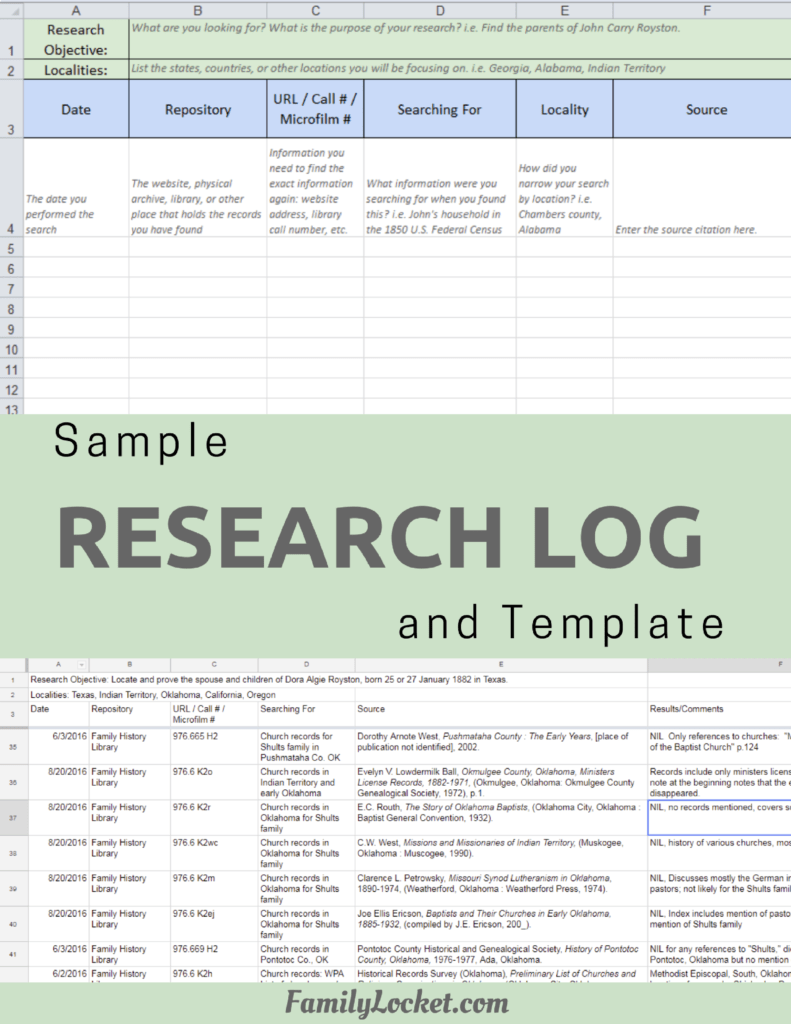
So that’s kind of why this is coming up because we are always trying to be more efficient in the research process and make sure that we are not duplicating our thinking and our work. So writing as you go is one way to do it, and the other way is to wait till the end of the research and then write it up. Writing as you go would just mean that instead of writing all of your research notes into your research log, you would maybe instead put the abstract only in your research log and then do more analysis in your report, right? When you’re looking at the document or the record that you found and put those notes into your report at the same time that you’re adding it to your log and doing a paragraph about it, then so what about waiting till the end?
Diana (13m 50s):
Well, sometimes I have had a project and I didn’t break through until the very end of the research for whatever reason. Sometimes it just works like that and the breakthrough that I had puts a whole different slant on the project. So sometimes it’s beneficial to wait until the end because then you can write up your research in a way that makes sense. With the total findings. I go back and forth with deciding which is most beneficial because I don’t want to spend for a client project a bunch of time writing up things that at the end I make a discovery and then it’s not necessary to put some of that other writing into the report.
Diana (14m 34s):
So I tend to like to keep really good notes in my research log and then maybe, you know, start writing after I have found a few records and I kind of see how the research is progressing, then maybe start writing and maybe do more in the middle and then the end, rather than waiting all the way to the end, it comes with experience. And I have to say, each project can be different. This is why we’re having this discussion.
Nicole (15m 3s):
Right, right. I think it’s so interesting to think about different projects that I’ve done. Some are so obvious that the records you’re finding match your subject and then you could just write about those right when you find them. But others, you find a record and it’s not clear if it’s a a match to your subject, putting that into a research log with some questions and notes, you know, could help you and guide you without having to spend a lot of time writing about it if it’s not your subject, although you will want to include information about that person because you hopefully by the end will have separated them from your subject. So it is tricky. Like basically the question is, when is the best time to analyze that document fully and write about it?
Nicole (15m 51s):
And I think that analyzing the document, the best time to do it is while you’re looking at it the first time. Because if we fail to really understand the source and what’s on it, then we could go down the wrong path as we’re researching. But putting that into a report or keeping it into your log, that’s a personal decision I think. Like which way you want to do it. Because once you’ve got all your research results in your log, then you can correlate that information and when you correlate it, you might come to a a conclusion that shows that you need to focus on writing about, you know, certain parts of your research log more than others.
Diana (16m 30s):
Right, right. So let’s just give an example. I have done projects where I may be analyze tax records for 20 years. Is it beneficial for me to write about each one of those years of the tax record: in 1801, the this person was found here, blah, blah, blah, blah? Well, not really. It’s better for me just to put that in my research log and detail what was found in each one. And then I can look at the 20 years of research on the tax records, I can come to some conclusions and then perhaps I could write a paragraph in my research report or start a section on the tax records and detail it out and talk about, oh, the ancestor was always taxed for this same 550 acres on this creek.
Diana (17m 23s):
Now if I had been writing each little separate thing out, I wouldn’t know until the end. So in that kind of a case, I like to do all the research and then look at it, correlate all the different findings, do some analysis, and then I could write something. Does that make sense? That’s, that’s an example of how I would do all the research on a specific type and then write a little bit about it.
Nicole (17m 45s):
That makes so much sense. And that reminds me of last week’s episode about Berger Solberg and the city directories, where if you had written about, you know, one or two of those city directories without correlating all of the city directories first, you would’ve come to an incomplete or a faulty conclusion because sometimes he was listed as Burger, sometimes he was listed as E Berger and sometimes he was listed as Burger G. And I think previous researchers had merged all these identities together because they hadn’t found all of the data to correlate first.
Diana (18m 19s):
Right. In fact, I believe that when I looked at the previous research they had just written about each one, and it’s difficult unless you have it in a table or a research log to correlate all those different names and the data. I think that this is something that we, with practice, we get better at determining for this specific situation right now. Should I start writing or should I keep researching a bit? And I think it just comes with experience.
Nicole (18m 49s):
Yeah, that’s a really good principle that sometimes you need to keep researching before you can write and come to a conclusion for your report. And like we’ve talked about in other episodes, every research cycle may not come to a good conclusion, but if you have the time in your project, in your allotted hours to research all the 20 years of tax records and then write about it, that would obviously be ideal rather than just looking at one or two and then writing about them separately. The principle there is you need to decide depending on your project, when is the best time to write now or later.
Diana (19m 30s):
Right.
Nicole (19m 31s):
Let’s talk about how in the cases where you are able to write as you go, because you’ve already figured out that a certain record matches your subject and it’s pretty clear. Let’s talk about how that could be a more efficient way to write your research reports. So like I mentioned, the best time to do your analysis of a record is the first time that you look at it. And if you’re going to be analyzing the record in your brain, you might as well be typing that information or writing it down somewhere so that you don’t forget about it while you’re researching, you look at a record, let’s say that you look at a land record and it’s clear that it matches your ancestor. And the identifying information in the land record matches what you’ve chosen for your objective.
Nicole (20m 14s):
So you’re going to write a paragraph about it in your research report. So let’s say that you create a source citation, an entry in your research log and now you’re going to your research project document or your research report. What do you write about? I think one of the first things you can do is to analyze the source. The source would be the book containing the deed or the land record or the actual deed itself. If it was a, you know, a deed that was kept in your family and passed down. Some questions for analysis of this source that we can use to guide us I took from chapter five of Mastering Genealogical Proof, which is about the GPS element analysis and correlation.
Nicole (20m 55s):
And I just thought it would be good to kind of talk about some of these questions that we can ask while we’re analyzing the source, because it will give us ideas of what to write about. Really what we’re trying to do is figure out how reliable this source is and if there’s any bias. So the first thing we can do is determine if what we’re looking at is an original source or a derivative of that original or an authored source that somebody has created by looking at a lot of different kinds of sources. Another question we can ask is, when was the source created? Was it created soon after the event that it reports or much later? So we can write about that if we know the answer or if we don’t know the answer, maybe we need to flip through different pages, go to the beginning of the Land Records book and try to figure out these answers.
Nicole (21m 43s):
We can ask ourselves why was the source created? If it was created by a county government, what were they hoping to accomplish? Was there a law that was passed that mandated the creation of this record? Was it a business record, a religious record? And if it was a religious record, why did the church want to keep track of this and so forth? Another question is, was the author or record keeper professional and careful, or were they sloppy and made a lot of errors that had to be crossed out and fixed? And then another question is, was the source open to challenge and correction? Like was it given in court where people could come in and challenge it or was it just something that the family wrote down and nobody else could challenge it?
Nicole (22m 26s):
Was it protected against bias, fraud and tampering, or was it just available for anybody to come and mess with it? Some examples of records that are protected are ones that are kept by a county and they’re kept in the clerk’s office and they’re protected from anyone coming in to mess with them. If you’re looking at an authored source, you can ask, did experts evaluate this authored source? Was it peer reviewed or was this just something that a person wrote in isolation? And did the author show potential for bias? Did they have a purpose for what they were writing or were they just trying to be objective? And did the writer use the least error prone sources?
Nicole (23m 7s):
Or did they rely heavily on derivative records or secondary information? And then does the source show any sign of alteration at any point in its history? So these are some of the questions that we can ask.
Diana (23m 20s):
So as you were going through those, I was thinking of an interesting situation. A lot of times we have family histories that have been handed down or like a county history where someone has submitted information about a family. And when you talked about bias, I was thinking, hmm, okay, so if you’re submitting information on your family and it’s going to be published in this book and you had to pay to have your family in there, are you gonna put your best foot forward? Are you going to perhaps fudge a little bit on the details? You know, we have to really look and think about who the informant was for some of these types of things, because family members who are submitting information to be published might have kept out some of the details that they maybe didn’t want to be put into a book.
Diana (24m 7s):
And if we just take everything that we read at face value and say, yep, that’s exactly how it was, then we are opening ourselves up to some incorrect information, possibly. Really important to analyze who was giving the information and thinking about if there was potential for bias, what are they getting out of it? Did they wanna tell the whole truth and nothing but the truth? Or did they want to paint the family’s history a little bit rosier than perhaps it was? So we have to really look at this with critical analysis and do our best to explain why maybe some things are conflicting because the informant told the information a little bit different.
Diana (24m 50s):
So these are all kinds of things that we can write about. We are creating, when we do a research report, an authored source. The definition of an authored source is taking original and derivative records and putting it together in a new source. And that’s what we’re doing. We’re creating a new look at our subject’s lives. One of the things that I teach is that we have to make sure we use qualifiers when we are writing, you know, things like almost certainly, probably, possibly, highly probable. We don’t ever just say this is clearly the case, because there might be another record that comes up that states, oh nope, this clearly wasn’t the case.
Diana (25m 30s):
And I have seen that. I have seen that in past projects, like with the Burger Solberg project. The previous research had said clearly the last place he was was in the 1930 census in Massachusetts. Well, for the research proved that he went to Canada in 1926. It clearly was not 1930 in Massachusetts. So we have to be careful about saying things that sound like we are absolutely sure, ’cause in genealogy, you never know what else you’re gonna find.
Nicole (26m 3s):
All right, who would’ve thought there was another Burger Solberg? But apparently that name is more common than the researcher thought. That was a really good point about the qualifiers. We talked about in your report that it’s important to analyze the source and write all about that. And we can also analyze the information that we’re seeing on the document as we’re going along, researching. And we can talk about who the informant was. If we don’t know, then maybe we can take an educated guess. We can also discuss whether or not the informant seemed to be reliable as an observer and a reporter. And we can also talk about if the informant shows potential for bias, because sometimes, you know, before I was talking about how the author could have shown potential for bias, but maybe the informant also shows a potential for bias on an original record because they wanted to paint a certain picture.
Nicole (26m 53s):
And those questions were also taken from Mastering Genealogical Proof, which we really recommend and it can help you a lot with your writing. So as we wrap this episode up, let’s just talk about why you might want to write about these things as you go. Because as we mentioned, it’s difficult to correlate as you go because you haven’t found everything yet, but you can definitely analyze as you research and put that into your report as you go. And it will help you to be more efficient and help you stay within your time restraints if you’re researching for a client, because you won’t reach the end of your 20 hours and then say, oh, now I have to write a report. You definitely need to make sure you leave more than zero hours for your report, at least leave a couple hours.
Nicole (27m 35s):
But sometimes you don’t know how long the report will take. And if you’ve already been writing as you go, then it helps you a lot more to stay on time and stay on track. And of course, another benefit which we always talk about is that writing as you research helps you make more connections during the research. We always say that when you’re writing your report, even if you write it at the end, that’s when you can pull things all together and really make connections. But if you’re doing that as you research, it will help you to make connections and maybe will change the direction that you take your research. And we know that research plans are flexible and that you can go down a different path if you find something really useful in a certain land record or something that shows a connection with another associate of the subject that you’re researching.
Nicole (28m 24s):
Maybe that person shows up in several records and you decide to go research that person next in your project, just consider that maybe writing as you go and analyzing the source and information as you research could be a useful way to stay more efficient as you write. So we have to wrap up this episode today and we hope that you guys will try it out and let us know what you think. And we will continue to discuss the research process and future episodes because as you know, it’s one of our favorite topics and we’re always trying to think of ways to help you research more efficiently and Research Like a Pro.
Diana (29m 1s):
All right, well everyone, good luck and if you haven’t started writing up your research, maybe this is the week that you do it, actually try writing something up about your research and see how fun it can be to get your thoughts and ideas down on paper or in a document.
Nicole (29m 15s):
Alright everybody, thanks for listening and we will talk to you again next week. Bye-bye.
Diana (29m 20s):
All right, bye-bye.
Nicole (29m 53s):
Thank you for listening to Research Like a Pro with Diana Elder, accredited genealogy professional and Nicole Dyer. We hope that something you heard today will help you make progress in your own genealogy research. If you like what you heard, please leave us a review on iTunes or Stitcher or visit our website, FamilyLocket.com to contact us. You can find our book Research Like a Pro a Genealogist’s Guide on Amazon.com and other booksellers. We hope you’ll start now to Research Like a Pro.
Links
RLP 9: Report Writing– Episode 9 is about report writing
Research Like a Pro Part 6: Write it Up– Diana’s post about report writing in the original RLP blog series at Family Locket
Mastering Genealogical Proofby Thomas W. Jones, link to the book on Amazon (affiliate link)
Research Like a Pro with DNA Study Group– sign up for our Fall study group
Study Group– more information and email list
Research Like a Pro: A Genealogist’s Guideby Diana Elder with Nicole Dyer on Amazon.com
Thank you
Thanks for listening! We hope that you will share your thoughts about our podcast and help us out by doing the following:
Share an honest review oniTunesorStitcher. You can easily write a review with Stitcher, without creating an account. Just scroll to the bottom of the page and click “write a review.” You simply provide a nickname and an email address that will not be published. We value your feedback and your ratings really help this podcast reach others. If you leave a review, we will read it on the podcast and answer any questions that you bring up in your review. Thank you!
Leave a comment in the comment or question in the comment section below.
Share the episode onTwitter,Facebook, orPinterest.
Subscribe oniTunes,Stitcher,Google Play, or your favorite podcast app.
Sign up for ournewsletterto receive notifications of new episodes.
Check out this list of genealogy podcasts from Feedspot: Top 20 Genealogy Podcasts




1 Comment
Leave your reply.