
Today’s episode of Research Like a Pro is about determining which of the many people of the same name and same place is your subject. How do you make sense of a complicated situation such as two individuals with very similar identities? It takes thorough research of all family members, analyzing the data, and then understanding the locality. Diana tells about the Edward Sullivan project, and how she solved it.
Transcript
Nicole (1s):
This is Research Like a Pro, Episode 62: Separating Men of the Same Name. Welcome to Research Like a Pro a Genealogy Podcast about taking your research to the next level, hosted by Nicole Dyer and Diana Elder accredited genealogy professional. Diana and Nicole are the mother-daughter team at FamilyLocket.com and the creators of the Amazon bestselling book, Research Like a Pro a Genealogists Guide. I’m Nicole co-host of the podcast join Diana and me as we discuss how to stay organized, make progress in our research and solve difficult cases. Let’s go.
Nicole (45s):
Hi everyone, welcome to the show today. I’m Nicole Dyer co-host of The Research Like a Pro Genealogy Podcast. I’m here with accredited genealogist, Diana Elder. Hi Diana, how are you today?
Diana (55s):
I’m doing well. Excited to be here again, talking about our favorite thing, which is research.
Nicole (1m 1s):
Yep. Today we’re talking about research problems like multiple men of the same name in the same area. So we’ll be talking about how to separate them. So our review today is from Sharam and her review is called A Gift from Heaven, which is too nice. So here’s our listener spotlight. “I never leave reviews for podcasts, but I couldn’t help myself after listening to this mother-daughter team. They’re amazing. I discovered their podcast after an instructor at my local family history library, asked me if I like to listen to podcasts. She casually mentioned that she had started listening to Research Like a Pro and she thought I might enjoy it too. Enjoy is an understatement.
Nicole (1m 42s):
I’ve been devouring the podcast and all of their information on FamilyLocket.com. I feel so blessed by their experience, expertise, and willingness to share it with the family history community throughout the world. Thank you for your professionalism and organization. You make it fun and manageable. I could keep gushing about how grateful I am, but I will stop here. A gigantic Thank you. I’ll spread the word of your book, podcast and website to whomever will listen to me.” Well that was very nice and yes, you are just gushing. I love it. Thank you for sharing your thoughts about the podcast and we’re really appreciative that it’s helping you and that you are sharing it and we’re glad that it’s working because we just, you know, had this idea, let’s try doing a podcast because it’s an easier way at least for me to digest content so I don’t have to sit down and read.
Nicole (2m 29s):
And it makes it so that we can learn on the go, which I love. So I’m glad you like it, too.
Diana (2m 34s):
Sometimes we have to help people out if they’ve never heard of podcasts, we have to help ’em find it on their phones or their devices. But then once they find them then they’re hooked totally on podcasts. So it’s pretty fun to get to do this on this platform. Well let’s jump into our topic for the day, Separating Men of the Same Name. So we’re going to use a case study of a gentleman named Edward Sullivan and I think case studies are really beneficial because we learn so much from just hearing how someone worked through a whole problem. And I know a lot of our listeners have this problem with men of the same name or women of the same name and it can be kind of tricky. So we’re going to share some specific things that you can do to help you when you are running into this kind of a problem and we’ll do that in the form of the case study of Edward.
Diana (3m 21s):
So just a little background, this was a client project and my client was asking me to write up her years and years of research, and her ancestors had come from Ireland, immigrated to the United States, and I was basically tracing and writing about their actions in the United States, probably 1870 to about 1930. As I was writing up this research, I came across Edward Sullivan and I’d been working on his family. He was the son of John and Julia Sullivan. He, I first found him in the census in 1860 as an 11-year-old. And this family had immigrated down to Virginia and they were in the portion that would become West Virginia.
Diana (4m 7s):
What’s gonna happen pretty soon, Nicole in West Virginia in that area.
Nicole (4m 10s):
The Civil War.
Diana (4m 11s):
Yeah. And they were right there on the battlefield an area where there was so much fighting. So in 1870, like so many of our ancestors in kind of the southern part of the United States, and this was you know, mid south, upper south, but Edward isn’t listed on the 1870 census. And so that is so difficult when you’re missing, you know, one of the census records.
Nicole (4m 36s):
Yeah.
Diana (4m 36s):
’cause you don’t know where they went. His family, his parents had moved to Ohio, Scioto County. So everyone listening, just give me a break because I don’t know how to say that properly. I just thought about that, that there are probably some people from this county in Ohio listening. So you’ll just have to write an email and say this is how we say it out here. Anyway, the family moves.
Nicole (5m 2s):
I think it’s Sigh-Ota.
Diana (5m 2s):
Sigh-Ota. Thank you.
Nicole (5m 4s):
I looked it up on Google. That’s what it says.
Diana (5m 8s):
Thank you. That’s very helpful. Okay, so who turns up in Scioto in the mid 1870s? Well, not just one Edward Sullivan, of course that would be too easy, but two. And so both these men were so similar, they were both married in 1875, 1876. They’re both on the 1880 census. One’s 28 years old, the one is 29. They both list Ireland as the birthplace of their parents and they’re not in the household of their parents, right? They’re in their own households. So how can I decide which one is the son of John and Julia Sullivan?
Nicole (5m 45s):
So let’s see if I can wrap my mind around this. So we have in 1860 that Edward is living with his parents, John and Julia. But in 1870 he’s not with his parents anymore. And there’s more than one person with the same name in Scioto County.
Diana (6m 0s):
Well, there’s no Edward at all. He doesn’t show up at all on the 1870 census. It’s 1880, 20 years after that he finally shows up.
Nicole (6m 8s):
So we have a 20 year break where we’re trying to figure out where he went.
Diana (6m 13s):
Exactly. Yeah. That’s the tricky thing. And so now we have two in the same county and their profiles are very much the same, very, you know, very similar ages and marriages. The first strategy that you can do if you have this scenario is to really research the family. Just keep in mind that the clues we need to identify an individual are going to be found not only in his records but those of his family. And you know, really all the family members are part of an individual’s FAN club. We, we often talk about that as friends, associates and neighbors, but also think of it as family, you know, parents, siblings, children and extended family often.
Diana (6m 53s):
So in Edward’s case, when I researched this father John, I discovered an obituary that gives an important clue. Keep in mind that this obituary was written 15 March, 1900 and it states that the surviving children are Edward Sullivan of Ashlyn, Kentucky, as well as some sons in New York and a daughter in Pittsburgh. But here we have a really good clue because this is the right John Sullivan that I’ve been tracking. This is the client’s ancestor. And so he’s got a surviving son named Edward, who’s of Ashlyn, Kentucky in 1900. So that’s really an important clue.
Nicole (7m 31s):
Yeah. Now we know where he was in 1900.
Diana (7m 34s):
And that he’s alive. That’s, that’s a good thing to know because what are we missing in 1890? We’re missing another census. That’s so frustrating too. We have 1880 and then we have the big 20 year gap to 1900, which makes it even more difficult to track people. Okay, for the purpose of my research, I had to name each Edward and so I just designated them Edward one and Edward two. And you know, if you’re running into something like this, I always tell people if they’re using, you know, if they’re creating a timeline and they start seeing patterns of different people that they can color code those, you know, Edward one could become all the records for him could become blue and Edward two could become red.
Diana (8m 18s):
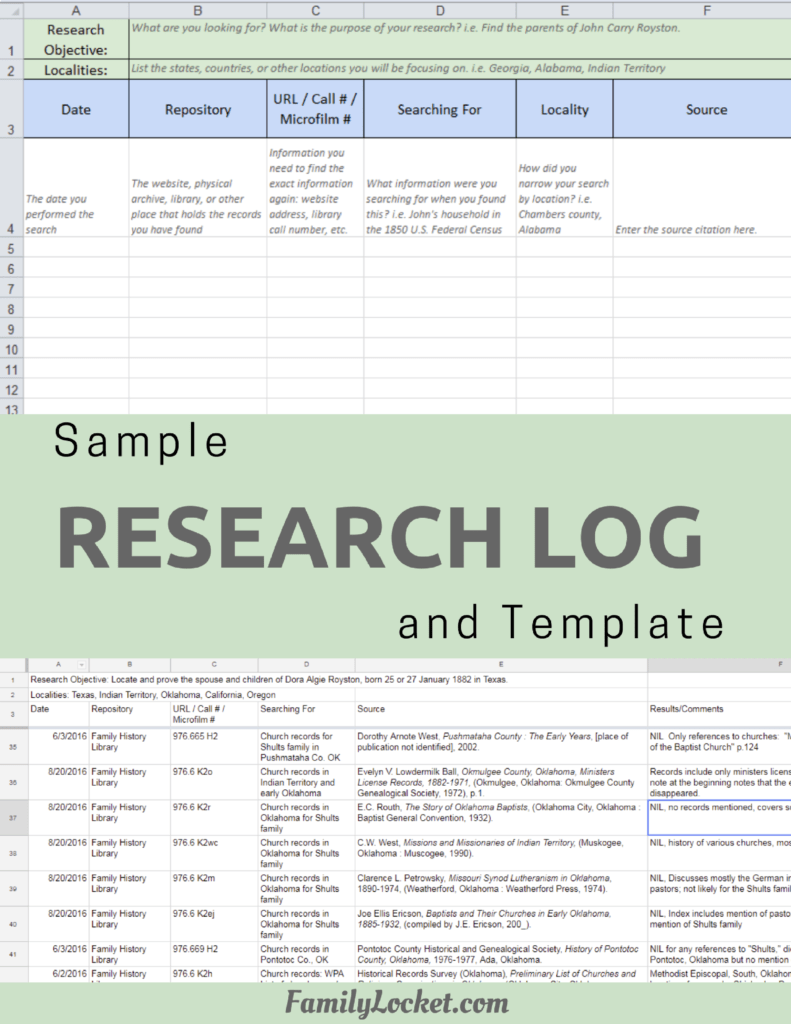
And the same thing with your research log. If you’re, as you’re doing the research, you can start to color code if you start seeing clear patterns. So I can’t really show you that on this podcast, but that is what I did. I started separating them out in my timeline and log. So I discovered as I was researching Edward one, and this was the Edward that my client had in her, on her Ancestry tree, this is who she thought was her Edward. And she had him married to a woman named Anna Zamp, Z-A-M-P in 1875, and they had moved to Kentucky, and the death certificates, she had found all the death certificates of Anna and Edward’s children and they all named their father Edward Sullivan, born in West Virginia.
Diana (9m 2s):
So that matches right, because the family in 1860 was in the area that was West Virginia. So no wonder you know, that she thought that was her relative. So then I started analyzing all the records, putting them into my timeline. And when I looked at that marriage record of Edward and Anna, I was a little confused because John and Julia Sullivan, the parents, were Catholics, they had had all their children baptized in either Ireland or the United States. And the other siblings were all married in the Catholic church. And I just kind of wondered if Edward married to Anna Zamp, they were not married in the Catholic church.
Diana (9m 43s):
She was a daughter of German parents and their marriage was performed by a minister of the gospel. And in looking at some other marriage records, I came across another Edward who married Mary O’Brien, daughter of Irish parents, and that was a Catholic marriage. So just kind of looking at those two, what would you have thought, Nicole, if you’d seen a family that was all pretty much Catholic.
Nicole (10m 9s):
It seems more likely that he would’ve married the Irish person in the Catholic church than the German person in a different church.
Diana (10m 17s):
Yeah. And that’s kind of what raised a red flag. Not that that couldn’t have happened, but because I had two Edwards marrying on within a year, one was 1875, one was 1876, I just started thinking maybe Anna Zamp, maybe this is not the right marriage and the right family. So what do we do when we come across something like that? Well, we keep researching, right? We look for more records trying to, this is conflicting information here, we’ve gotta try to find more things to put this into focus. So let’s talk about Edward one who married Anna Zamp, the the German, the daughter of German parents.
Diana (10m 58s):
So that household had a William who was age 22. And I think that the client thought that this matched up because Edward did have a brother William. But in the 1880 census he was listed as a son. And so maybe the client was thinking this was just a mis mark or a relationship that wasn’t written correctly. But because it does say that he was a son, I mean there obviously is something weird here. Edward is 29 and he is got William as a son, 22. So obviously there’s something off there. The other weird thing was that this Edward said he was born in Vermont, which seemed a little odd.
Diana (11m 40s):
So things weren’t really adding up with that. And I was trying to make this fit because this was what the client had. And as I was writing it up, I was trying to make it fit, but it just didn’t work. So this other Edward 2 that I found, he just had his wife Mary and a daughter Bridget. He was born in Virginia as expected, and here was a big clue: he was living in the township of Buena Vista in 1880. And guess who was really close to him, just a few households away was his father, John Sullivan.
Nicole (12m 15s):
Let’s see if I can recap. So you found Edward 1, had a brother named William, but the ages were weird. And the biggest, I think the biggest red flag with that Edward 1 was that he listed he was born in Vermont, which didn’t match. And then the biggest clue from Edward 2 is that he was living nearby his family in 1880. And so you kind of have a, the expected family group all living nearby each other.
Diana (12m 43s):
Absolutely. And the other thing is that Edward 2 born in Virginia living by his family, his occupation was a stone cutter and that was what his father was. They had moved to this area in Ohio and that seemed to be a family occupation, whereas the other Edward was a boiler maker. So sometimes occupations are very, very helpful in Separating Men of the Same Name. People will sometimes change their occupations, but often they followed the same occupation throughout their life. So that can be helpful in looking at these censuses and trying to decide which one is your person looking at every single bit of information and looking at the people all around them to see if they’re living by family or part of their FAN club.
Diana (13m 35s):
City directories were another important clue, and I love city directories because they fill in the years in between censuses. And when I did a little searching in city directories, I found that Edward had died before 1898, because his wife Anna, remember Anna was the daughter of the German immigrants, she was listed in a city directory of Covington, Kentucky and she was the widow of Edward. And I love city directories because they will list that it had Anna Sullivan and then in parentheses widow of Edward. Isn’t that fabulous? It’s so great.
Nicole (14m 13s):
Yeah, that’s really great.
Diana (14m 14s):
Yeah, because then you can, it not only gives you relationships, but it gives you so many clues. And because the city directory was dated 1898, you know, we knew he had already died. Since the 1900 obituary of John Sullivan named Edward as a living son, then the Edward who had died before 1898 couldn’t be his son. So that city directory really clarified which Edward was which. Edward, the husband of Anna, could not have been the son of John Sullivan because he died before 1898 and the obituary was dated 1900.
Nicole (14m 53s):
Interesting. So in 1900, John Sullivan named, you know, his obituary named his son Edward as living in Ashland, Kentucky. But in Covington, Kentucky in 1898, there’s the widow of the other Edward. So now we can really separate them out and say they’re separate and different and not the same.
Diana (15m 13s):
Right. You would think, okay, well what about the 1900 census? Right? You know, that would, that should clear it all up. But of course the 1900 census doesn’t find either Edward Sullivan, which makes sense because Edward 1 died, but Edward 2 is nowhere. And so that’s frustrating because if he had shown up then that would clearly have shown which one was which. And probably this confusion would not have ensued. But because we can’t find him in that census, you know, it’s easy to see how the client got confused and and went with the Edward 1. But as I was doing this research, I realized that I really needed to map the location.
Diana (15m 54s):
And when I did that, I saw that all of these locations were just right on the border of Ohio and Kentucky. So even though it sounds like maybe they moved far away, they, they literally just moved over the state line kind of went back and forth a bit. So a map was always very, very helpful. So, you know, kind of to wrap up or put this all together, I used several different techniques. So let’s just kind of review what I did. So first of all, I was putting this into my timeline, you know, as we teach in the Research, Like a Pro process, I was taking all the different records and putting ’em into the timeline and analyzing them and came across that 1880 census, which kind of had some red flags.
Diana (16m 46s):
And as I continued to research the family, I found the obituary that said that Edward was surviving in 1900. And then I went back and looked at marriage records, I was kind of confused with the marriage outside the Catholic church, found a second marriage, you know, everything came together. And in the process of our research, it sounds like this came together very simply and easily when I talk about it. But in the process of our research, it doesn’t always happen that way. You know, it was really putting everything into my research log and timeline that I was able to make sense of this. So many times if we’re not doing that, we may see something that’s conflicting and we just kind of ignore it.
Diana (17m 30s):
We just think, Oh yeah, that William who was listed as a son, that’s just really his brother. And you know, we don’t really dig in there and analyze it enough to make sense when we separate people the same name. We have to do really thorough research and we have to keep really good records.
Nicole (17m 46s):
You did a good job with that. I think a lot of the time we tend to to explain away conflicting evidence so that it will fit within our hypothesis. But we need to try to be the devil’s advocate with our own research and say, I’m gonna try to disprove this hypothesis now and see if the records show that it could be something else. So if we look at both sides of our hypothesis, try to prove it one way and then try to disprove it.
Diana (18m 16s):
Absolutely. We do want to fit things nice and neatly into what we think the scenario should be. So I love that idea that devil’s advocate, we should be trying to disprove maybe more than prove things. And I also wanna make a note here that it was also in the writing this up that things began to show those red flags. I, like I said, I had put things into my research log or I first I’d done the timeline analysis and I’d put that in there and not really noticed these things until I was writing. And as I was writing it I thought, oh wait, this doesn’t make sense. So writing is such a good way, we say that all the time, but it’s such a good way to make sense of the research.
Diana (18m 57s):
It makes our brain look at it in a different way, which is super valuable.
Nicole (19m 1s):
I think another thing that writing does is it brings out more of those points of comparison that sometimes we ignore. Because when you’re writing, writing a profile of a person, you look at their occupation and you look at their family members and you look at the larger context. So the more points of comparison that we have between men of the same name, the more we can distinguish them. And I like that you brought out the occupation. You know, one was a boiler maker and the other one followed after his father’s occupation, which was, what was it?
Diana (19m 37s):
Stone cutter.
Nicole (19m 38s):
Stone cutter. So using that as a point of comparison helped to differentiate them. And then also their locations. They were in the same states, but different parts of Kentucky, right? And then they had religions that were different too. And that’s one that was kind of a, a unique clue that you had to, you had to dig a little bit more because it didn’t say outright. You just had to kind of figure out that because they were German, they were probably not Catholic. And looking at what type of minister it said minister of the Gospel. So you could kind of assume that they were maybe Protestant. And then the other marriage was a Catholic marriage and Irish people who were more likely to be Catholic.
Nicole (20m 20s):
So I thought that was another really good point of comparison that was overlooked before.
Diana (20m 26s):
Absolutely. And sometimes when you’re doing this, you get those ideas for further research and you know, that can go into your timeline as you’re putting it together. And then you can see that, oh, this marriage looks a little odd, maybe I should look for another marriage. And you can make a little note of that. And that can be part of your research plan. So as you’re going through, you know, maybe you’re revisiting a project and you’re going through it and you’re doing your timeline, you’re trying to break down your brick wall, make note of all those questions that come up for things that should be researched again, because maybe this is a project that you’ve done years ago and there’s more record availability now, and you can find new things that are going to break open that case.
Diana (21m 14s):
So that’s one of my favorite things to do actually, is to go revisit some old research and look at things with fresh eyes and see if I can find those red flags or conflicting information and then get new ideas to research to see if things are accurate or if I’ve got somebody wrong. Just like in Edward Sullivan’s case.
Nicole (21m 35s):
Well, great job on that case. That was a really interesting study of how to separate men of the same name who lived in the same areas. So great. Thank you for telling us about that.
Diana (21m 46s):
Well, it was fun.
Nicole (21m 48s):
Thanks for listening everybody, and we hope you have a great week and we will talk to you again soon and we’ll see you next week.
Diana (21m 54s):
All right. Bye-bye everyone. Good luck in your research this week.
Nicole (21m 59s):
Bye-bye. Thank you for listening to Research Like a Pro with Diana Elder, accredited genealogy professional and Nicole Dyer. We hope that something you heard today will help you make progress in your own genealogy research. If you like what you heard, please leave us a review on iTunes or Stitcher or visit our website, FamilyLocket.com to contact us. You can find our book Research Like a Pro a Genealogist’s Guide on Amazon.com and other booksellers. We hope you’ll start now to Research Like a Pro.
Links
Will the Real Edward Please Stand Up? Separating Men of the Same Name
Study Group – more information and email list
Research Like a Pro: A Genealogist’s Guide by Diana Elder with Nicole Dyer on Amazon.com
Thank you
Thanks for listening! We hope that you will share your thoughts about our podcast and help us out by doing the following:
Share an honest review on iTunes or Stitcher. You can easily write a review with Stitcher, without creating an account. Just scroll to the bottom of the page and click “write a review.” You simply provide a nickname and an email address that will not be published. We value your feedback and your ratings really help this podcast reach others. If you leave a review, we will read it on the podcast and answer any questions that you bring up in your review. Thank you!
Leave a comment in the comment or question in the comment section below.
Share the episode on Twitter, Facebook, or Pinterest. Do you have a friend who would love this podcast? Please share! We know that recommendations from friends are one of the tops ways our podcast is found.
Subscribe on iTunes, Stitcher, Google Play, or your favorite podcast app.
Sign up for our newsletter to receive notifications of new episodes.
Check out this list of genealogy podcasts from Feedspot: Top 20 Genealogy Podcasts



Leave a Reply
Thanks for the note!