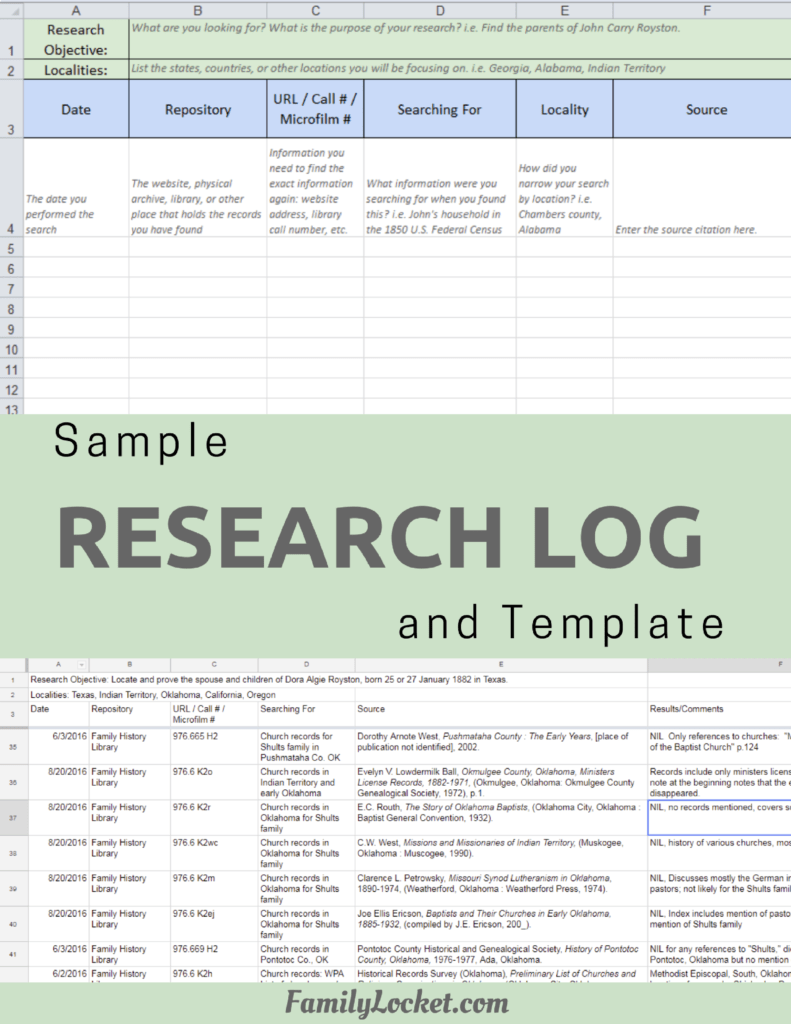
Do you have several research logs, reports, and other research tools for your ancestors that represent months or years of research? Do you ever forget that you’ve created a tool such as a timeline only to recreate it? I set up an Airtable base to track my research projects, and today am sharing my thought process. You can do something similar for your research. I’ve published my base under the title Track Your Ancestral Research...
Today’s episode of Research Like a Pro is an interview with Richard Miller, developer of the Goldie May research assistant application. He shares a new feature with us called the subway map. This tool is a timeline graph showing locations on the y-axis and times on the x-axis. It helps you see migration over time, spot errors, compare migrations of family members and FAN club members, and more. Transcript Nicole (3s): This is Research Like...
Would you like an efficient method to find clusters of DNA matches relevant to your research subject? In this series, I’m sharing the steps to create a network graph using the free, open source Gephi application, available for Windows or Mac. I use Gephi to create network graphs of my AncestryDNA matches, but you can use matches from other companies as well. Throughout this series, I will be using my own matches from AncestryDNA, but...
Today’s episode of Research Like a Pro is about Nicole’s research findings about Joanna West. This is a continuation of episode 216, where Nicole shared her preparatory steps for using DNA evidence to test the hypothesis that Barsheba Tharp was the daughter of Joanna West. She tells about the deeds and estate records she found for Humphrey Arnold linking him to his children and heirs. She also shares the DNA matches she found who...
You may have heard the terms endogamy, pedigree collapse, or multiple relationships as you’ve been learning how to use DNA with genealogy. What does your match list look like if you have any of these scenarios? What do your cluster results look like? How do you work with those DNA matches? What does this mean for your research and analysis? This article will help you understand each term and give you examples to digest. I’ll...
Today’s episode of Research Like a Pro is about Nicole’s research to test the hypothesis that Joanna West was Barsheba Tharp’s mother. She worked on this project for the 4th Research Like a Pro with DNA study group and shares her progress on each step. In this first part, Nicole shares her objective, clustering with Gephi, collaborating with a West researcher, the limitations of using DNA evidence for people who lived in the 1700s, making...
FamilySearch is adding new digital images every second from around the world. These images are being dropped immediately into FamilySearch but are not indexed and not added to the FamilySearch Catalog. If you’re not aware of this next place to search, you may be missing out on a valuable resource. In this article, I’ll walk you through FamilySearch Images and give you some tips on navigating the site. Accessing Images You can find the Images...
Today’s episode of Research Like a Pro is a discussion with Lisa Stokes about the Accreditation course she and Diana are teaching in 2023 for the Salt Lake Institute of Genealogy Academy. Diana also talks about the requirements to renew the AG credential and how she fulfilled those. Lisa talks about her plans to renew as well. Transcript Nicole (1s): This is Research Like a Pro episode 215 Renewing the AG Credential and SLIG...
Today’s episode of Research Like a Pro is an interview with Roberta Estes, author of DNA for Native American Genealogy. We talk with Roberta about strategies for discovering if the myths in your family about Native American heritage are true. We talk about federal recognition of tribes, documentary research, Y-DNA and mitochondrial DNA testing, and using ethnicity paintings of autosomal DNA segments to help isolate Native American DNA. Transcript Nicole (0s): This is Research Like...
Do any of your ancestral lines go back to the southern colonies of Georgia, Virginia, or the Carolinas? You may have wondered if it is even possible to research families in these difficult localities and times. Often all we need is a new perspective on the research – something that I gained in abundance in my recent course at the Institute of Genealogy and Historical Research (IGHR), which was coordinated by J. Mark Lowe. I’ll...