In this episode, Nicole and Diana discuss Phase 5, Part 5 of Diana’s ongoing research project to identify the biological father of Cynthia (Dillard) Royston. Diana evaluates three specific candidates who drew land in Cass County, Georgia, during the 1832 Gold Lottery: James Dillard of Pulaski County, Joseph B. Dillard of Oglethorpe County, and Tolliver Dillard of Burke County. Nicole outlines the project scope and historical context, highlighting significant record destruction caused by courthouse fires...
Initials can be one of the most stubborn obstacles in genealogical research. The first generation of my Kinship Determination Project (KDP) for certification is John Christian Harris and Malissa Welch. One of their daughters, Martha Rosetta Harris, married Benjamin Horton Moore (1856–1938). I planned to include his full name as Martha’s spouse in the couple’s child list. The trouble was that every source I found recorded him as either B. H. Moore or Ben H....
In this episode, Diana and Nicole discuss a challenging search for an Oklahoma death certificate. Nicole shares her experience trying to find the 1928 death record for Margaret Cinderella (Harris) Bone to complete her Kinship Determination Project. Despite knowing Margaret’s birth date, death date, and county, Nicole’s initial searches on the OK2Explore database fail. She explains how she eventually finds the record by removing the name entirely and searching only by gender, county, and the...
Newspapers contain multiple pieces of information we can use as evidence in our research. Articles add context, provide residence details, can establish relationships, and more. In my recent case study on Thomas Beverly Royston, newspaper articles offered important clues that led to a new research location and provided a plausible answer to a census conundrum. The following was written by Claude Opus 5 High based on a project I created. The project knowledge includes my...
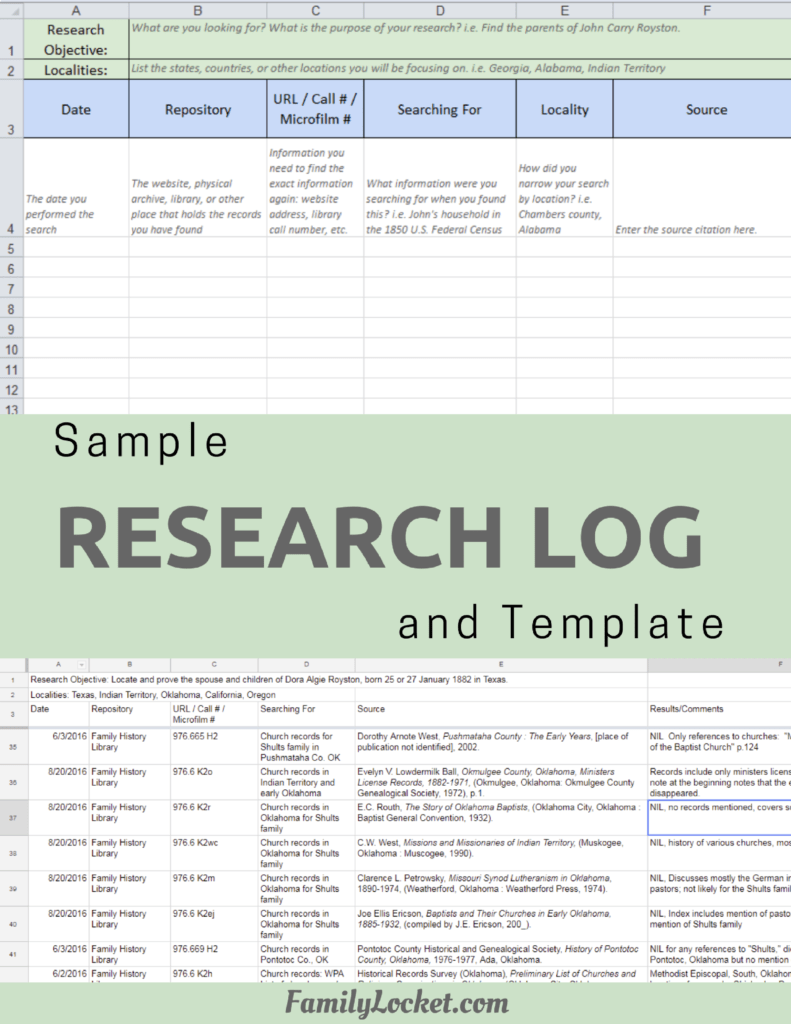
In this episode, Nicole and Diana discuss part 4 of Diana’s 5th project to search for the father of Cynthia (Dillard) Royston, focusing on research logging and source citations. Diana explains how she uses the Airtable template, “RLP with DNA 4.2 (2026),” to organize her project and enter data for key DNA matches. Nicole details the real-time logging process, noting how they enter data in either row or form views. To organize her research on...
Identifying naming patterns among ancestors and their relatives can be key evidence in proving relationships- but only if the records support it. One of my first research projects was the Royston line. My 2nd great-grandfather, Robert Cisney Royston, had a unique middle name that proved important in tying him to his Alabama and Georgia origins. It also provided the clue that set me on the path that identified the next generation of Roystons. In this...
In this episode, Diana and Nicole discuss Phase 5, Part 3 of the search for Cynthia (Dillard) Royston’s biological father. They review the known facts about Cynthia’s life using census, tax, and estate records, as well as death certificates of her children. Diana presents her hypothesis focusing on three Dillard men who drew lots in the 1832 Gold Lottery in Cass County, Georgia: James Dillard, Joseph B. Dillard, and Roliver Dillard. She explains how they...
When a marriage record cannot be found, how do you connect two individuals in the early years of the 19th century? In researching and writing about Thomas Beverly Royston and his family connections, I discovered more about his half-sister, Elizabeth “Betsy” Cessna. I had seen the name John Dawson connected with the Royston and Cessna records, but it wasn’t until I wrote my case study on Thomas that I finally formed a solid conclusion about...
Diana and Nicole interview Sam Morrison, a dedicated family historian who has researched his family lines for over two decades. Sam shares his motivation for creating TreeAlive, a free digital tool designed to transform static genealogical data into animated films that visualize family migration and historical context across maps. His extensive experience researching his roots in Ohio, Virginia, and abroad drives his interest in helping others see their ancestors’ journeys rather than just reading lists...
If you want other researchers to access your research, adding it to the collaborative FamilySearch Family Tree is an excellent idea. Because it is collaborative, you risk someone changing information or even merging identities incorrectly. Inversely, someone may create a duplicate record for a person, resulting in two profiles for the same person. With these challenges, what benefits does FamilySearch provide? First, it is completely free, and you can easily email the URL of a...