Genealogists have seen amazing advances in technology over the last 40 years. These advances have made many genealogical records more accessible and increased the speed of communication. But how has it affected our research habits? Do we fall victim to the random search-and-click hunting encouraged by the slot-machine effect? What can we learn from the pre-1980 era of genealogy research? How has the addition of DNA as a genealogically relevant source affected our research? Thomas...

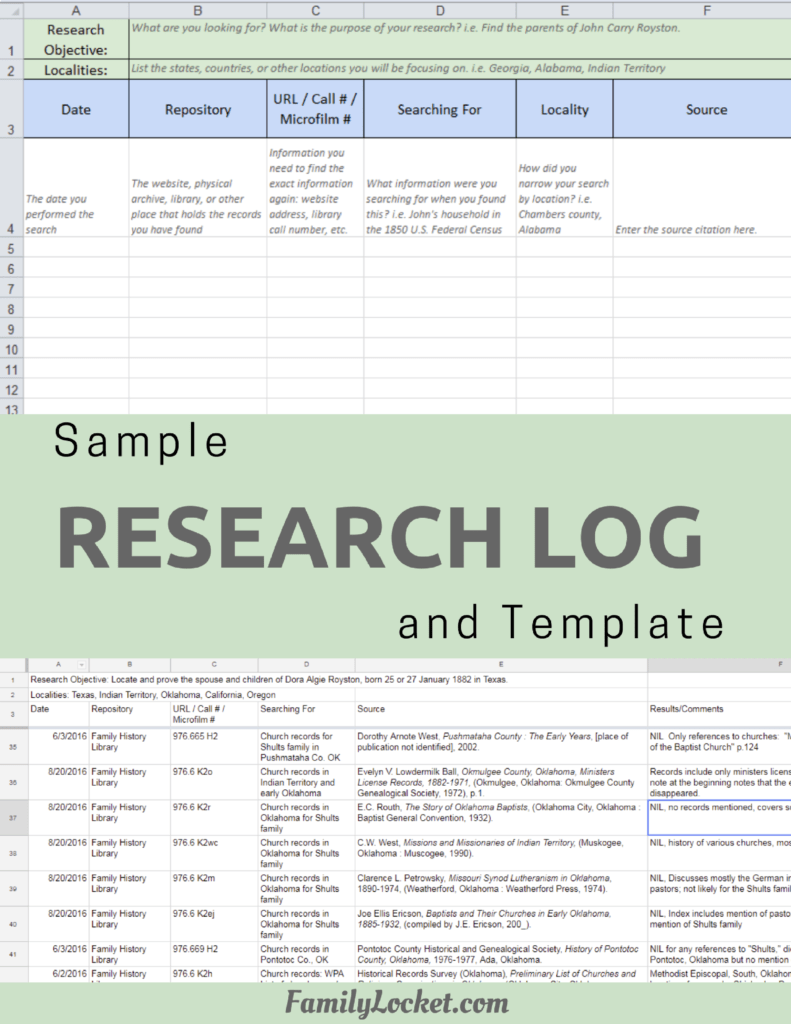
Today’s episode of Research Like a Pro is about how to use a research log in your genetic genealogy research. We discuss the sources and methods to include in your log, how to best keep track of your DNA matches, correspondence logs, and tech tools that will help you be efficient. We discuss how to use a database tool called Airtable to help you with big projects where you have a lot of DNA matches...

Is your genealogy society cancelling their monthly meeting due to the Coronavirus? One of our subscribers mentioned that her society would like to stay home and watch a webinar for their monthly meeting instead. She asked if we could provide a lecture for their society. We thought we would share our Research Like a Pro in 30 Minutes a Day recorded webinar for her and for any of you who are in the same boat....

Do you have an ancestor who emigrated from another country yet left no story about the why and how? Leaving a home and traveling to a new place, learning a new language and culture – these are significant events in our family story that can strengthen us in our own challenges. How do you discover the story of an ancestor? The Research Like a Pro process will not only help you organize a research project...

I have been reading How to Find Your Family History In U.S. Church Records: A Genealogist’s Guide, a new book by Sunny Jane Morton and Harold A. Henderson, CG. I just finished it, and I’m excited to share my thoughts about with you. Genealogical Publishing Company sent me a copy of the book to review. I am grateful for the opportunity to read the book and the motivation that having this task provided. When I received...

Today’s episode of Research Like a Pro is about how to find and use gazetteers in your genealogy research. Diana and Nicole discuss how to locate them using the FamilySearch Wiki, Google, and library catalogs, and what kind of helpful information they contain. They share several examples of helpful gazetteers, including Meyers Gazetteer for Germany, the U.S. Geographic Name Information System, Names in South Carolina, and more. Transcript Nicole (1s): This is Research Like a...

Today’s episode of Research Like a Pro is about how to analyze a record thoroughly and find clues for future research. Nicole is preparing her portfolio to submit to the Board for Certification of Genealogists, so we are discussing portfolio element 3 – Document Work – in conjunction with this subject. For this portfolio element, applicants are given a document to transcribe and analyze. We focus primarily on parts 3C, 3D, and 3E – creating...

Today’s episode of Research Like a Pro is about how to include contextual information in your genealogical writing. Whether you are writing a research report, proof argument, or a family history narrative, adding context will aid you. You may want to flesh out an ancestor’s life with details about their occupation and community, or add to your body of evidence by discussing the laws that prompted a record set’s creation. Tune in as we discuss...

Have you used DNA test results to help with your genealogy research? Maybe you’ve heard that you can verify ancestors with DNA. Or perhaps you have formed a hypothesis about a brick wall ancestor’s parents and would like to confirm it. You may want to identify the biological parents of a recent relative who was adopted. What is the best way to go about using DNA test results to meet these objectives? What tool could...

Today’s episode of Research Like a Pro is about how to create DNA source citations. We will discuss the importance of citing and saving DNA information, the citation elements described in Genealogy Standard #5, and how to cite DNA matches and tools using this formula. We give several examples of what each element could be, from the DNA testing company name, to the details about an mtDNA haplogroup. Join us to learn about how...