
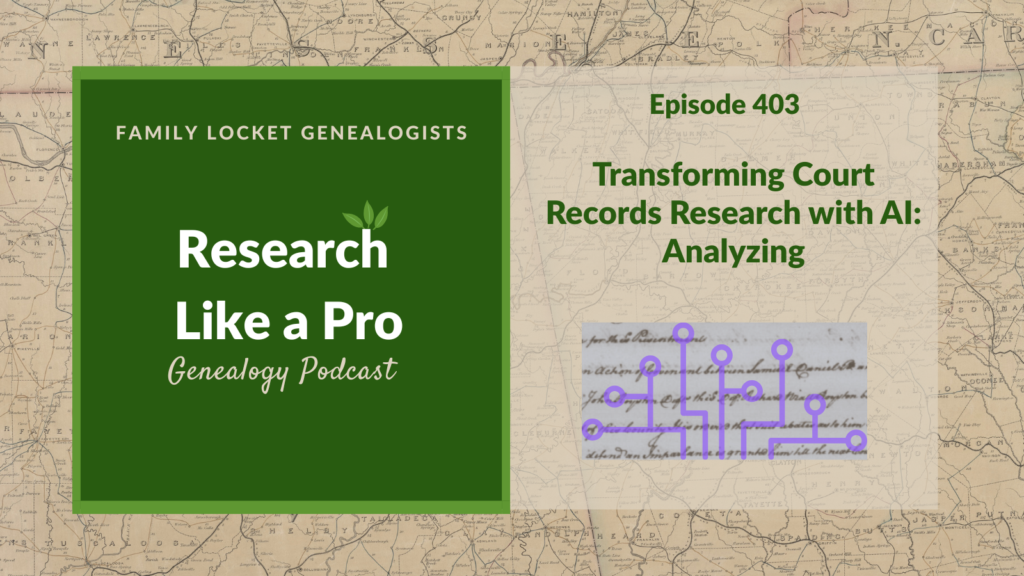
Diana and Nicole discuss the analysis phase of their AI-assisted research into the 18th-century court orders between Samuel Daniel and the Roystons in Colonial Virginia. They explain how AI helps them understand complex legal terms like “imparlance,” “covenant,” “trespass upon the case,” and “replevin bond” within the context of the court cases. Going through a case-by-case analysis, they trace the legal strategy that began after apprentice John Royston ran away from Samuel Daniel in 1770. They discuss Richard Wiatt Royston’s initial trespass suit, Daniel’s failed attempt to sue the minor John Royston, and the protracted litigation that ultimately led to Daniel successfully suing Richard as the apprenticeship guarantor, which resulted in a £10 award. They also analyze the execution on a replevin bond, which reveals details about Daniel’s financial struggle. Listeners will learn how to effectively use AI as an assistant to find, transcribe, interpret, and organize complex court records faster, without sacrificing the fundamental principles of sound genealogical research.
This summary was generated by Google Gemini.
Transcript
Nicole (0s):
This is Research Like a Pro, episode 403: Transforming Court Records Research with AI – Analyzing. Welcome to Research Like a Pro a Genealogy Podcast about taking your research to the next level, hosted by Nicole Dyer and Diana Elder accredited genealogy professional. Diana and Nicole are the mother-daughter team at FamilyLocket.com and the authors of Research Like a Pro A Genealogist Guide. With Robin Wirthlin they also co-authored the companion volume, Research Like a Pro with DNA. Join Diana and Nicole as they discuss how to stay organized, make progress in their research and solve difficult cases.
Nicole (40s):
Let’s go. Today’s episode is sponsored by Newspapers.com. Hi everyone, welcome to Research Like a Pro.
Diana (48s):
Hi Nicole. How are you doing today?
Nicole (50s):
I’m great. It’s good to be here and I’m excited that we get to talk about using AI with court records. That’ll be fun. We just came off such a fun conference at Roots Tech with learning all the fun things people are doing with AI. It was definitely one of the main themes that we noticed, so
Diana (1m 7s):
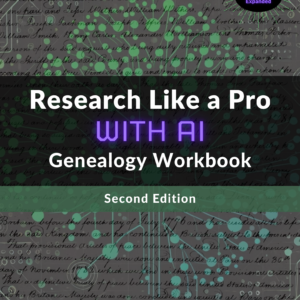
Oh absolutely, yes. AI was all over the place and we were excited to be there and to have our second edition a Research Like a Pro with AI available. And once again, we sold out pretty early. We did make it to Saturday morning first thing in the morning, but then they were gone for the rest of Saturday, so that was great. But the good news is it’s available on the website.
Nicole (1m 29s):
Yeah, and you can buy the ebook. We don’t like to print and ship books, so we just make it available for you to purchase as an ebook. And with the ebook you can get a print PDF that you can take to your print shop and we give you the cover files and you can get it printed and bound for yourself if you prefer it that way. But we’re just not really that good at shipping books, so that’s why we usually have our books fulfilled by Amazon, but we’re probably not gonna put this one into Amazon. We’re just selling the ebook. Hopefully you can get it printed yourself if that’s the format you prefer. And you know, it was interesting to, to like track my time working on the book and, and how many hours it took to write it last year versus how many to hours it took to update it this year.
Nicole (2m 10s):
And there have been so many updates and changes with AI that it took me longer to update it this year than it did to write it originally. So that was crazy.
Diana (2m 19s):
That is funny. But it makes sense because it’s getting more and more complicated as AI can do more and more. So I totally understand that.
Nicole (2m 30s):
Yeah, and even still, like I, it’s not possible to cover all of the things available that can help us with AI in our research, but I tried to touch on the ones that would be most useful as we’re going through the Research Like a Pro process with making a research plan and logging citations and writing a report. So that was kind of nice to have that focus.
Diana (2m 50s):
Right. And you don’t have to go into how to use it for every single scenario there could possibly be. We’re restricting to a pretty specific way to use it in genealogy. And of course there are always going to be people who are doing some fun experiments and using Claude code to build all sorts of cool little apps and things. But you know, we’re sticking to basics so that anybody can just jump in and start using it without having to do anything they’re uncomfortable with. I mean that’s the, that’s the purpose. That’s what we’re hoping we’re doing with it.
Nicole (3m 23s):
Yeah, And it seems like if you are a beginner, you can learn how to get started and if you’re intermediate, you’ve tried some AI tools, then it can give you some ideas for how to try some new things and move your research forward and be more efficient without sacrificing the accuracy that we need as Genealogists.
Diana (3m 39s):
Right. And to have a workbook that is telling you what to do and giving you sample prompts. You know, so many times we hear about these great things happening with AI but we’re just not sure exactly how to do it. And so it’s so great that that is all there now that you were able to pull everything together and just have a great resource for people.
Nicole (4m 1s):
Yeah. Well let’s do our announcements. We are, our Research Like a Pro webinar that’s coming up on Tuesday, April 21st is called Finding a Father for Elizabeth Adcock. And the presenter is Scott Dixon. He did such a great webinar last time, so we’re excited he’s gonna be back presenting more about his southern roots. And the description for this one is that Elizabeth Adcock was born about 1786 in Granville County, North Carolina. In 1805, she married Henry Vincent and the couple migrated to Rutherford County, Tennessee along with a number of relatives and associates. So far, no direct evidence has been located to definitively identify Elizabeth’s father and family of origin.
Nicole (4m 42s):
But ample documentary indirect evidence within the broader family and family network can help to identify her likely father. This case study makes strong use of locality, indirect evidence, and negative evidence to support its conclusion. So the topics include Granville County, North Carolina; Rutherford County, Tennessee, Wills & Estates, Tax Records, Census, Land Deeds, Indirect Evidence, Negative Evidence. While Scott Dixon has been pursuing genealogy research since the late 1980s when he inherited several family bibles and many letters including ones from an ancestor couple who went to Africa as missionaries in 1856. Whoa, that would be fun.
Nicole (5m 22s):
His research has focused primarily on the southeastern US with forays into early Massachusetts and French Canada on his wife’s side. He’s a member of the board of the Georgia Genealogical Society and a three time graduate of the Research Like a Pro study group. So we are excited to have Scott back for the webinar series. He works in IT sales and lives in the beautiful Charleston, South Carolina area. Well, we’re excited for this webinar and we hope that you can join us. And if you haven’t registered for our webinar series yet, you can still do do so and you’ll have access to the previously recorded webinars for the first few months of the year. Also, our next study group begins August, 2026. So if you’d like to register, we’ll open registration in May.
Nicole (6m 5s):
And if you wanna be a peer group leader, just email us or apply on our website. And being a peer group leader gives you a complimentary registration. Don’t forget to join our newsletter that comes out every Monday with an email about new posts and upcoming lectures and coupons that we’re running. We’re looking forward to the National Genealogical Society Conference on May 27th through 30th in Fort Wayne, Indiana. It’s home to the renowned genealogy center at the Allen County Public Library. So it’ll be fun. This will be our first time visiting that and doing a tour and doing some research there. The theme is America at 250, so that will be really fun and a lot of the talks are gonna be focused around that theme.
Nicole (6m 47s):
Mom, your topics are fun. You’re doing 1. Reconstructing Female Networks Through Antebellum Court Records and Property Transfers, as well as another court records lecture, 2. Uncovering Family Stories Through American Court Records: Research Strategies. And then I’ll be talking about d1. Decoding America’s Past: Using AI to Understand 250 Years of Historical Terminology, which is one of my favorite topics for AI, which I haven’t taught about that much. I taught about it at the Texas Institute last year and so I’m excited to to do that one again. It’ll be slightly different, obviously just the same type of idea. And then this next one is 2. From Colonial Virginia to Tennessee: DNA Reveals Barsheba Tharp’s Ancestry in America’s Westward Migration.
Nicole (7m 31s):
And this is one where I, I was all set to teach it a couple years ago, but then with the pregnancy that I was going through, I had some complications so I wasn’t allowed to travel to Virginia for that one, sadly. So now I get to do it for this year. And then my last one is a workshop 3. Deciphering Script & Scrawl: A Practical Workshop for Early Handwriting. And that’s just gonna be fun going over types of handwriting and we’re gonna be like using pens and pencils on paper to practice different scripts and different letter forms and just some basics there.
Diana (8m 4s):
Well, it’s exciting to look forward to our next conference After wrapping up RootsTech, now we’re looking forward to NGS and some different topics. And it is fun that I have two based on court records. One of them will really be about women and how court records and other types of records, land records specifically and tax records really, really figured out some women and their relationships and connections. And it’s very early in Georgia. So it’s, it’s a really fun case study And I, I’m excited because our topic for today’s podcast is about court records as well. So it’s something I’ve been doing a lot with ever since Full Text Search came out and I started finding these court records so much easier.
Diana (8m 47s):
Well, before we jump into our topic, we do have a listener spotlight by Barbara Coviello and this was for our 400th episode, but we had already recorded it so we told Barbara we would just read it later. So she says, “I know that your 400th podcast episode is approaching soon And I just wanted to share how much I’ve learned from listening over the years. In June of 2018, I retired from my career as a special education teacher 41 years. And one of the things I was most excited about was finally being able to devote more time to my genealogy and family history research. It has been a passion of mine since childhood. I was also looking forward to having more time to read for pleasure and as I set up a good reads profile that summer of 2018, I noted a post about your FamilyLocket Book Club.
Diana (9m 35s):
Intrigued, I checked out your website and signed up for the RLP eCourse that September of 2018. I also started listening to your podcast. I can’t tell you what a difference you’ve made in my education as a Genealogist. I look forward to every podcast episode. and proudly, proudly display my RLP eCourse certificate on the wall near my desk. Thanks for all you do and congratulations on your 400th episode.” Well Thank you so much Barbara. We are just thrilled to know you and have you be part of our Research Like a Pro community. It just is exciting to hear that we have helped you. That’s wonderful.
Nicole (10m 11s):
I love that she saw our post about the book club. That’s so fun. And you’re still adding to those books on Good Reads and I always find good ideas for me to listen to on Audible from your book club choices, so thanks Mom.
Diana (10m 27s):
You are welcome. You know, when I first started it, I was doing one a month if you can believe it, and then that just became too many. So I went to one a quarter. So every quarter I do a blog post about a book I’ve read that has some connection to family history research or telling stories. And it’s been so fun. Sometimes I have corresponded with the author and they’ll come write a little blurb and sometimes I haven’t reached out in time to get that done ’cause they’re always very busy people. But it’s always fun and I love looking for books and we do have a whole list on there so you can go check it out. Some of them we haven’t focused on yet, but they’re just possibilities.
Diana (11m 8s):
So it’s always fun.
Nicole (11m 9s):
Well, you do read at least a book a month though, because you’re in two book clubs, right?
Diana (11m 12s):
Yes, I am in two book clubs, so I do, I do two books a month, but then I’m, I’m always listening to books and so one of my book clubs we trade off hosting and then presenting books that the group can choose. And so we always have four selections for every month and we choose one of those. But I will order all all of the selections And I often end up reading or listening to almost all of them eventually because they’re all good books but we can only choose one.
Nicole (11m 44s):
You usually get ’em from the library, right?
Diana (11m 47s):
Oh yeah, I hit the library and then I have the Libby app for all of my audio books. So I am such a proponent of libraries. I was so thrilled when our town that I live in now, Highland, Utah, got a library. They hadn’t had one for years and a few years after we moved here they put in a library. Before that I would have to travel to different places to other libraries where I could be kind of a guest. Some libraries will let you have a card and you pay a little extra and then you can use their library system. So anyway, now it’s just down the street and it’s so easy and they’re amazing. They are always getting new books. It’s just such a wonderful service.
Nicole (12m 26s):
It is. I love our library system here in Tucson with the Pima County Library System. It’s a lot like the one where when we were in Seattle growing up where it’s a whole countywide system and you can go to any of the libraries and order books from any of the libraries. And I also love that interlibrary loan. I know I’ve probably talked about this before, but I’ve done a lot of genealogy requests for materials through interlibrary loan with our library and it’s always so convenient to get those right to my local library.
Diana (12m 54s):
I agree, yes. There’s no reason to buy a lot of books when you have a library right there. And you can get a lot of books read if you are listening while you are doing yard work, in my case, or making dinner, doing dishes, cleaning house. I was laughing with someone at RootsTech who she loves listening to our podcast and she said, yes, I get so much cleaning done because I don’t wanna stop listening so I find something else I can clean. And I have certainly done that looked around and thought, oh maybe it’s time to do some baseboards. You know, some of those things that you never clean unless you really wanna keep listening to your book or your podcast.
Nicole (13m 30s):
Yeah, if the book is really enticing, I’ll keep cleaning but usually I don’t want to clean that much, so
Diana (13m 36s):
We have too many other fun things to do. Right? Like research.
Nicole (13m 41s):
Like research. A hundred percent.
Diana (13m 42s):
Yep. Well now that we have digressed all about libraries, let’s, and cleaning, let’s get to our topic. So we are following up with this series. We started it in the last episode and in this one we’re following up. So part one of court records, we learned how AI assisted my research on finding, logging and organizing a series of court records between Samuel Daniel and my Roystons. In this episode we are going to go through those cases and see how AI can help us understand legal context of the court terms. So I had written previously about John Royston, my runaway apprentice, and I wrote that in a, a blog post and we also did a podcast episode about him and I had not previously researched Samuel Daniel who had apprentice John.
Diana (14m 33s):
And so I decided this would be perfect for our 14 day challenge. And so I set my objective to be, research Samuel Daniel of Virginia who advertised for his runaway apprentice, John Royston, in the Virginia Gazette in 1770. Samuel Daniel was likely born before 1740 in Virginia. John Royston was born 1750 in Gloucester County, Virginia and died after 1816 in Georgia. So Samuel Daniel had referenced Middlesex County, Virginia in his advertisement. So my research plan was to review church, court, tax and land records, and the court records turned out to be a great boon using FamilySearch’s Full Text Search.
Diana (15m 14s):
I found 12 court orders in the order books between the Roystons and Samuel Daniel. And so it was one thing to transcribe and log those records, which of course I used AI to help me, but then I needed to understand what actually was happening and the language and legal implications was was tricky. So for this part of the project I used Claude AI to help with that analysis and understanding.
Nicole (15m 41s):
Well AI had transcribed the court records, but what did the terms “imparlance,” “covenant,” “trespass upon the case,” and “replevin bond” actually mean? Well rather than spending a lot of time researching 18th century legal terminology, it was a great time to ask Claude to explain each term in the context of this case. So AI not only can help transcribe but then can help give some clues about what the meaning of these words are. Well, Claude AI explained that Imparlance meant the defendant was granted additional time to respond, kind of like a continuance. Covenant referred to a breach of contract, the apprenticeship indenture.
Nicole (16m 23s):
Trespass upon the case was an indirect tort action for damages, and replevin bond allowed Daniel to recover seized goods by posting security. What was even better was that Claude analyzed the entire sequence of cases to reveal the legal strategy going on and Claude was able to explain why Richard Wyatt Royston initially sued Daniel, possibly a counterclaim to offset expected damages, and why Daniel’s first attempt to sue Richard failed, which was due to jurisdictional issues because Richard lived in neighboring Gloucester County and why the final verdict awarded Daniel 10 pounds and that’s compensation for lost labor and breach of the apprenticeship contract.
Nicole (17m 10s):
So not only can Claude help us figure out what words mean in the context of the historical record, but Claude and other AI tools can also give us some ideas for why these things are happening that we can then happen, you know, kind of use as a hypothesis to research further.
Diana (17m 26s):
Right. I was initially confused because you would think it would just be Samuel Daniel suing the Roystons because John had run away, but then here was the dad, Richard Wyatt Royston suing Daniel. So it was confusing to me to see all the different parties at play. It wasn’t what I had expected. Basically here is the narrative and AI assisted in helping me understand. So in 1770 we have apprentice John running away from Master Craftsman, Samuel Daniel. And it appears that he, Daniel, tried non-judicial remedies such as the newspaper ad for three years, but negotiations likely failed.
Diana (18m 9s):
We don’t know for sure, but litigation began in April of 1773 and then both parties, as I said, were suing each other in this complex series of cases where Daniel ultimately won 10 pounds in damages. But then he also lost a separate five pound case to to Roystons. And so one of the things that was interesting was it did reveal his occupation as a shop joiner and AI explained that was a fine woodworker and cabinet maker. So could I have done this without AI? Well of course I could have worked on that, but piecing together the story would’ve required much more time.
Diana (18m 49s):
And you know, all of this work was finding the records, transcribing the clerk’s abbreviations, researching legal terminology and analyzing the proceedings. So AI really compressed this timeline dramatically and improved accuracy. I am not a legal scholar, I’m not an attorney. And so this helped to have AI’s knowledge and data that it’s been trained on to help me understand And it also added some possible scenarios when the records left a void. I think that’s one of the challenging things when we have a court case because all of a sudden it seems to happen out of the blue and we don’t have all the backstory, we don’t know what was going on.
Diana (19m 33s):
And so sometimes it’s just nice to have some ideas even though we would not say for sure it’s what happened.
Nicole (19m 44s):
Absolutely. That’s great. All right, well let’s dive deeper into kind of what AI did as far as giving us more details as far as how the court case kind of played out. And this is just so helpful to see how, So it’s really fun to see what the AI can do with the transcript of this court case and then kind of give us more of a narrative that that describes what happened. So it said the court cases from 1773 to 1774 represent the legal aftermath of John Royston’s 1770 desertion from his apprenticeship to Samuel Daniel. What appears as a confusing series of lawsuits becomes clear when understood as an escalating dispute over a broken apprenticeship contract and its financial consequences, the legal framework apprenticeship and denture as contract.
Nicole (20m 40s):
No record has been discovered for the original indenture, but one between Thomas Perry and Samuel Daniel in 1764 provides the standard apprenticeship terms. So this is really cool to see how it might’ve worked. It says binding contract between father/guardian and master. Father signs as guarantor. Freedom dues owed at completion, six pounds for Thomas Perry, and specific behavioral requirements and obligations. So when John Royston ran away in 1770, both he and his father, Richard Wyatt Royston, were in breach of of this covenant or contract.
Diana (21m 16s):
Right. I was really excited to find that because I wanted to know what the terms were for this time period between someone whose apprentice, an apprentice, you know what, what would that look like? And so I thought that was very helpful to have one that Samuel Daniel had used just a few years before and I’m sure the one with John Royston was very, very similar. So you know, sometimes you just have to think outside the box and go see what else you can find that can help you understand the case. Well let’s take a break and have a word from our Sponsor. Are you ready to take your family history research beyond names and dates? If so, Newspapers.com is a game changer for genealogists of all levels.
Diana (21m 57s):
With access to over a billion pages of historical newspapers, you can uncover rich untold stories about your ancestors that you won’t find anywhere else. Imagine discovering a detailed obituary that reveals the extended family, or a local news story that highlights your great-grandmother’s role in the community. Maybe you’ll come across a photo capturing a moment in your ancestors’ life, something that brings their story vividly to life. Newspapers captured the everyday details: announcements, happenings, achievements and challenges that paint a fuller picture of who your ancestors were and what their world was like. These primary sources reveal the social history behind the names on your family tree and help you connect with your past in a personal, meaningful way.
Diana (22m 43s):
Searching is simple and intuitive, letting you explore by name, location, or date to unearth those hidden gems. Ready to enrich your research with stories you won’t find in traditional records? Visit Newspapers.com/FamilyLocket today and get 20% off a subscription. Start turning your family tree into a family story. Well I will just note here that without that newspaper advertisement I wouldn’t have even known to go looking for this information in the court records. So I love that sometimes newspapers give us just the clue we need to go find more records.
Nicole (23m 16s):
Yes, that’s such a great point. I love that.
Diana (23m 19s):
Well let’s jump back into our court record analysis here. So why the three year delay? Because John runs away 1770, the court records don’t start till 1773. So as I mentioned before, Samuel Daniel likely just tried multiple remedies. The newspaper announcement had said that he could be in several different counties, so he obviously knew something about John and where maybe his acquaintances were. So I’m sure he would tried everything he could to recover his apprentice before he actually went to the court. He had offered 30 shillings for a reward for any news about John. And you know, the records are just silent unfortunately for those three years.
Diana (24m 3s):
But it’s likely that he kept trying to find John and that he reached out to his father, Richard Wyatt Royston for compensation and that he possibly accepted partial payments that later stopped and that he gave time for John to return voluntarily. So those are all things that are a little speculative, we’re not exactly sure, but in 1773 any type of negotiations that he was trying to do without resorting to the courts broke down and started this litigation.
Nicole (24m 37s):
Well I love this so far it’s been fun to see how Claude has created this very nice overview and timeline. So let’s continue with the summary of Claude. The next section is case by case analysis April through June, 1773. Richard Wyatt Royston versus Samuel Daniel Trespass. So what trespass upon the case means it says indirect tort action for damages. Richard Wyatt Royston claims Samuel Daniel harmed him somehow. Like what was the reason? So here we have some possible scenarios which is really nice because sometimes we can’t imagine like what could it be?
Nicole (25m 18s):
But with all of the training data that the AI has, it’s read a lot of things about this before. So it’s kinda like talking to an attorney who has some ideas. So one of the scenarios is defamation. Richard claimed the runaway advertisement or Daniel’s statements damaged his reputation. So that could be another one is property dispute related to goods or money from the apprenticeship. So we don’t know what the actual harm was that Richard Wyatt Waston claimed but could be those. Then we have a counterclaim and this is a strategic lawsuit to off Daniel’s expected covenant suit and then we have some interference.
Nicole (26m 1s):
Maybe Daniel interfered with Richard’s property or business. And so the outcome was that Richard won five pounds, one shilling and 2d, whatever that means. What’s a d?
Diana (26m 11s):
Pence. It stands for Pence.
Nicole (26m 13s):
Pence? Okay. A relatively small amount suggesting either the claim had some merit or a compromise verdict by the jury.
Diana (26m 20s):
Right. Isn’t it interesting how in these court minutes you get these hints at what might have happened but you don’t get the full story? You know, we wish we just had that court case transcribed word for word. It would’ve been so fun, you know, to have all the testimony back and forth, but we don’t get that. We just get what we get, which we are grateful for that at least.
Nicole (26m 40s):
Right. And it kind of makes you wonder, was John just like lazy or was he rebellious? And then the fact that his dad was like suing the guy back kind of makes it seem like he was defending his son and like was on his son’s side, although he was part of the, you know, original apprenticeship contract. So it’s like what happened? You know, was John being mistreated or was he just rebellious? And his actions later in life kind of seemed like he just liked running away from stuff that he didn’t like or that was hard.
Diana (27m 11s):
Right. We have a pattern that, start, maybe started here. So the next little bit we have is that from May to October in 1773 we have another case which is actually Samuel Daniel versus John Royston. And this is a covenant case. So this means that Daniel sued John directly for the breach of the apprenticeship contract. John as the apprentice was a party to the indenture and it was dismissed in October, 1773 because John was a minor when he ran away. He was 19 years old when he ran away. So the legal principle according to Claude was that the father or the guarantor was the primary obliger, not the minor apprentice.
Diana (27m 58s):
John recovered his cost suggesting the court found Daniel’s suit against the son was inappropriate and then the court redirected Daniel to sue the father, the guarantor instead. So that makes sense. So we do have in May, 1773 Samuel Daniel versus Richard Wyatt Royston and John Royston this time, both of them together in another covenant case. And the initial attempt failed. Daniel was trying to sue both the father and son together, but there was a problem, Richard was returned in the records as not an inhabitant of this county. So there was a jurisdictional issue.
Diana (28m 39s):
Middlesex county court did not have jurisdiction over Richard because he was a resident of Gloucester County. So the suit was abated or dismissed as to Richard. And this perhaps explains why Richard’s non-residency was documented and why separate suits were necessary and why the litigation became so protracted.
Nicole (28m 60s):
Interesting. I was just thinking about the fact that John was considered a minor and then I was like well he is 19, when did that change? So I was just looking that up that minors were under 21 in in the 1770s And it wasn’t until the 1970s that the age of majority changed to 18 in the US, sounds like. So,
Diana (29m 24s):
Okay,
Nicole (29m 25s):
I need to keep reading on Wikipedia, but it’s talking about different, you know, requirements for driving, purchasing alcohol and different things like that, voting age, all those kind of things. And it does, it does sound like it depends on the state.
Diana (29m 39s):
Hmm. Right. So apparently in Virginia you could not sue a minor.
Nicole (29m 42s):
Yeah. And those kinda things are so helpful to have that background historical context that AI can help you understand and then you can go, you know, look into the actual laws and find the sources. But you know, it would be really difficult to figure this court case out without a little help.
Diana (30m 2s):
Exactly.
Nicole (30m 2s):
Okay, so we’re on to October, 1773 to March, 1774: Samuel Daniel versus Richard Wyatt Royston, Covenant broken. So this was a successful suit. Daniel correctly sued Richard as a guarantor of the apprenticeship instead of John and the jurisdiction established and Richard appeared and defended. So in March of 1774 the verdict was that 10 pounds was awarded to Samuel Daniel and that 10 pounds likely represents the loss of labor of three to four years of unpaid apprentice labor lost. So from 1770 to 1773. And the challenge here is that Daniel, Samuel Daniel, probably spent time training his apprentice John and then investing that time and the materials training him and then John ran away.
Nicole (30m 49s):
And so, you know, it’s kind of like the idea that if he would’ve stayed, he would’ve gotten that labor and the investment would’ve paid off. But, but because he didn’t stay then he lost that investment of work that he put in. So then there’s the freedom dues and that’s the money that Samuel Daniel would’ve paid at the completion compared compare that to Thomas Perry’s six pounds from that contract that that you found. So the possible damages are the cost of finding a replacement apprentice apprentice. And then why was Richard liable? Well, as the father, he had signed the indenture as the guarantor. So when John breached the contract by running away, Richard became financially responsible.
Nicole (31m 34s):
And so that’s a standard legal principle in apprenticeship law
Diana (31m 38s):
And that that makes you realize why there would be a contract because I’m sure this wasn’t the first time an apprentice ran away. And you know, if you are teaching training someone investing in them and then they run away, of course you need to have some compensation for that and you need to fall back upon a contract. So it all makes sense, doesn’t it?
Nicole (32m 3s):
Yeah.
Diana (32m 4s):
Well we also have in February, 1774 another case which is an execution on a replevin bond. And when I first saw the term replevin in the transcription, I thought it was maybe not a correct transcription, but it actually is a word and it means to recover. So after Richard won five pounds, one shilling, two pence in June, 1773, he sought to collect on that and Samuel Daniels goods were seized, taken in execution is the term. And then Daniel posted a 19 pound, two shilling, one pence bond to replevy, or recover his goods, and the court ordered execution on the bond.
Diana (32m 51s):
So we have this initial bond of the 19 pounds, two shillings, one pence, and it was dischargeable by nine pounds, one shilling, one pence plus interest from August 12th, 1773. So what does all this mean? This seems so confusing to me, but AI helped to, to make it a little bit more understandable that Daniel was struggling financially to pay that June, 1773 judgment and he had to pay nearly double the judgment amount as a bond interest had accrued from August 12th, 1773. And that suggests that the payment was due then.
Diana (33m 33s):
So it looks like Samuel Daniel is really having issues financially and so he’s got some problems going on here.
Nicole (33m 42s):
Yeah and you know, it kind of reveals like a difference between the the Roystons and Samuel Daniel and it makes you wonder if they were, I don’t know, like were they in the same social class or maybe they were maybe not, but it definitely seems like Samuel Daniel was struggling to pay. But it’s interesting because he would’ve received more of a payment than he had to pay to Richard Wyatt Royston, which just interesting to think about both their finances and that kind of thing.
Diana (34m 16s):
I know.
Nicole (34m 17s):
Do you know if Richard Wyatt Royston had other children or do you just know about John?
Diana (34m 23s):
There are other children that we think perhaps are attributed to him. The problem is that Gloucester County has catastrophic record loss and so literally nothing remains in this era for county court. So any probate land records, anything that would be at the county courthouse is gone. But Richard Wyatt Royston is in the church records at this time. The Anglican church was in charge and they’re the vestry books. It was Petworth Parish vestry books And it, that is one of the parishes where the vestry books are intact, which is why we know so much about this family. And Richard is in those a lot.
Diana (35m 5s):
So he was, he must have been, you know, of a social class that he was part of that governing board and he is doing all sorts of different things within the, in the church parameters. And so I do get the sense that perhaps he could have been a little bit higher social class than Samuel Daniel, not sure, but I do get the sense that perhaps that that’s the case. He is, Richard Wyatt is the grandson or great-grandson, we’re not sure how many generations, of the original Thomas Royston who comes to England and gets thousands upon thousands of acres of headright land there in that area.
Diana (35m 46s):
So the family was an old family, they’d been established there for a long time. And perhaps Samuel Daniel was a later transplant from England, you know, coming over and making his way and you know, he was a shop joiner and he’s bringing on apprentices and he, it’s him versus this family that’s very established, been there for, well a hundred years at least. So that’s just some of the, the background context that I have gleaned from, from the, the sparse records that we have about this family and what we know kind of about the historical context of the time.
Nicole (36m 24s):
Right. And it would be fun to dive deeper into that and understanding, you know, why might somebody apprentice their son out? Was the son rebellious? Was he difficult? Maybe that’s why he was like, okay, you gotta go over here and learn a trade ’cause you’re not doing what I say. Or maybe that was just like a good path to follow and maybe that’s what he wanted to do. Who knows?
Diana (36m 46s):
Well, and also consider the time 1770. We’re not into the full blown revolution yet, but you know, things are a little bit unstable with England and the colonies and perhaps the Royston fortune was diminishing, you know, that land gets parceled out among different sons and inheritors. And so perhaps there really was a need for John to go learn a trade, but I really am strongly leaning towards the side that he was rebellious and the dad just wanted him outta the house and he needed to go learn something else just based on his, on the rest of his life and his life story that we see going forward.
Nicole (37m 27s):
Right.
Diana (37m 28s):
We may never know.
Nicole (37m 29s):
Well, this was fun. It’s fun to think about the possibilities.
Diana (37m 34s):
It was really amazing to have AI to help me with this whole scenario of the court records. I was excited to find them, but as I was looking at them, I realized that, man, this is confusing. So these court records have always been treasure troves of genealogical information. They just were really difficult in the past to access them. And AI with full tech search on FamilySearch makes it easy to find them now, which is amazing. And then the tools in helping to transcribe and abstract and understand them. And I think that as AI becomes more sophisticated, we’ll see even greater possibilities.
Diana (38m 13s):
You know, searching across multiple jurisdictions is amazing. I should have thought of course that Middlesex County could be researched for Samuel Daniel, but I just hadn’t done that. You know, here we have a county that’s has no records in Gloucester County and then we have Middlesex County, which has all their records, you know, and their neighboring counties. It’s just so interesting to see the differences. So you know, going forward with AI, we’ll see it getting even better with translation and interpretation of records in all different languages and pattern recognition across thousands of cases, you know, to help us identify these social networks.
Diana (38m 55s):
So this research that I completed in just two weeks as part of that 14 day challenge, hopefully gives all of you listening an idea of what you can do today, what maybe would’ve taken months or years of courthouse visits can now be accomplished from home in days. And we still get all of that good scholarly rigor that AI can give us because of what it has been trained on and how it can interpret. So really the thing that we always talk about is using it as our assessment assistant, not a replacement for traditional genealogical methods. We, we can use it to find the records faster, understand them more deeply, and to organize them more effectively.
Diana (39m 40s):
But we always verify, we always document what AI is telling us, and we always apply the fundamental principles of sound genealogical research. So this was so fun to talk about. It was fun to research and I am excited to go forward with looking for more court records for these early ancestors because they are all over the place in the courts. You just sued people right and left And it was just what they did, and we could find them so much more than we would, you know, like contemporaneously. We don’t think right now, you know, to go sue our neighbor immediately. But it seemed like they kind of resort resorted to the courts to help them with all sorts of small things.
Diana (40m 23s):
And we can find our people there now easier than ever.
Nicole (40m 27s):
Well, that’s so true and thanks for going through all those takeaways as far as you know, what we can do going forward with AI as our assistant to help us with our research and understanding context and things. So that was fun And I hope you all have a great week. We’ll talk to you again next week and good luck with incorporating AI into your research.
Diana (40m 49s):
All right, thanks for everyone listening and we will talk to you next time. Bye-bye.
Nicole (40m 55s):
Bye. Thank you for listening. We hope that something you heard today will help you make progress in your research. If you want to learn more, purchase our books, Research Like a Pro and Research Like a Pro with DNA on Amazon.com and other booksellers. You can also register for our online courses or study groups of the same names. Learn more at FamilyLocket.com/services. To share your progress and ask questions, join our private Facebook group by sending us your book receipt or joining our courses to get updates in your email inbox each Monday, subscribe to our newsletter at FamilyLocket.com/newsletter. Please subscribe, rate and review our podcast. We read each review and are so thankful for them. We hope you’ll start now to Research Like a Pro.
Links
Transforming Court Records Research with AI: A Case Study from Colonial Virginia Part 2: Analysis – https://familylocket.com/transforming-court-records-research-with-ai-a-case-study-from-colonial-virginia-part-2-analysis/
Sponsor – Newspapers.com
For listeners of this podcast, Newspapers.com is offering new subscribers 20% off a Publisher Extra subscription so you can start exploring today. Just use the code “FamilyLocket” at checkout.
Research Like a Pro Resources
Airtable Universe – Nicole’s Airtable Templates – https://www.airtable.com/universe/creator/usrsBSDhwHyLNnP4O/nicole-dyer
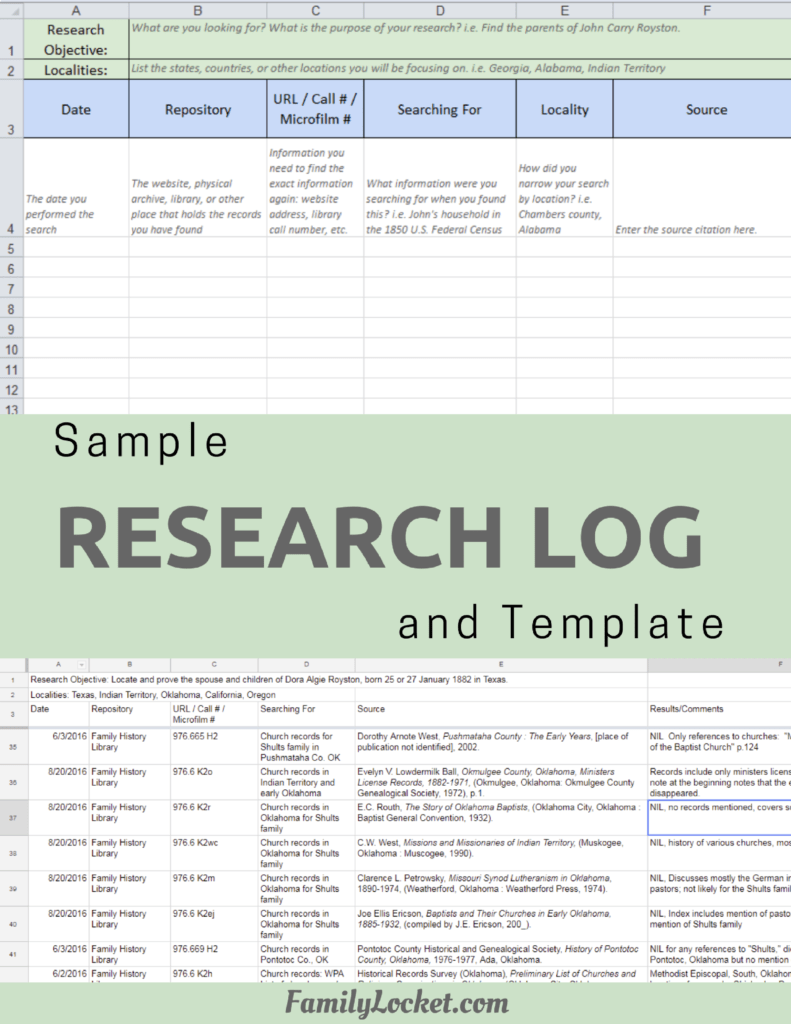
Airtable Research Logs Quick Reference – by Nicole Dyer – https://familylocket.com/product-tag/airtable/
Research Like a Pro: A Genealogist’s Guide book by Diana Elder with Nicole Dyer on Amazon.com – https://amzn.to/2x0ku3d
14-Day Research Like a Pro Challenge Workbook – digital – https://familylocket.com/product/14-day-research-like-a-pro-challenge-workbook-digital-only/ and spiral bound – https://familylocket.com/product/14-day-research-like-a-pro-challenge-workbook-spiral-bound/
Research Like a Pro Webinar Series – monthly case study webinars including documentary evidence and many with DNA evidence – https://familylocket.com/product-category/webinars/
Research Like a Pro eCourse – independent study course – https://familylocket.com/product/research-like-a-pro-e-course/
RLP Study Group – upcoming group and email notification list – https://familylocket.com/services/research-like-a-pro-study-group/
Research Like a Pro Institute Courses – https://familylocket.com/product-category/institute-course/
Research Like a Pro with DNA Resources
Research Like a Pro with DNA: A Genealogist’s Guide to Finding and Confirming Ancestors with DNA Evidence book by Diana Elder, Nicole Dyer, and Robin Wirthlin – https://amzn.to/3gn0hKx
Research Like a Pro with DNA eCourse – independent study course – https://familylocket.com/product/research-like-a-pro-with-dna-ecourse/
RLP with DNA Study Group – upcoming group and email notification list – https://familylocket.com/services/research-like-a-pro-with-dna-study-group/
Thank you
Thanks for listening! We hope that you will share your thoughts about our podcast and help us out by doing the following:
Write a review on iTunes or Apple Podcasts. If you leave a review, we will read it on the podcast and answer any questions that you bring up in your review. Thank you!
Leave a comment in the comment or question in the comment section below.
Share the episode on Twitter, Facebook, or Pinterest.
Subscribe on iTunes or your favorite podcast app.
Sign up for our newsletter to receive notifications of new episodes – https://familylocket.com/sign-up/
Check out this list of genealogy podcasts from Feedspot: Best Genealogy Podcasts – https://blog.feedspot.com/genealogy_podcasts/


Leave a Reply
Thanks for the note!