Diana and Nicole discuss how genealogists use artificial intelligence to transcribe handwritten, foreign-language historical documents. They review feedback from a survey regarding experiences with various AI tools, including Transkribus, Gemini, ChatGPT, Claude, and Leo. The researchers report positive experiences, with average accuracy ratings between 7.5 and 8 out of 10. Listeners learn which languages, such as Spanish, German, French, Latin, and Scandinavian, are commonly processed through these tools. The discussion highlights that while AI excels...

Nicole Dyer and Diana Elder explore Leo, a powerful handwritten text recognition platform designed specifically for researchers. Nicole interviews the creator, Jon Cooper, a PhD candidate at Stanford who developed the tool with a machine learning expert to address the difficulty of transcribing complex Elizabethan manuscripts. Listeners learn how Leo differs from general AI models by prioritizing faithful, accurate transcriptions of handwritten text rather than guessing words. The platform offers specialized features for genealogists, including...

Diana Elder and Nicole Dyer discuss the evolution of AI Handwritten Text Recognition (HTR) tools, focusing on the platforms Nicole explored at RootsTech. They evaluate several key technologies used to decipher historical manuscripts. They discuss Kindex, which provides highly accurate transcriptions and a side-by-side editor for corrections. They also review Leo, an AI platform that handles secretary hand effectively and offers a side-by-side editor, though users should watch for minor hallucinations. Transkribus serves as a...

Diana Elder and Nicole Dyer examine the current capabilities of artificial intelligence for mapping historical land records. Nicole tests ChatGPT’s ability to convert a metes and bounds description from an 1788 Arnold-West deed into an accurate land plat drawing. She compares the AI-generated results against a verified plat she previously created using DeedMapper software. Nicole experiments with several prompting strategies, including simple prompts, chain-of-thought, and meta-prompting. She discovers that while basic image generation struggles to...

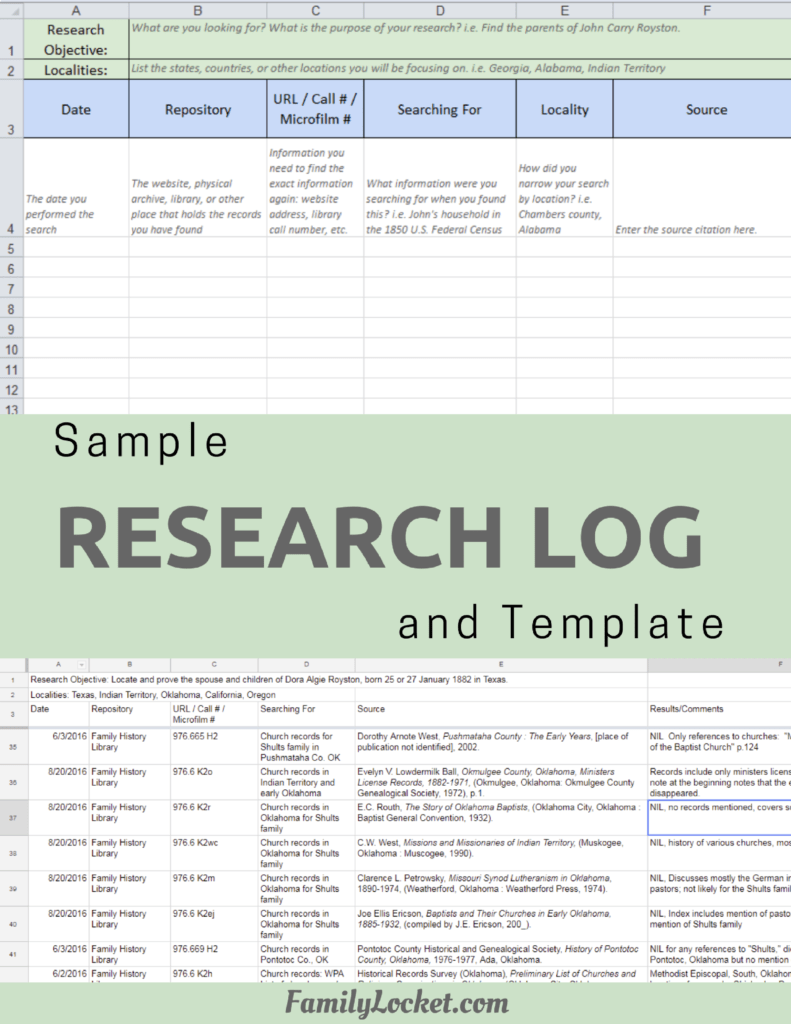
Hosts Nicole and Diana discuss using Claude’s Custom Skills to automate genealogical report writing. Nicole begins by sharing her previous, challenging attempt to transform a Baldy Dyer research log spreadsheet into a research report using earlier Claude models. Diana provides an overview of Claude, noting its models (Haiku, Sonnet, Opus) and new features like Custom Skills, which are similar to Custom GPTs. Nicole explains that she set up a Custom Skill to convert spreadsheet files...

If you’ve ever stared at a page of Kurrent script or a faded colonial Spanish church record and wished for a little help, you’re not alone. As you know, handwritten text recognition is one of my favorite topics—but I mostly research documents created in English, so when it comes to foreign-language records, I wanted to learn from all of you. I asked in the April 6 Family Locket newsletter: Have you been using AI to...

This episode focuses on the newly updated second edition of the Research Like a Pro with AI genealogy workbook. Nicole and Diana discuss how the book shifts its attention from early 2025 models to the most powerful models available in mid-February 2026, specifically ChatGPT 5.2, Claude Opus 4.6, and Gemini 3. Diana highlights the most significant change, which is the introduction of “agentic” browsers, including Claude in Chrome, Perplexity Comet, and ChatGPT Atlas. These autonomous...

This episode features guest Richard Miller, who discusses the Goldie May AI assistant. Richard explains the AI assistant was added to provide genealogists with an injection of brain power when they feel stuck on a family line. He says the tool helps users find answers by proposing different thinking options. They discuss how the tool assists with core research tasks. The AI assistant helps with research objectives by reviewing sources for gaps and performing pedigree...

Nicole and Diana open the episode by discussing Claude in Chrome for Pedigree Triangulation before introducing their interview with Mark and Steve about AI, who host the Family History AI Show. Mark Thompson also runs the Making Family History blog, and Steve Little writes on his Substack, Vibe Genealogy AI. Steve is the AI Program Director for the National Genealogical Society. They both teach widely about AI topics and family history, including their own courses....

Diana and Nicole discuss the analysis phase of their AI-assisted research into the 18th-century court orders between Samuel Daniel and the Roystons in Colonial Virginia. They explain how AI helps them understand complex legal terms like “imparlance,” “covenant,” “trespass upon the case,” and “replevin bond” within the context of the court cases. Going through a case-by-case analysis, they trace the legal strategy that began after apprentice John Royston ran away from Samuel Daniel in 1770....