
Diana and Nicole examine the ongoing research project to identify the biological father of Cynthia (Dillard) Royston. Diana summarizes previous research phases conducted through the Research Like a Pro with DNA study group, which have systematically tested Dillard candidates and narrowed the search using documentary evidence. She explains the genealogical background of Cynthia, who was born about 1815 in Georgia, and details the elimination of various candidates from earlier research phases. The discussion also covers the DNA analysis, including the use of network graphs to identify clusters related to Elijah Dillard, a potential brother of Cynthia, and the efforts to increase genomic coverage.
The hosts outline the research goals for phase 5 of the project. Listeners learn how Diana applies both documentary and DNA evidence to identify Cynthia’s father. Diana describes her plan to search for connections between Cynthia and three specific Dillard men who drew lots in the 1832 Gold Lottery in Cass County, Georgia: James Dillard, Joseph B. Dillard, and Toliver Dillard. Additionally, she discusses her DNA research objective, which focuses on further analyzing network graphs and expanding DNA evidence through Y-DNA testing and improved genome coverage. By listening, you gain insight into the structured process of managing complex genealogical projects through distinct phases of investigation.
This summary was generated by Google Gemini.
Transcript
Nicole (1s):
This is Research Like a Pro Episode 422: Objective for Phase 5 of Cynthia Dillard’s Father. Welcome to Research Like a Pro a Genealogy Podcast about taking your research to the next level, hosted by Nicole Dyer and Diana Elder accredited genealogy professional. Diana and Nicole are the mother-daughter team at FamilyLocket.com and the authors of Research Like a Pro A Genealogist’s Guide. With Robin Wirthlin they also co-authored the companion volume, Research Like a Pro with DNA. Join Diana and Nicole as they discuss how to stay organized, make progress in their research and solve difficult cases.
Nicole (40s):
Let’s go. This episode is sponsored by Newspapers.com. Hi everyone and Welcome to Research Like a Pro.
Diana (49s):
Hi Nicole. How are you doing today?
Nicole (51s):
Hey, I am doing great. Have you found anything new in your Dillard research?
Diana (55s):
I’ve been working on DNA and yesterday I was working on the autosomal DNA matches on Ancestry and I found a good group of people that all shared DNA with that Elijah Dillard cluster that I’ve been working on previously. I had only really found all the matches that went with my test taker, Victor Parker. And then yesterday I was trying to identify some unknown matches in the shared match feature and found this woman who shares DNA with like a lot of the Parker group. So I am now hypothesizing that Victor just inherited more of this Dillard DNA than some of the other siblings and it got passed down through his line because there’s so many people of all these different branches coming down through Sarah Royston Parker.
Diana (1m 52s):
Anyway, it’s really interesting just kind of teasing out where this DNA matching is coming from.
Nicole (1m 59s):
Yeah, that’s cool that some of your test takers have matches to these Dillards and others don’t like Victor and the descendants of Sarah Parker Royston.
Diana (2m 8s):
Yes, indeed. Well and the thing is Victor is so close, he is Cynthia’s great grandson. So he is one of those like really long generations. His father was born in 1869, can you believe that?
Nicole (2m 23s):
No.
Diana (2m 24s):
And then had Victor really late in life and Victor is older and so he is going to pull more of that DNA than me, you know, two generations down the road. So just kind of is interesting to think about how DNA gets recombined and gets passed on differently to different children.
Nicole (2m 45s):
It is. I always find that when I’m doing a lot of analysis of various descendants of my research subject and usually there’s one or two that just have none of the ancestors’ DNA that I’m trying to track and then a couple have more and those are the ones you end up focusing on and you kind of do more analysis there. But even some of the ones that don’t seem to have very much, they will always match like one or two if I get a big enough group, you know what I mean?
Diana (3m 13s):
Yes.
Nicole (3m 14s):
It’s, it’s interesting how the more DNA matches you find the more unique segments you find and then all of a sudden they will match one of your test takers who you never found a match for on that line. So it’s cool to see the comparisons and understand the recombination of genetics better.
Diana (3m 31s):
It is, and I’m really grateful to have our Airtable research log to track all these details and all these people because it’s so easy as you’re clicking around on the match pages trying to figure out who people are to just lose track of what you are doing. And so I’ve been using a lot of the shared matching and then the feature where with the shared match you can have look at their closest DNA matches and so often it’s a sister or a brother or a father or a mother or a daughter and they have a tree, even if it’s just a little tree and I can figure out the connection. So I’ve been so grateful that we have that feature now to be able to see who the, you know who these people are, these people that seem unknown.
Diana (4m 18s):
There was even one yesterday that had a really random name. It wasn’t even the name, it was like the name of a something just really random and I figured him out. I’m like, gotcha. Because you know his daughter and son had tested and I was like, okay, now I know who you are. That’s awesome.
Nicole (4m 39s):
That is awesome.
Diana (4m 41s):
Well let’s do some announcements. We have our Research Like a Pro webinar series for August coming up on Tuesday, August 18th at 11:00 AM Mountain Time. And this will be by Torhild Shirley accredited Genealogist Professional. The title is, Tracing Mathilda: Finding an Ancestor’s Swedish Birthplace through American Records. And the description says, Identifying an immigrant ancestor’s birthplace is the key to crossing the ocean in genealogical research. This case study follows Mathilda A. Nelson through a variety of American sources to gather the details needed to locate her in Swedish records. The research demonstrates effective strategies for bridging the gap between U.S.
Diana (5m 25s):
and Scandinavian sources. And the topics will be Sweden, Census, church, passenger lists, household examinations. A little bit about Torhild. She is a native Norwegian and she’s the owner of ScandinavianFamily.com. Torhild is comfortable with the old gothic handwriting used in Scandinavian documents and can transcribe and translate documents as needed. She has translated many letters from “Family in the old country,” journals, patriarchal blessings, will and probate documents, land records and more. So I’m excited to learn from her. And of course with a surname like Nelson and a common name like Matilda, can only imagine how many there were in the US and trying to figure out the correct one to find her in Sweden.
Diana (6m 12s):
So that will be such a fun webinar. The next Research Like a Pro study group, begins August 26th where we’ll meet weekly for nine lessons and we will have four break weeks. So if you’re worried about getting behind going on a vacation or something, you will have time to catch up. The registration is open until August 20th. So if you’ve been on the fence, please join us. And we are always welcoming you to join our newsletter, which comes out every Monday and you can learn more about what we’re doing posts, podcasts, lectures, coupon codes, all the good things that we’re offering. We are also excited about the upcoming Association of Professional Genealogist conference, which is for professional genealogists and it’s October 14th through 17th.
Diana (7m 3s):
And I will be presenting, Easy CRM Tools: Managing Client projects and Contractors with Google Sheets and Airtable, and then a panel discussion, From Concept to Classroom: Genealogists Share How They Built Courses that Teach and Inspire. And Nicole is also doing a panel session, Find Your Voice: Podcasting as a Path to Community, Clients, and Credibility, and a workshop, Airtable Meets AI: Smarter Transcription & Research Logging. So we’re looking forward to that conference. It’s completely virtual if you’re thinking about becoming professional or if you’re just a newbie or if you’ve been professional for a while, there will likely be a great set of talks for you to watch or listen to and enjoy and learn from.
Nicole (7m 50s):
Yes, I keep thinking that it’s in person. Then I have to remind myself this one’s virtual.
Diana (7m 55s):
Yes.
Nicole (7m 55s):
So it’ll be fun and it will be a little different doing a panel session virtually, but I think it’ll be really fun.
Diana (8m 2s):
I agree. And we’ve got some fun guests on our panels.
Nicole (8m 5s):
Yeah, I was just making my syllabus for that, and I have Drew Smith and Andrew Koch from Family Tree Magazine, he’s the editor there and does their podcast and Mark Thompson from the Family History AI show. So those three guys will share all about what they do for podcasts. I’ll share about what we do. It’ll be interesting.
Diana (8m 24s):
That sounds awesome.
Nicole (8m 27s):
Well we have been talking at the beginning of this episode a little bit about your Dillard research and today we’re going to actually start a series all about what you’ve been doing. And it’s so fun when we get to do these series where we talk about the Research Like a Pro process with one of our projects. So we’ll go through each of the steps and first is research objectives. So if you have an ancestor who is still a mystery despite years of research, you can relate to this project. Diana’s Cynthia Dillard Royston project is on phase five and each phase has focused on a specific objective and has eliminated many Dillard candidates. Eventually she hopes to have one man left standing whom documentary and DNA evidence point to as Cynthia’s father.
Nicole (9m 8s):
Well, as part of each new phase, we want to include some background information to help you get to know what we’ve discovered in previous phases. So we’ll break this up into two sections, genealogical background information and then DNA background information.
Diana (9m 26s):
Okay. You know, it’s so good for me to do this when I am doing a project on like phase five, to help me remember what did I do back in the past? I knew I did a lot of different things, but I love having it all spelled out. So the very first phase that I did, or just to give some background, first of all on Cynthia, all of our listeners probably know about as much about her as I do because we’ve talked about her so much. But as a reminder, Cynthia Dillard Royston was born about 1815 in Georgia and died on August 2nd in 1882 in Collin County, Texas. And we only know her maiden name of Dillard because three of her 14 children lived to have a death certificate.
Diana (10m 7s):
I’m so grateful. They were the younger children and they all had Dillard on there. And she married Thomas Beverly Royston. We are thinking about 1833 in probably Georgia, maybe Alabama, but no marriage record. Of course it is a burned county where I, I feel like she was married and we first see her actually by name in the 1850 census of Chambers County, Alabama. I have done four different research phases and they have been to identify her father and he would’ve been born before 1795, likely in Virginia, and residing in Georgia during the 1820s and 1830s.
Diana (10m 50s):
And I say born in Virginia because she did live to be on the 1880 census where it, he was identified probably by her, she was the head of household as born in Virginia. So in phase number one I had a hypothesis that a George W Dillard, who was born in Virginia about 1781, so he fit that profile and he died in 1854 in Lee County, Alabama, which was right close to Chambers County where Cynthia lived. And I looked at his 1820 and 1830 census households and they had females that could have been Cynthia of the right age and because he later resided near them, I thought this is a good one to explore.
Diana (11m 32s):
I did a lot of work discovering George Dillard and then I had a kind reader who read on the blog that I was doing this research and sent me copies of the Mahome family Bible, which had the family of George W Dillard and the female born in 1815 was a Mariah L Dillard and she married a James Kivlin on April 8th, 1830. So there was my Cynthia’s placeholder, she was, it was really Mariah, not Cynthia. Well, and in phase two I decided to go look at all the additional Dillard candidates from the 1820 Georgia Census who had females of the appropriate age that could be Cynthia and there were 10.
Diana (12m 16s):
I was able to eliminate all of them because I found probate, wills, marriage records, the census analysis. They all did not have a place for Cynthia as as a daughter. So there was Arthur, Edmund, John, Nathan, Owen, Philip, Sampson, Thomas and Theopolis and a Susan that I eliminated. Well phase three I decided I better start working on DNA and I used the autosomal DNA of my distant cousin, Victor Parker, who we already talked a bit about, Cynthia’s great grandson. He and I have been on this research journey together trying to figure out the, the parentage of Cynthia and I did a Gephi network graph analysis.
Diana (13m 0s):
There was a distinct cluster that appeared to originate with an Elijah Dillard. And Elijah was born about 1814 or eighteen fifteen, eighteen sixteen in Georgia, died September 6th, 1886 in Pike County, Alabama. And he would’ve been the perfect age to be Cynthia’s brother, also born in Georgia. And because it was this tight cluster matching Victor, I hypothesized, they could have the same unknown parents, could be a brother. So I traced, Elijah. Did a good survey of his life through the documents and found that he lived in all sorts of Alabama counties, Macon, Barber, Dale Counties, he had land patents.
Diana (13m 44s):
He married a Winny Grubbs in Pike County in 1855, served in the Civil War and then ended up dying out in Pike County in 1886. And I was able to find two of his sons, Josiah Dillard and James Monroe Dillard, that these DNA matches came from both of those independent lines, through two different sons. So that was good. And then phase four, I picked up the research, probably a good two years afterwards ’cause I had been working on Clemsy Cline for a while and I came back to it and I came back to it because I discovered a new county where the Royston had moved to in Georgia.
Diana (14m 30s):
It was a whole new place to think about where I could be researching. And this was up in the northwest county of Georgia, Cass County. And I had found that Thomas B Royston served as a first lieutenant in 1830 and a deputy sheriff in 1834. And so I knew he was there right when they would’ve been married and thought, okay, there’s possibility that Cynthia’s family had moved there and that’s where they met. And I found four Dillard households in 1840 an Elizabeth, John, William, and, and Elijah and I traced all of those individuals, found that Elizabeth was from Lawrence County, South Carolina.
Diana (15m 13s):
And I was able to eliminate her because of her migration pattern and origins that just did not fit. And then John, William and Elijah were all a family unit from North Carolina and they migrated through Monroe County, Tennessee. And there was a deed and subsequent court records that named John Dillard’s heirs and Cynthia was not among them. And that Cass County, Elijah Dillard was confirmed to be a whole different individual than the Elijah Dillard I had found through DNA. I was initially excited about that and then it didn’t pan out. Well in the process of phase four, I really did a deep analysis of the 1832 gold lottery and it had three men who specifically drew lots in Cass County.
Diana (16m 2s):
So I, again, I hypothesized that if those men had drawn lots, maybe they were in the area and Cynthia had met Thomas at that time. So there was a James Dillard of Pulaski County, a Joseph B Dillard of Oglethorpe County and and Toliver Dillard of Burke County. And so I decided that those would be three good candidates to research. I had not done anything on them in the past. And there was that challenge again of record loss because we had the early Cass County deed books are destroyed. And so this was a critical period and we have some burned records, but there are other records are from different counties.
Diana (16m 47s):
And so those three men I decided would be my objective for going forward with the documentary research for phase five.
Nicole (16m 57s):
Wow. There’s been so much research that you’ve done here and I was gonna ask you a little question about the 1820 census versus the people you found in 1840. It seems like you decided to do the 1820 to find candidates because that’s when she would’ve been the youngest?
Diana (17m 13s):
Right. And then and people who were living in Georgia at that time.
Nicole (17m 17s):
Nice. So, ’cause she said like her records showed that she was born in Georgia.
Diana (17m 22s):
Right.
Nicole (17m 23s):
And then you even looked at the 1830 census too, right?
Diana (17m 28s):
Yep, yep. To find those 10 candidates.
Nicole (17m 31s):
And all of those have been ruled out now.
Diana (17m 34s):
Yeah, they, they either had probate where they listed and I could account for all the people in the household or they had subsequent census years where people were listed or there were marriage records who showed all the daughters, you know, all of our tools for just figuring, figuring out people. Some of ’em were pretty easy to eliminate right away. And then just left a couple that needed a little bit digger deeper digging because they were coming from counties that didn’t have burned records. They actually had all the records I needed.
Nicole (18m 3s):
Aw, so easy. Well then when you did the geographic focus in phase four on Cass County, that’s when you were able to say, oh my Thomas B Royston lived there. And that was probably around the time they got married. So then you were looking at the households that were in that county in 1840, which you hadn’t looked at 1840 Georgia households yet, right?
Diana (18m 25s):
Right. Because she was already married.
Nicole (18m 27s):
So tricky when people are moving around, you know, a lot during these times and so you’re not, you’re not really sure where exactly they lived in Georgia, they could have moved.
Diana (18m 37s):
Exactly. So really it, it helped because I had done a lot of new research on Thomas Beverly Royston and discovered his migration. And so having done that, it opened up this for Cynthia. So we have to really research the men in our women’s lives. It’s so key.
Nicole (18m 57s):
Well, after you did the Cass County 1840 analysis, you eliminated all four of those, right?
Diana (19m 5s):
I did.
Nicole (19m 5s):
So the census analysis just never has really gotten a candidate for you. But now that you’ve done this gold lottery, people who drew lots in Cass County, these ones are the ones you’re kind of thinking, okay, maybe these are the ones. But I do have to wonder, could it be that just, you know, the parents died after she was born and that’s why it’s been so hard to find them?
Diana (19m 28s):
Of course. That’s why I had to go to DNA because she could have been an orphan. But then finding Elijah, okay, we might have two orphans. That’s totally possible.
Nicole (19m 37s):
And have you thought maybe she wasn’t born in Georgia?
Diana (19m 39s):
I have thought that, but all the records of her life where she reported where she was born, or Thomas, her husband reported where she was born, do say Georgia and her death certificates, much later, because she did live all the, all the time that her children knew her, lived in Alabama, they say either Alabama or Florida, which is kind of funny. Florida was such an outlier. The interesting thing is that I discovered that Elijah Dillard actually had one of his sons lived in Florida just in the, in the panhandle, just south of Alabama there. And so I thought, okay, there is finally a Florida connection ’cause I had not seen any Florida connections ever in the records.
Diana (20m 22s):
And so then I thought, well maybe this, it was one of Cynthia’s daughters who gave the information for her sister who had died, said maybe they kept in contact and this would’ve been their first cousins and they knew these cousins that lived in Florida and she thought Cynthia was, was born there. It was just such a random location. So anyway.
Nicole (20m 41s):
It seems random, but it’s, I guess it’s not that far away, you know, and maybe, I know there were some, well we just heard a, the Research Like a Pro webinar from Sunni and she was talking about her family that lived in Georgia and went down to Florida and they were part of some war battle or something that was happening in the early 1800s. So it kind of makes you wonder if there was like more going back and forth between Georgia and Florida than we think.
Diana (21m 5s):
Oh yeah, I think absolutely. And so she never mentions Florida, I mean, I think if Cynthia knew she was born in Florida, that would’ve been in the censuses. We, I’ve got her in 1850 all the way to 1880 and it’s always just very consistently Georgia. So the only Florida was from a daughter like in the 1900s way later. So one of those.
Nicole (21m 33s):
I think your theory that she knew someone in the family was from there is helpful. And maybe after she was born, they moved to Florida at like later when, you know, when she was like married or something. Like maybe she knew her grandparents lived there. You know, the parents of Cynthia.
Diana (21m 50s):
Oh maybe they moved to Florida.
Nicole (21m 52s):
Yeah.
Diana (21m 52s):
Oh well that’s a good point.
Nicole (21m 54s):
Yeah, you know, that’s very helpful. I was born in Seattle and you guys live in Utah now. And so my kids probably think I was born in Utah where you guys currently live.
Diana (22m 5s):
That is a very interesting thought. Yeah.
Nicole (22m 8s):
You know, you never know. So Florida, you should look into that. I know you have, but it seems like this Georgia census is just so crazy that there’s no candidates in Georgia censuses that could be the parents. And I know it could be that they just were indexed wrong or something, but it’s so interesting.
Diana (22m 28s):
Oh, well you’re just gonna have to wait to hear about my findings to see in this project what I discovered.
Nicole (22m 36s):
Well we better get along with me doing my part instead of asking you questions about it. Okay, well my part is to talk about the DNA background information. And so let’s talk about the coverage of this project as far as autosomal DNA test takers. So you currently have 26.3% coverage of Cynthia’s genome at Ancestry. And coverage is always calculated by which, how many test takers you have at one database. So we’re focusing on the Ancestry database. So you want to raise that number to 35%. I like that you’ve made a goal for that. And your goal is to have a test taker from each one of Cynthia’s children who had descendants to live to the present day.
Nicole (23m 19s):
ThruLines is currently showing matches through eight of Cynthia’s 14 children. And it’s just amazing to me that she had 14 children. So your primary test taker is Victor Parker, who is so close generationally to Cynthia. He may have inherited about 12.5% of her DNA, maybe a little more, maybe a little less. But how much of it is for the Dillard line and how much of it is for her unknown mother’s line? So that’s something to consider too. And actually, you know, even if it is from Cynthia’s mother’s line, finding a cluster of people who could help figure out, the mother can also help figure out who her husband was.
Nicole (23m 60s):
So both of those are good. Well, that network graph that you talked about already for those Ancestry DNA matches of Victor revealed clear clusters. And many of these would not be on the Royston line. But separating out just the Royston related clusters resulted in a really focused network graph. And analyzing that found that in the top right section there were some matches who all went back to Elijah Dillard as the common ancestor, a possible brother of Cynthia, and Elijah’s birth year ranges from 1816 to 1825, he lived in the southeastern Alabama county of Pike with two counties separating him from Cynthia’s home Con Cynthia’s home in Chambers County.
Nicole (24m 44s):
Victor’s DNA matches in the peach cluster also connect to other Royston descendants. So we know it’s on this Royston line. Closest to the peach cluster are the blue and aqua clusters, which contain known descendants of Cynthia Dillard Royston through her sons Richard and Robert. Both Richard and Robert migrated to Texas in the 1870s. So now that we’ve reviewed all this background information, you are ready to create a research Objective for Phase five. So after our Sponsor ad, we will go over the objective and discuss what you wrote for your phase five objective. And now we’ll have a word from our Sponsor.
newspapers.com (25m 22s):
Are you ready to take your family history research beyond names and dates? If so, Newspapers.com is a game-changer for genealogists of all levels. With access to over a billion pages of historical newspapers, you can uncover rich, untold stories about your ancestors that you won’t find anywhere else. Imagine discovering a detailed obituary that reveals the extended family, or a local news story that highlights your great-grandmother’s role in the community. Maybe you’ll come across a photo capturing a moment in your ancestor’s life—something that brings their story vividly to life. Newspapers captured the everyday details—announcements, happenings, achievements, and challenges—that paint a fuller picture of who your ancestors were and what their world was like. These primary sources reveal the social history behind the names on your family tree and help you connect with your past in a personal, meaningful way. Searching is simple and intuitive, letting you explore by name, location, or date to unearth those hidden gems. Ready to enrich your research with stories you won’t find in traditional records? Visit Newspapers.com/FamilyLocket today and get 20% off a subscription. Start turning your family tree into a family story.
Diana (26m 28s):
Well, after reviewing everything I had done in the past, it was time to create an objective. And when I have several phases, I like to have an overall objective and then I like to have something very specific for the current phase. So my overall objective reads, Through DNA and documentary evidence, discover Cynthia (Dillard) Royston’s biological father. Cynthia was born about 1815 in Georgia and died on August 2nd, 1882 in Collin County, Texas. Cynthia married Thomas B. Royston about 1833 or 1834, possibly in Cass County, Georgia. So you’ll notice that in my objectives I have just the specific birth marriage and death dates, and then something about her spouse.
Diana (27m 14s):
And of course I don’t know these marriage and birth dates, so I do my best to put in what I have hypothesized, what I’ve decided on. So that’s my overall objective. So for phase five, I have for the Documentary Research Objective, because I split this into two parts, to Seek connections between Cynthia (Dillard) Royston and three men who drew lots in Cass County, Georgia in the 1832 Gold Lottery: James Dillard of Pulaski County, Odams District; Joseph B. Dillard of Oglethorpe County, Hargroves District, and Toliver Dillard of Burke County, 68 District.
Nicole (27m 57s):
Well great. That sounds good. I’m just dying to know what you discovered about all these Dillards. So I, it’s gonna be hard to wait. I might have to sneak a peek at your research log in your notes, but we will be covering what she found about all these three Dillard candidates. And then it’s interesting to me that you divided your Research Objective into two kind of like sections, with the DNA Research Objective being a little different. So let’s read that and then I’ll ask you about it. So phase five DNA Research Objective: Further analyze the DNA network graph for additional Dillard connections and seek additional DNA evidence through Y-DNA testing and expanding DNA coverage for Cynthia’s genome. Okay.
Nicole (28m 37s):
So tell me why you’d wanted to have it be like a little separate from your documentary objective.
Diana (28m 43s):
Well, my research plan is going to be two different sections and I just decided I wanted to separate them out so I was really clear about what I was trying to do for each portion of the research.
Nicole (28m 55s):
Nice. So it just gave you like a clear way to show exactly what you wanted to focus on because you already have your overall objective so you know what the top goal is.
Diana (29m 4s):
Exactly. Yeah, I wanted to have a clear focus, you know, not just the broad idea, well it’s just use DNA to try to figure this out. I had some very specific things that I wanted to do with it. And sometimes if it’s just your first project in using DNA, you are doing the really basics of trying to separate out all the different clusters and discovering the common ancestor in each one, but I’d already done that and so I was trying to think what else do I need to do to get some more information here.
Nicole (29m 39s):
Yeah, well you already have this network graph that you feel is not fully analyzed, so you have more to do there. And it sounds like you just wanted to remember to make sure you do that in this phase.
Diana (29m 51s):
Yes.
Nicole (29m 51s):
And then your idea of doing the YDNA testing, that’s a whole big, you know, that could be its own phase all on its own. So you had a lot of things you wanted to accomplish and it’ll be fun to see what you did.
Diana (30m 5s):
Yeah, and I’m grateful that I’ve had some time this summer to finish up this project because it was spring when I started it and it was a super busy spring with travel and speaking and so much work, so many different things that I just didn’t have time to sit down and finish it up. So I’ve been really grateful to have July a little bit quieter and calmer and time to tackle all of this. So it’s been fun.
Nicole (30m 31s):
Well great. Thanks for listening everyone. It’s been so interesting hearing about the Dillard Project and we will talk to you again next week. Bye-bye.
Diana (30m 43s):
Alright, bye-bye.
Nicole (30m 43s):
Thank you for listening. We hope that something you heard today will help you make progress in your research. If you want to learn more, purchase our books, Research Like a Pro and Research Like a Pro with DNA on Amazon.com and other booksellers. You can also register for our online courses or study groups of the same names. Learn more at FamilyLocket.com/services. To share your progress and ask questions, join our private Facebook group by sending us your book receipt or joining our courses to get updates in your email inbox each Monday, subscribe to our newsletter at FamilyLocket.com/newsletter. Please subscribe, rate and review our podcast. We read each review and are so thankful for them. We hope you’ll start now to Research Like a Pro.
Links
Finding a Father for Cynthia: Phase 5 – Part 1 Research Objective – https://familylocket.com/finding-a-father-for-cynthia-phase-5-part-1-research-objective/
Sponsor – Newspapers.com
For listeners of this podcast, Newspapers.com is offering new subscribers 20% off a Publisher Extra subscription so you can start exploring today. Just use the code “FamilyLocket” at checkout.
Research Like a Pro Resources
Airtable Universe – Nicole’s Airtable Templates – https://www.airtable.com/universe/creator/usrsBSDhwHyLNnP4O/nicole-dyer
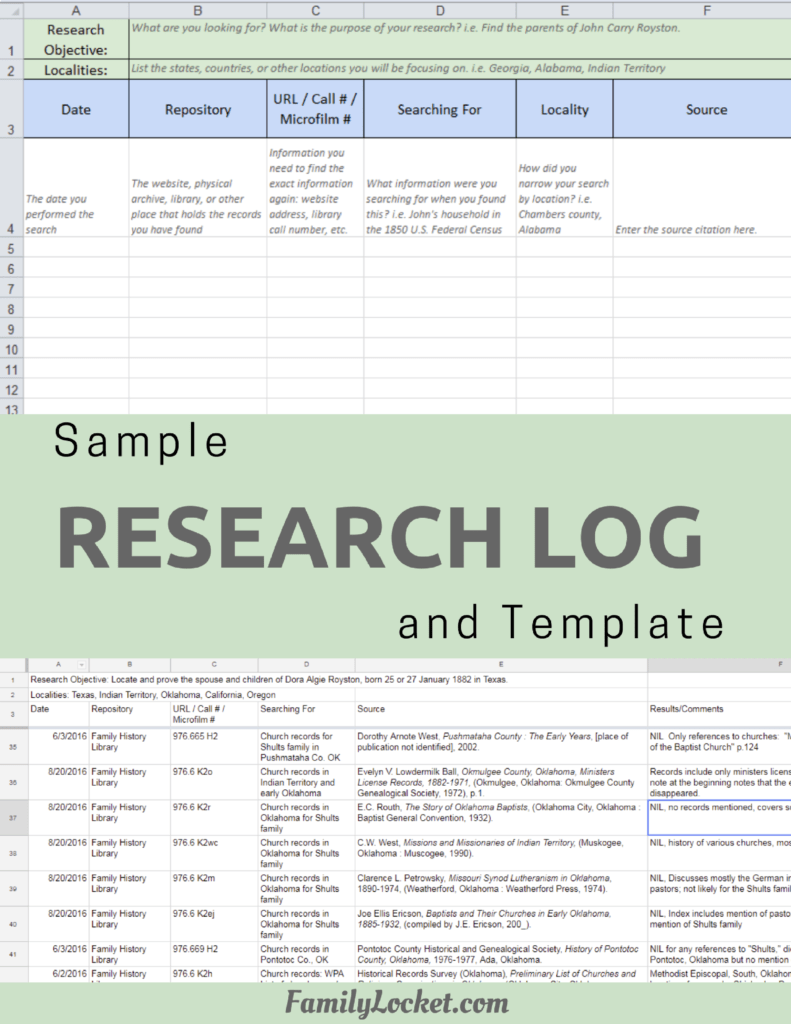
Airtable Research Logs Quick Reference – by Nicole Dyer – https://familylocket.com/product-tag/airtable/
Research Like a Pro: A Genealogist’s Guide book by Diana Elder with Nicole Dyer on Amazon.com – https://amzn.to/2x0ku3d
Research Like a Pro with AI Workbook – Second Edition (eBook) – https://familylocket.com/product/research-like-a-pro-with-ai-workbook-second-edition-ebook/
14-Day Research Like a Pro Challenge Workbook – digital – https://familylocket.com/product/14-day-research-like-a-pro-challenge-workbook-digital-only/ and spiral bound – https://familylocket.com/product/14-day-research-like-a-pro-challenge-workbook-spiral-bound/
Research Like a Pro Webinar Series – monthly case study webinars including documentary evidence and many with DNA evidence – https://familylocket.com/product-category/webinars/
Research Like a Pro eCourse – independent study course – https://familylocket.com/product/research-like-a-pro-e-course/
RLP Study Group – upcoming group and email notification list – https://familylocket.com/services/research-like-a-pro-study-group/
Research Like a Pro Institute Courses – https://familylocket.com/product-category/institute-course/
Research Like a Pro with DNA Resources
Research Like a Pro with DNA: A Genealogist’s Guide to Finding and Confirming Ancestors with DNA Evidence book by Diana Elder, Nicole Dyer, and Robin Wirthlin – https://amzn.to/3gn0hKx
Research Like a Pro with DNA eCourse – independent study course – https://familylocket.com/product/research-like-a-pro-with-dna-ecourse/
RLP with DNA Study Group – upcoming group and email notification list – https://familylocket.com/services/research-like-a-pro-with-dna-study-group/
Thank you
Thanks for listening! We hope that you will share your thoughts about our podcast and help us out by doing the following:
Write a review on iTunes or Apple Podcasts. If you leave a review, we will read it on the podcast and answer any questions that you bring up in your review. Thank you!
Leave a comment in the comment or question in the comment section below.
Share the episode on Twitter, Facebook, or Pinterest.
Subscribe on iTunes or your favorite podcast app.
Sign up for our newsletter to receive notifications of new episodes – https://familylocket.com/sign-up/
Check out this list of genealogy podcasts from Feedspot: Best Genealogy Podcasts – https://blog.feedspot.com/genealogy_podcasts/


Leave a Reply
Thanks for the note!