
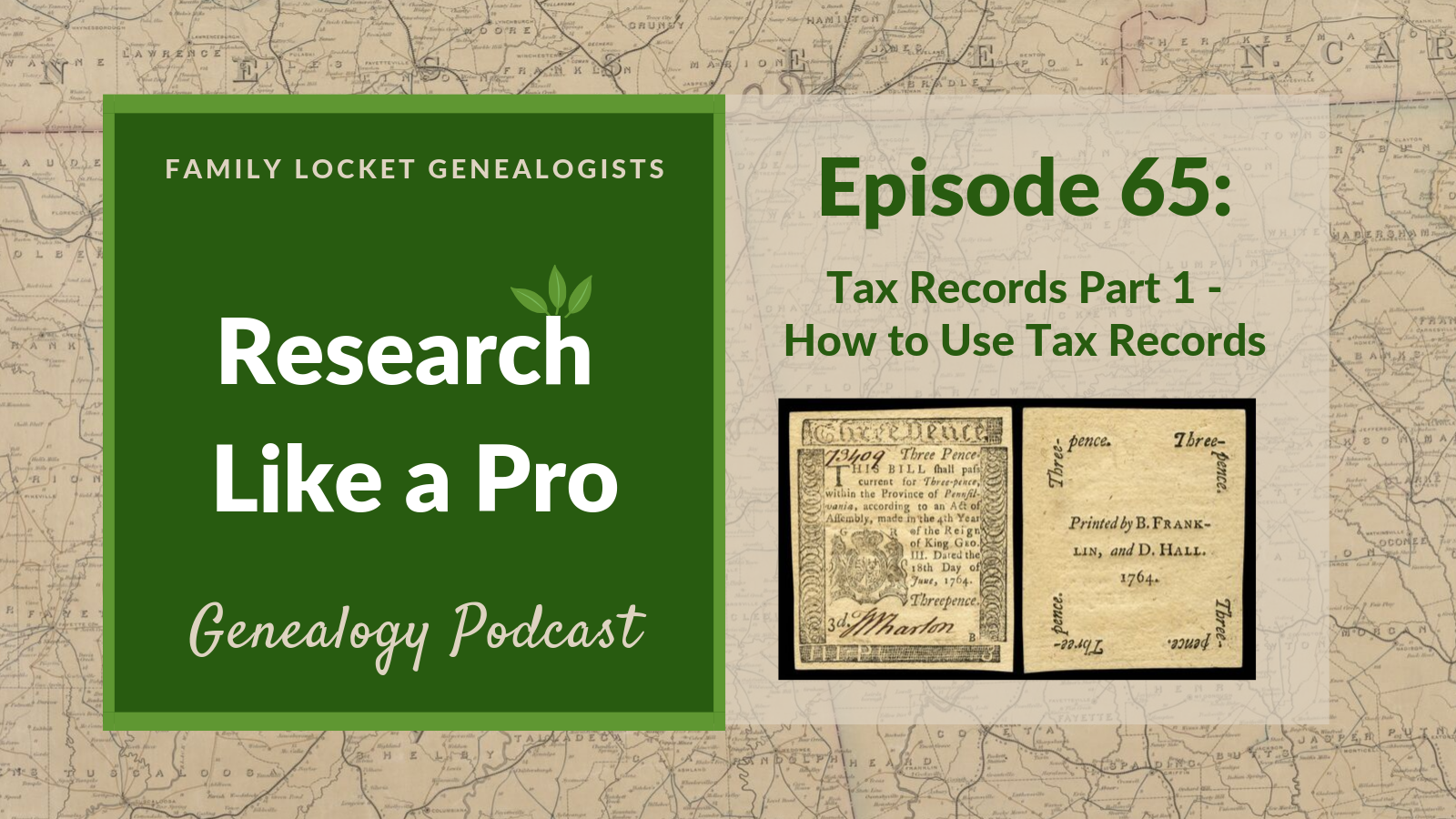
Today’s episode of Research Like a Pro is about using tax records to solve genealogy research questions. This is the first of a three part series about tax records. Our examples are from U.S. research, but most countries tax their citizens, and the same general principles apply to researching there as well. In this part of the series, we tell you about three steps for extracting information from tax records, putting the data in a research log, correlating the data in a table, and then writing a summary of your conclusions. Diana solved a case about three generations of the Ballard family in Maryland in the early 1700s using tax records. We discuss how this process for using tax records, combined with probate records, helped her come to a solution.
Transcript
Nicole (1s):
This is Research Like a Pro, Episode 65 Tax Records – How to Use Tax Records. Welcome to Research Like a Pro a Genealogy Podcast about taking your research to the next level, hosted by Nicole Dyer and Diana Elder accredited genealogy professional. Diana and Nicole are the mother-daughter team at FamilyLocket.com and the creators of the Amazon bestselling book, Research Like a Pro a Genealogists Guide. I’m Nicole co-host of the podcast join Diana and me as we discuss how to stay organized, make progress in our research and solve difficult cases.
Nicole (41s):
Let’s go. Hi everyone and welcome to the show. I’m Nicole Dyer, co-host of The Research Like a Pro Genealogy Podcast. I’m here with accredited Genealogist, Diana Elder. Hi Diana, how are you?
Diana (58s):
I’m doing great. How are you doing today?
Nicole (60s):
Doing well. I went for a walk and the weather turned cooler here this morning just for an hour before the sun heated everything up. So it was in the sixties, which was amazing.
Diana (1m 9s):
That always feels good, especially in Arizona.
Nicole (1m 14s):
Today we’re talking about using tax records and extracting data from them and then putting in your log and making a table, so that’ll be fun.
Diana (1m 23s):
Oh, I love tax records. They are the mainstay of my research now, So I’m excited we get to talk about those. That’ll be really fun. So let’s do the listener spotlight. This is from FSB Junior and it is titled, “You Rock. If genealogy had rock stars, it’d be you ladies. Your podcast content is informative and helpful even to a longtime researcher such as myself. I appreciate your expertise and enthusiasm, my dog thank you as well. I think she knows our morning beach walk is not going to end until I can get through an entire episode or two. Please keep up your important work.” We love hearing that and I think it’s fun. I know the feeling sometimes when I get going on an ebook or an audio book or a podcast and I’m cleaning my house.
Diana (2m 8s):
I keep cleaning and it’s a great way to get something done that maybe you don’t wanna do when you’re listening to something that you’re excited about and interested in. We love those reviews, so keep them coming everyone.
Nicole (2m 18s):
I love that review, especially because he’s walking on the beach with his dog while he listens. Let’s talk today about tax records and since this is the first episode of a series on tax records, let’s just go over why Genealogists search tax records. Everyone who has done genealogy knows how much we rely on census records to track families every 10 years. But what about those in between years and what about those years before the 1850 census when not everybody was listed on the census? Well, tax records won’t tell you every single person in a household, but they can often tell you more than just the head of household.
Nicole (2m 59s):
And a lot of things can happen in between the enumerations, like people moving and people passing away in between those 10 year census records. So because tax lists were usually taken annually, they can help establish ages and residences and even relationships and the year an individual died or left the area. They’re also really helpful if you have a burned county, a county where the courthouse burned down or was involved in some kind of disaster and all of the marriage land and probate records were destroyed at that point, the tax records can come to the rescue because those copies were often sent from the county to the state auditor and kept at a state level.
Nicole (3m 40s):
So a listing for your ancestor and a tax list can provide valuable evidence of their residents and land ownership in the case of missing or destroyed records. Now, we’ve talked a little bit about the years before the 1850 census, but what about the years before any censuses were taken in the United States? How can you track your ancestor before then? Well, tax records are often able to help you there too, and they may not be available for every year that your ancestor lived in a certain area because the further back you go, the less records are ex extent, but they collectively can help provide more information regarding ages and give you clues for other sources to search. So those tax records before 1790 can be helpful as well.
Diana (4m 24s):
So let’s talk about some of the specific information that can be found in tax records. Well, first of all, you’re going to get a name and sometimes you’ll get varieties of names. You know, you’ll get variations depending on how the person who was recording the information decided it should be spelled or how the individual said their name. So that can be helpful to see some of the different ways that the name was used throughout the years. You’ll get a residence, and this is primary information because the tax collector was recording the taxes for where this person was generally residing. You’ll know about their age because men were not taxed until a certain age was reached, and so you can kind of determine when they were born once they start showing up in the tax records.
Diana (5m 14s):
And then also if they disappear out of the tax records, that helps you know that maybe they aged out because they were only taxed for their property or land for a certain amount of time during their lifetime. Once they got older they weren’t necessarily taxed. And of course it all depends upon the laws of the actual state that you are working in. So the laws are really important in tax records to understand. You may also find out about the occupation and you’re going to for sure get a description of the real estate because they will let you know exactly where it is or the water course that is near. So you’ll get some kind of a description.
Diana (5m 54s):
It may be just the number of acres, but that can actually help as you’re trying to track the land and the people. So especially if you have men of the same name, seeing that the same man had 250 acres year after year can really help because some men may have had a thousand acres and you can differentiate between two different people. Sometimes they’ll have the name of the original purchaser in the tax record and that again, can be helpful in tracing the property and figuring out what was happening in that area. You will get description of personal property in some of the tax lists, and these are always really fun because you can see how much actual cash they had on hand or what other types of things they might have owned.
Diana (6m 40s):
I’ve seen things where they talk about their wagons and different types of personal property and they’re also different and varied. It’s always really interesting. You will see how many males over 21 are in the household. So there might be three males over 21 in the household, which gives you a clue that either the sons have grown up or there’s some other men living in the household that could be boarders or could be apprentices. So it just gives you an idea, sort of like those early censuses. You sometimes will see the number of school children again, which helps with figuring out the household, the number of slaves that are on the farm or plantation, which also can help you to determine people of the same name to try to identify a specific person.
Diana (7m 31s):
You will see the number of farm animals and you always have to look up at the little headings and see what they’re talking about. And I know sometimes they have kind of funny terms like STOs or different kinds of terms for animals that we may not use now. And so you have to do a little bit of translation of figuring out what the form was talking about. So the big takeaway is that tax records can be pretty varied depending on the form, the time, the place, but they will give you information. Now, the trick to using them is to organize them in a way that allows you to analyze the information. And I like to do this in a table.
Diana (8m 11s):
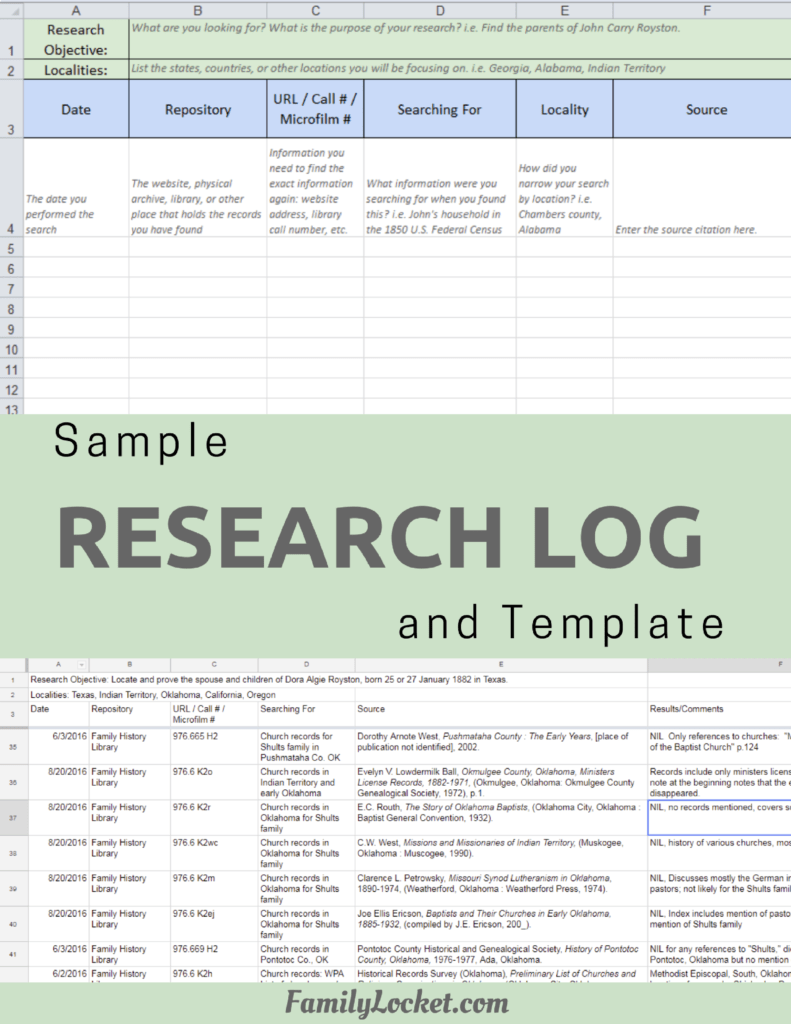
So I’m gonna use the case study of some research I did a while ago. This is the Charles Ballard family of Somerset County, Maryland. And I’m gonna show you how I use tax records in conjunction with probate records to sort out three generations of the family. And this was early, this was before census records began. So the very first step that I always do when I’m working with the tax records is to enter all the information into my research log. This is where I create my source citation. I track the year of the tax record and I include a link to wherever I found it online. And then I extract the details.
Diana (8m 52s):
So as you know, as you’re working through the research process, often you need to go back to the original source of the information. And I love having the link. So many times I’ve had to go back and look at a record and just because I have more questions that come up as I’m writing the report or as I’m doing the analysis. And so having the link and my research log has become key to saving time.
Nicole (9m 14s):
Maybe we should tell our listeners how to put a link into a spreadsheet because we get that question a lot.
Diana (9m 20s):
Great idea. Why don’t you do that? ’cause you’re, you’re great at explaining that.
Nicole (9m 24s):
Well, it’s usually fine if the link is a shorter link because you can just copy and paste that into a cell. But when it’s a really, really long link, what I like to do is type into the cell of the spreadsheet, link to original tax list, and then highlight that cell and then use the keyboard shortcut CTRL K to insert a link to that cell. So then it’s putting a hyperlink on those words that I typed.
Diana (9m 53s):
Right? I love doing that. The other thing that you can do is use something like the tiny URL or Bitly website. I use the Bitly website and I have a Chrome extension. It’s a little circle with a B. So when I’m on a record, say a FamilySearch Research record and it’s a text list, I click that little B and it gives me a shortened link that I just copy and paste right into my research log. So there’s a couple different ways you can do that, and I so glad you said that, Nicole. ’cause when I first started putting links in, they were those really big ugly links and they took up way too much space on my research log. It’s a research log. I don’t wanna have a huge link in there. When you’re doing your extracting of all the tax records, it may sound like it’s really ponderous to do your source citation, but what I like to do is once I get into the collection, I get everything written into the source citation such as the microfilm number and the title of it, the years where I found it.
Diana (10m 49s):
And then all I have to do is copy and paste that to the next cell and just change a little bit of information in that for the next tax record. Because generally you’re going through one microfilm for several tax years. And if you’re doing it for the same person, maybe all you’d have to change in the source citation is the specific year. Everything else would remain exactly the same. So if you take a little bit of time to create that source citation correctly from all the information in the record, then you can copy and paste and just change the date and you can go really, really fast once you get the hang of recording it in your research log. And then of course once it’s created, it’s already for your research report, which is fabulous.
Diana (11m 31s):
So what do I enter into my research log for a tax list? I do the date I’m doing the research, I put in the repository, so for this specific case study I’m doing on the Charles Ballard family, I actually found the tax lists at the Maryland State Archives online, which was great because it turned out to be a fabulous repository for these tax records, which were not on FamilySearch Research.
Nicole (11m 54s):
That’s really nice.
Diana (11m 55s):
Yeah. And So I put in the URL, and in this case it actually was not even a really long one, So I just copied the actual URL right in there. And then in the searching for column, I put the 1723 tax list. I put the actual date in another column 1723, and I’ll just make a little comment here, I’ve added this column of just the specific date of the record in my research log. And then I like to sort by that because it gives me a chronology of the records and that has been really helpful in my research. Then the next column would be locality, which was Somerset, Maryland. And then this source citation. And I’ll just read what it sounds like. So Somerset County Court 1723 tax list.
Diana (12m 38s):
And then there’s a little informational part that comes from the website about where it’s found on the website. So it sounds a little cryptic, but it’s MSAC 1812-1 Maryland State Archives. So that little MSAC 1812-1 is the identifying information within the website. That’s the wherein part of the source citation. And then Maryland State Archives. And then I have the URL and the date I accessed it. So that’s my source citation. Now, I did not put a specific name of an individual here because I was extracting all the Ballards from 1723.
Diana (13m 16s):
I did not know who was who. And I just knew the surname was Ballard. I didn’t know who was going to be the father, the sons of the ancestor. I just needed to extract all of them. And so in my result comment section, then I have each name. So I have Jarvis Ballard, he was in Manokin, which is, or maybe it’s Manoakan. Not sure about that. And he was age 20, or no, he was in household 25 and he was taxed as a head of household. So then I also have Charles Ballard, Henry Ballard, another Charles Ballard and another Charles Ballard. So gosh, three Charles Ballards, here we go, men of the same name, again, trying to decide who is who in this family.
Diana (14m 4s):
I did have two different locations though, the Manokin and Wicomico.
Nicole (14m 11s):
Okay, how to pronounce it is Mah-no-kin and Wi-comico.
Diana (14m 19s):
Oh, good. Manokin and Wicomico. Great. ’cause I’m gonna have to say that a few more times today, so I’ll have that right now. The other thing that was super helpful in the results comment section were the names of the enslaved people in the household. And we had specific names most of the time, which is going to help me a lot. So I extracted all that information into my research log.
Nicole (14m 45s):
So when you use the information in your report and you need to grab that citation from your research log, do you update the citation to include the exact person that you’re citing information about at that point?
Diana (14m 59s):
Yeah, I do. I would say for Jarvis Ballard, you know, it would still be 1723 tax list for Jarvis Ballard or for Charles Ballard or what have you. You don’t necessarily have to do that. It kind of depends on the project and how it’s all coming together. But you know, very easily, once you’ve got the basic citation, you can do whatever you need to for the report to make it very, very clear to whoever’s reading it.
Nicole (15m 24s):
Okay. Well the next step after extracting all of the information from the tax records into your research log is to then create a table with it. And this is something you can use in your report. And the reason why you might want to create a table showing the information beyond your research log is because it helps the reader to really understand and see what’s going on in a simple format. So your table won’t have all the information that’s in your research log, like the link and whatnot, and the date and the repository. It will just have the names of the individuals and the years just to really help you see and visualize the data and be able to analyze it better and show the client or yourself what you have.
Nicole (16m 8s):
So what you can do with your table is, in Diana’s case, separate out who is who based on different identifying pieces of information. So Diana, just tell us a little bit about how you did this and what patterns you noticed with the Ballard individuals living in Wicomico and how you put ’em into two different groups of people.
Diana (16m 30s):
Okay, so in my table, I had just three columns. The first column was for the year. The second column was for the individual, and they called it the Hundred. So think of a Hundred as kind of like a section within a county.
Nicole (16m 45s):
Like a township almost?
Diana (16m 47s):
Yeah, like that. It was taken from the old English Hundreds. And so this is early 1700s, they’re still using some of the terminology from England. And so they had these Hundreds, Manokin and Wicomico, so I put that into the table. All is one section, the individual, the a Hundred, and then the household number because they gave the household number. And then I also put in whether they were a head or dependent. And then I had a whole column just for the enslaved individuals so that I could see how those matched up. So I had to do a little research on the actual laws of Somerset County, Maryland, and I learned that the poll tax was levied on free males over the age of 15 and slaves of both sexes over 15.
Diana (17m 31s):
And luckily those lists on the Maryland State archives abstracted all of that, the household number, the Hundred, and then the slaves of the household.
Nicole (17m 41s):
Oh, it was the transcription you were looking at?
Diana (17m 43s):
Yes. So it was not the original, and I really appreciated whoever did the website because they gave a lot of information and they explained that the originals were just really difficult to read or they were crumbling. I can’t remember exactly, but they had extracted them. So I was using an extract, which was nice because then I could use the control find option to get right to all the Ballards because they weren’t alphabetical, they were by the Hundred. So they did all the people in Manokin and then all the people in Wicomico. So using the control find function, I could just put in Ballard and it would find all of them for me.
Nicole (18m 23s):
Nice. Even though it’s harder to find your subject when it is not alphabetized, I’m always glad when I find a tax list that is listed by a geographical place instead because then you can find people by their neighbors that were closest or the people that they came to report their taxes with. You know, it gives you more clues about who or their associates when it’s not alphabetized.
Diana (18m 44s):
I agree. It’s really, really helpful. And I also loved how they had either head or dependent. So that was really a big clue because I could see that when a male first showed up in a household as a dependent, that was probably a sign of his turning 15. And so I was able to put all these different men into a timeframe where before I just had names and I had no idea how old anyone was or when anyone was born, so who could be the father and son. Once I had these tax lists and I determined the approximate birth years and the households, that really helped to start putting together families.
Diana (19m 25s):
So I I love these tax lists.
Nicole (19m 28s):
Yeah, at the very least you can say each of these people who show up on the tax list are at least 15. So you can take that information and subtracted. And then if you, they appear several times, you can say, well this year they’re 15 plus one at least because they were there last year.
Diana (19m 44s):
Exactly. And of course we correlate all this with other evidence with probate records and I had a lot of probate records for these families, but with the many, many men of the same name, it was just tricky figuring out who was who.
Nicole (19m 59s):
Right? I’m noticing in your first entry on the table, it has two Charles Ballards, but you can quickly see the difference because one, Charles Ballard is in household 105 in the Manokin Hundred, and the other Charles Ballards are from Wicomico. And they live in the same household and one is the head and one is the dependent.
Diana (20m 19s):
Exactly. So it really helps a lot getting it into a table, because if you were just looking at this online, let’s say that I took just Charles Ballard and I took all the listings for him, and I just ignored everybody else, it would not be the right context for the family, right? Taking the entire family group or the surname group and putting them in the table. I was able to figure out much, much more than just trying to focus only on that one man. So I was really lucky because the archives did give a lot of information about the tax lists. Now, if you are doing some research, all of any of you listening and you don’t have something like that, you may have to do a bit more digging.
Diana (20m 59s):
So the FamilySearch Research Wiki is always a good place to learn about the taxes list for your location. You might have to do a Google search, you may have to dig in more to the actual country or the state or county to get more information, but it’s worth it because then you’ll understand the record better. If you don’t do that, then you’re not gonna have any idea what it means when you see something like dependent on a household and you won’t be able to use the information properly.
Nicole (21m 25s):
Right. Using the information as evidence is only possible when you know the laws that cause that record to be created. And all of the reasons why that information was written down. You know, these men were recorded because they were over age 15. That alone gives us information about their birth,
Diana (21m 44s):
Right. So the third step is to analyze all of this data. We’ve got it in our Research Logs, we’ve got it in a table, but we have to analyze it and write a summary of this because if we don’t, we’re going to forget all the connections we made that as we were looking through this. And this is where you make sense of your findings in your research report. Now, as I said earlier, I use these tax records in conjunction with the will of Charles Ballard where he names his children and bequeaths land as well as slaves to each one. There was an original settler in the county with the name of Charles Ballard, which is why there were so many of his descendants who were named Charles. Often you’ll see that if you have an original settler, then that same name pops up in every generation numerous times because they’re all hearkening back to their original ancestor.
Diana (22m 35s):
So that can be a clue to who the original is if you keep seeing that name. So using the data from the tax table, I was able to determine three generations of men named Charles Ballard and define each one in my research report, which turned out to be 17 pages. The naming of the slaves in the tax list was the key point because in the probate records, the slaves were listed and who they were bequeathed to which son, and that completely illuminated the whole project. So as I was writing my report, I had to designate something to help separate these different Charles Ballards. And so I just gave them each a number.
Diana (23m 17s):
So you know, I said Charles Ballard one, two, or three. And then that really helped to separate them out. And that is something I do in a lot of my research projects. We have men of the same name. I just give them a, give them a number one, two, or three. So Charles Ballard number three first appears in the tax list of 1723 in the household of Charles Ballard, number two. So notice the original isn’t even in the tax list. And then from 1723 to 1759, that is a big time span. What is that? That’s like 36 years. Charles three is consistently listed, residing in Wicomico.
Diana (23m 57s):
And he was given this land in his will by his father Charles, and there’s no marriage record for him, but he likely married by 1730. And then John Ballard is first listed in his household in 1745 as a dependent, which I inferred that that was likely his oldest son born about 1730. So that’s just a little example of how I started putting this all together, taking these families. Now it sounds like it came together really easily for me, but nothing comes easily. This is one of my examples where I used my big whiteboard and I had all these different people all over the place. Anyway, my whiteboard was kind of a key thing and I had to do something to make sense of all these people.
Nicole (24m 42s):
Yes, that is really interesting that the slave names were so helpful in separating out the same named men. And of course, a very important key thing that you did was correlating all of the tax data with the probate records and analyzing them all in conjunction with each other really helps you come to a solid conclusion.
Diana (25m 2s):
Exactly.
Nicole (25m 3s):
So next episode, and the one after that will be about tax records. So thanks for listening today, and we will talk to you guys again next week.
Diana (25m 12s):
All right, bye-bye everyone.
Nicole (25m 14s):
Bye. Thank you for listening to Research Like a Pro with Diana Elder, accredited genealogy professional and Nicole Dyer. We hope that something you heard today will help you make progress in your own genealogy research. If you like what you heard, please leave us a review on iTunes or Stitcher or visit our website, FamilyLocket.com to contact us. You can find our book Research Like a Pro a Genealogist’s Guide on Amazon.com and other booksellers. We hope you’ll start now to Research Like a Pro.
Links
Back to the Basics with Tax Records: Part 1 – by Diana at Family Locket
RLP 8: Research Logs – our podcast episode about research logs
Research Logs: The Key to Organizing Your Family History by Diana at Family Locket
Research Like a Pro, Part 5: Where Did You Look and What Did You Find.
Put it in a Table: Understanding and Organizing Research Findings
Study Group – more information and email list
Research Like a Pro: A Genealogist’s Guide by Diana Elder with Nicole Dyer on Amazon.com
Thank you
Thanks for listening! We hope that you will share your thoughts about our podcast and help us out by doing the following:
Share an honest review on iTunes or Stitcher. You can easily write a review with Stitcher, without creating an account. Just scroll to the bottom of the page and click “write a review.” You simply provide a nickname and an email address that will not be published. We value your feedback and your ratings really help this podcast reach others. If you leave a review, we will read it on the podcast and answer any questions that you bring up in your review. Thank you!
Leave a comment in the comment or question in the comment section below.
Share the episode on Twitter, Facebook, or Pinterest.
Subscribe on iTunes, Stitcher, Google Play, or your favorite podcast app.
Sign up for our newsletter to receive notifications of new episodes.
Check out this list of genealogy podcasts from Feedspot: Top 20 Genealogy Podcasts





Leave a Reply
Thanks for the note!