In this episode, Nicole and Diana discuss part 4 of Diana’s 5th project to search for the father of Cynthia (Dillard) Royston, focusing on research logging and source citations. Diana explains how she uses the Airtable template, “RLP with DNA 4.2 (2026),” to organize her project and enter data for key DNA matches. Nicole details the real-time logging process, noting how they enter data in either row or form views. To organize her research on...

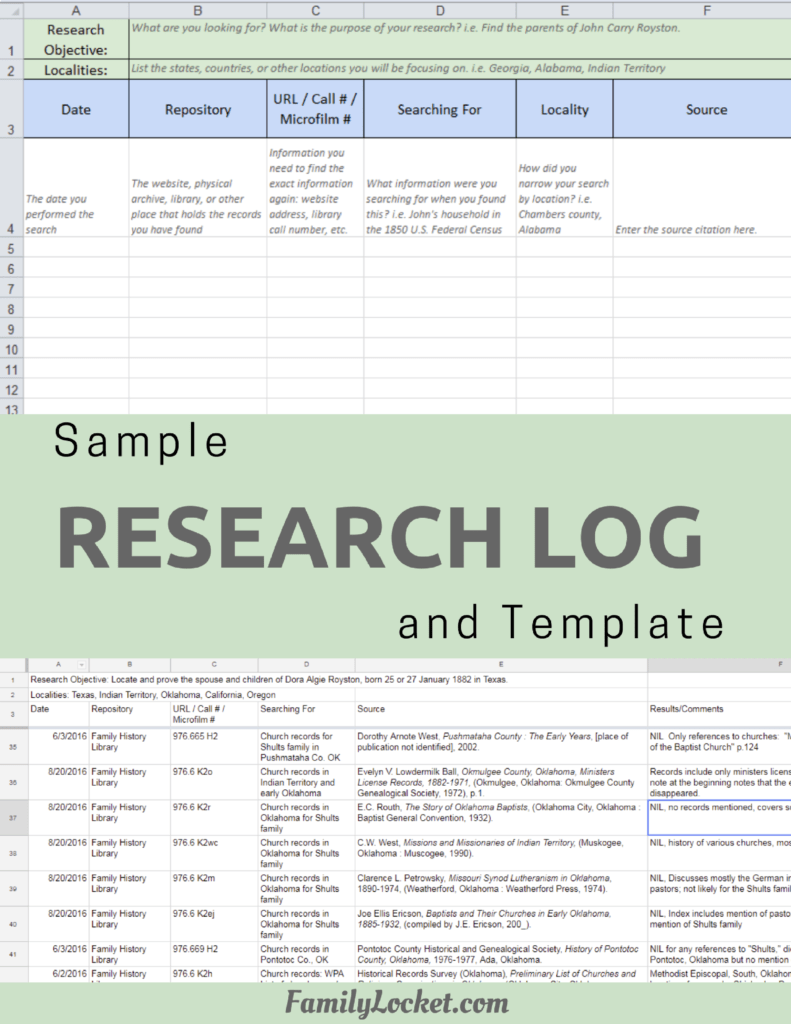
This episode addresses the importance of methodically logging research and creating source citations as you follow a research plan. Diana shares her strategy for quickly creating citations for FamilySearch records, emphasizing the value of creating the citation first to understand the source and ensure it’s done. Nicole explains how she sets up and fills out her research log using the Research Like a Pro Airtable template, which includes features for grouping, sorting, and linking records...

Nicole and Diana discuss citing digitized records from FamilySearch. Nicole explains that FamilySearch has billions of digitized records that can be attached, downloaded, or added to a research log. They emphasize the importance of precise source citations. Diana illustrates the challenge of citing digitized microfilm records, using an example from Russell County, Alabama’s Orphan’s Court Docket. She explains that the same record can be accessed through “Images” or the FamilySearch Catalog, resulting in different image...

In this episode of the Research Like a Pro Genealogy podcast, hosts Diana and Nicole interview Lisa Stokes, AG, about educational opportunities for genealogists. Lisa, an experienced genealogist and educator, shares her insights on several valuable resources. She begins by discussing her e-course, Genealogy Source Citations Simplified, emphasizing the importance of proper citations for credibility and accuracy in genealogical research. Lisa’s course offers a simplified approach to citations, guiding students through step-by-step video tutorials and...

In this podcast episode, Diana and Nicole discuss the use of Generative AI in scholarly and genealogical writing, emphasizing the importance of transparency in disclosing AI assistance. They talk about editorial guidelines from scholarly journals and the Association of Computational Linguistics, which suggest clear declarations of AI’s involvement in literature searches, drafting, and idea generation. Key points include recommendations for crediting AI-generated content not as authors but by detailing the AI’s role. They also explore...

Exploring the use of artificial intelligence chatbots for creating written content is the new frontier – full of uncertainties and unknowns. Organizations that once prohibited the use of LLMs for research papers are now allowing them, as long as authors are fact-checking the output and attempting to cite potentially copyrighted materials included in the output. In 2023, the International Conference on Machine Learning prohibited the use of LLMs in their call for papers. In 2024,...

Lisa Fair, one of our Research Like a Pro graduates is sharing this guest post about her experience writing a family history book and formatting a bibliography. As she discusses, bibliographies usually get only a passing mention in citation lessons! She shares how she came up with her chosen format. I hope you enjoy her post. – Nicole I’ve decided that the bibliography for a family history book gets the short end of the...

Online Repository Assistant (https://www.ora-extension.com), also known as ORA, is a browser extension and Windows application created by John Cardinal. It works with many common online “repositories” like FamilySearch, Ancestry, FindaGrave, FindMyPast, Fold3, and more, to extract data from records and make it easier to paste text into your genealogy software or research report. I wrote a little about it in my post, Automated Source Citation Builders. ORA allows you to create your own text templates...

Did you know you can have an automatic research log with Goldie May? Goldie May is a genealogy research assistant tool created by Richard Miller available for Chrome and Firefox. Essentially it is a browser extension that opens a sidebar to help you log your research-in-progress. The research log tool in Goldie May helps you manage projects and logs websites you visit. Not only does it create an automatic research log for you, tracking the...

Today’s episode of Research Like a Pro is about civil marriage records and where to find them. We discuss examples from the U.S. and England and give a tutorial for how to make citations for marriage records from a bound volume at the county courthouse viewed as images online. Transcript Nicole (1s): This is Research Like a Pro episode 281 Civil Marriage Records Welcome to research Like a Pro a genealogy podcast about taking your...