
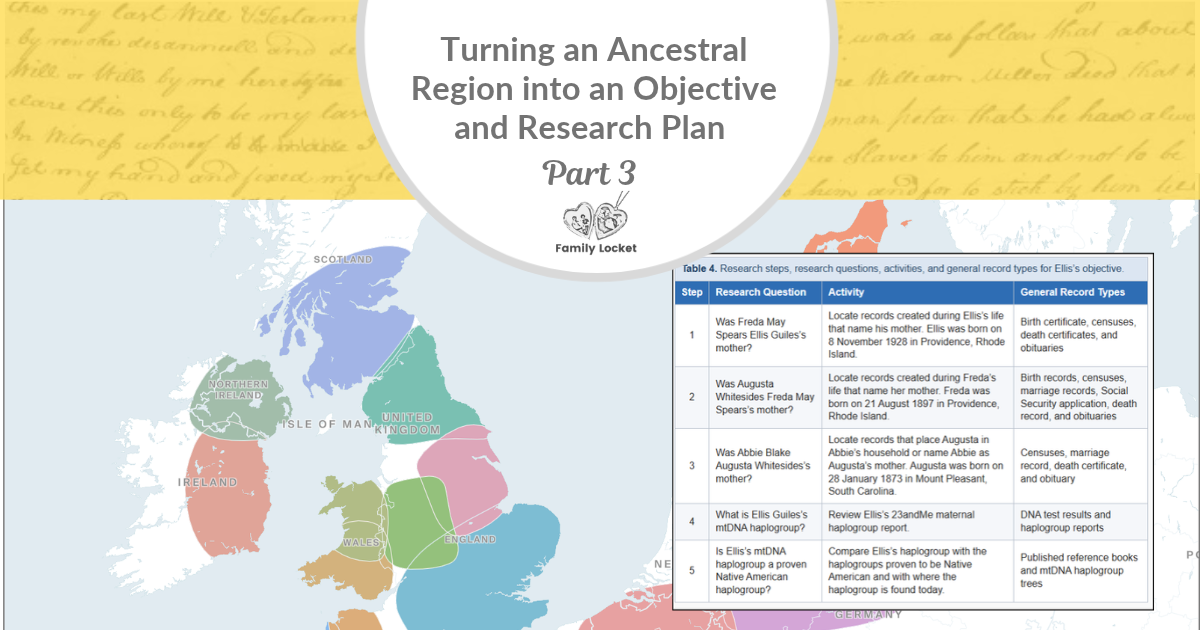
In this series on Ancestry DNA’s Ancestral Regions, we’re learning the science behind these regions, how to organize them, and how to use that information in your research. Part 3 of this series will show you an example of how to turn one of your Ancestral Regions into a research objective and plan, using my father, Ellis Guiles, as an example.
Part 1 explained what Ancestry changed in its October 2026 update: more regions, a larger reference panel, and a new way of comparing your DNA with that panel. Part 2 walked you through five steps to save, organize, and analyze your Ancestral Regions. This post picks up where Part 2 ended, starting with a short update, because Ancestry changed Ellis’s results again after Part 2 was posted. Then it chooses one of Ellis’s regions, Atlantic Northeast (Canada & USA), and asks whether a family story could explain it. Family lore says that Ellis’s great-grandmother, Abbie Blake, was Native American. Part 3 builds the objective and research plan to test that story with mitochondrial DNA (mtDNA), a type of DNA that a mother passes to all her children.
A change since Part 2
Ancestry updated Ellis’s Ancestral Regions again after Part 2 was posted. By 9 November 2026, several of Ellis’s region percentages had changed, but his continent totals had not.[1] The figures in Part 2 show his results as of 21 October 2026. A future post will look at Ancestry’s new SideView 2.0 and how it may have changed these results. For now, Tables 1–3 give Ellis’s updated numbers alongside his earlier ones.[2]
Ellis’s continent totals stayed the same from October to November 2026 (Table 1). Africa remained at 35 percent, Europe at 62 percent, and the Americas at 3 percent. The November changes took place within the continents, at the subregion and region levels.
| Table 1. Ellis’s Ancestral Regions added up by continent. | |||
| Continent | October 2025 | 21 October 2026 | 9 November 2026 |
|---|---|---|---|
| Africa | 36% | 35% | 35% |
| Europe | 61% | 62% | 62% |
| Americas | 3% | 3% | 3% |
| Total | 100% | 100% | 100% |
Four of Ellis’s subregion totals changed by one or two percentage points (Table 2). Northern Europe fell from 60 to 59 percent, and Western Europe rose from 2 to 3 percent. Western Africa fell from 31 to 29 percent, and Southern Africa rose from 1 to 3 percent. Brittany appears under the Celtic & Gaelic heading on Ellis’s Regions page, but Ancestry’s interactive list places it in Western Europe, so Table 2 counts it there.[3]
| Table 2. Ellis’s Ancestral Regions added up by subregion. | ||||
| Continent | Subregion | October 2025 | 21 October 2026 | 9 November 2026 |
|---|---|---|---|---|
| Europe | Northern Europe | 55% | 60% | 59% |
| Europe | Western Europe | 4% | 2% | 3% |
| Europe | Southern Europe | 2% | 0% | 0% |
| Africa | Western Africa | 33% | 31% | 29% |
| Africa | Central Africa | 3% | 3% | 3% |
| Africa | Southern Africa | 0% | 1% | 3% |
| Americas | North America | 3% | 3% | 3% |
| Total | 100% | 100% | 100% | |
Sixteen of Ellis’s regions changed between 21 October and 9 November 2026 (Table 3). Four regions dropped out: France, Liberia, Southwestern Cameroon, and Ulster, Ireland. Four new regions appeared: Belgium, Brittany, DRC–Luba Peoples, and Southern Bantu Peoples. Ellis still has twenty-six regions. Atlantic Northeast (Canada & USA), the region this post tests, stayed at 3 percent.
| Table 3. Ellis’s regions that changed between 21 October and 9 November 2026. | ||||
| Subregion | Region | 21 October 2026 | 9 November 2026 | Change |
|---|---|---|---|---|
| Northern Europe | Scottish Lowlands & Central Belt | 7% | 6% | −1 |
| Northern Europe | Southern Wales | 1% | 2% | +1 |
| Northern Europe | Ulster, Ireland | 1% | 0% | −1 |
| Western Europe | France | 2% | 0% | −2 |
| Western Europe | Belgium | 0% | 2% | +2 |
| Western Europe | Brittany | 0% | 1% | +1 |
| Western Africa | Ghana & Western Togo | 3% | 5% | +2 |
| Western Africa | Senegal | 2% | 3% | +1 |
| Western Africa | Hausa & Fulani Peoples | 4% | 3% | −1 |
| Western Africa | Sierra Leone | 3% | 2% | −1 |
| Western Africa | Yorubaland | 4% | 2% | −2 |
| Western Africa | Liberia | 1% | 0% | −1 |
| Central Africa | Southwestern Cameroon | 1% | 0% | −1 |
| Central Africa | DRC–Luba Peoples | 0% | 1% | +1 |
| Southern Africa | Zimbabwe | 1% | 2% | +1 |
| Southern Africa | Southern Bantu Peoples | 0% | 1% | +1 |
KEY TAKEAWAY
Ancestral Regions can change more than once after an update. Save a dated copy each time your results change, and compare your continent and subregion totals before you look at individual regions.
Choose a region to test
A research objective can start with any of your regions. Part 2 suggests using regions under 5 percent with care, because small regions can appear in one update and disappear in the next. Ellis’s Atlantic Northeast (Canada & USA) region is small: 3 percent, with a range from 0 to 6 percent, on both 21 October and 9 November 2026. The region is still worth testing, because a family story may explain it, and a story sometimes can be tested. Ancestry describes the region this way:[4]
“The Atlantic Northeast stretches from the St. Lawrence River to the rocky coasts of eastern Canada. This region is the ancestral home of the Mi’kmaq, Wolastoqiyik (Maliseet), Innu, and many other Indigenous peoples, who have lived from its forests, rivers, and seas for thousands of years. In the 1600s, French and British settlers established colonies and competed for control of the fur trade and valuable coastal harbors. Despite conflict, displacement, and the Acadian Expulsion, Indigenous and Acadian communities preserved their cultures. Today, the region is known for its strong French and Indigenous traditions, maritime music, fishing communities, and deep connection to the Atlantic Ocean.”
Atlantic Northeast is Ellis’s only region in the Americas. Ancestry lists it under the Indigenous Americas heading on Ellis’s Regions page and places it in the North America subregion on its interactive list. Ellis’s family has a story that might explain this region. Ellis’s maternal great-grandmother, Abbie Blake, was born about 1855 in Mount Pleasant, Charleston County, South Carolina.[5] Family lore says that Abbie was Native American.[6] Abbie’s daughter, Augusta Whitesides, played Pocahontas in a traveling circus. According to the story, Abbie’s heritage helped Augusta know how to play the role, and the same heritage gave Augusta a Native American appearance.
KEY TAKEAWAY
Choose a region that a family story or a paper trail can test. A small region is not wrong, but test it before you rely on it.
What can mitochondrial DNA tell you?
Mitochondrial DNA (mtDNA) is a small piece of DNA that sits outside the cell’s center, or nucleus. A mother passes her mtDNA to all of her children, both sons and daughters, but only her daughters pass it to the next generation (Figure 1). Because of this pattern, mtDNA follows a single line: your mother, her mother, her mother, and so on. That line is called your direct maternal line.
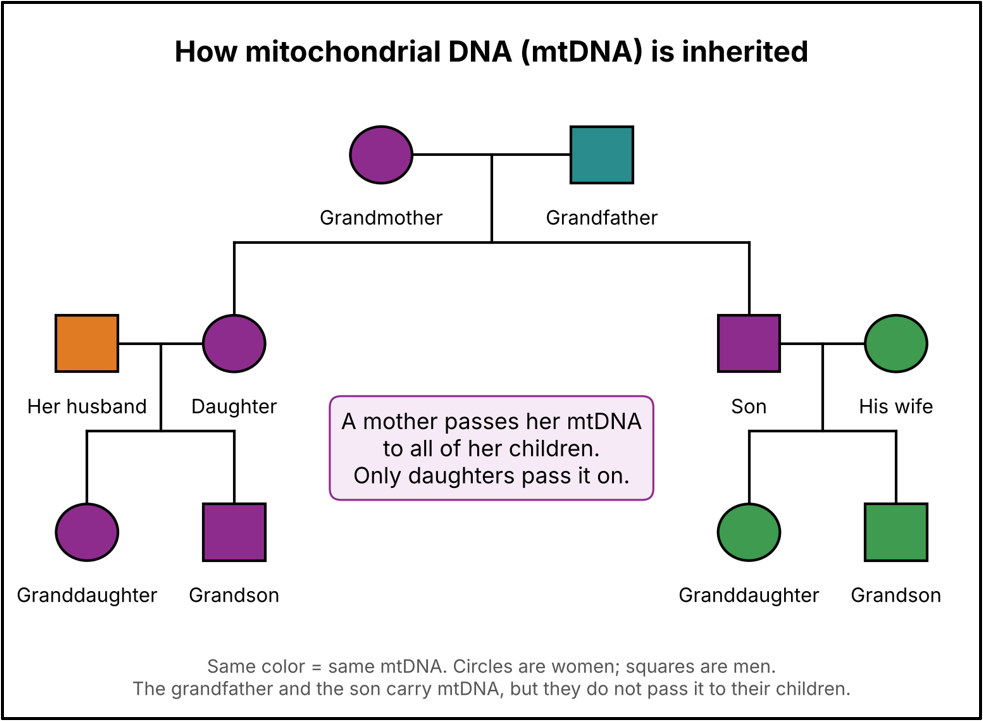
Figure 1. A mother passes her mtDNA to all of her children, but only her daughters pass it on.
mtDNA changes very slowly, so it stays almost the same for many generations. Over thousands of years, small changes build up. People who share the same set of changes belong to the same haplogroup, one branch of the family tree of all maternal lines. Each haplogroup traces back to one woman who lived long ago. Haplogroups are named with letters and numbers, such as A2 or L3e3b. The first letter names the main branch, and each added number or letter names a smaller branch, called a subclade.
Some haplogroups are found mainly in one part of the world. Only certain branches of haplogroups A, B, C, D, and X are proven to be Native American, and Step 5 explains how that list applies to Ellis.[7] If Abbie Blake’s direct maternal line was Native American, Ellis’s haplogroup should fall within one of those branches.
mtDNA has one important limit: it tests only one line. Ellis had eight great-grandparents, and his mtDNA follows only one of them, Abbie Blake. From Abbie, the mtDNA follows only her mother, her mother’s mother, and so on. If Abbie had Native American ancestors through her father or another line, her mtDNA would not show that ancestry. However, family lore says that Abbie was Native American.
KEY TAKEAWAY
mtDNA follows one line: mother to mother to mother. A haplogroup can show where that one line came from. It cannot speak for your other ancestors.
Write the research objective
A research objective is the specific question your research is trying to answer. It names the person, the place, the time, and the kind of evidence you plan to use. A clear objective keeps every step of the research plan working toward the same answer. Ellis’s objective is:
Objective: Use mitochondrial DNA to determine if Ellis Guiles’s direct maternal-line ancestor could have contributed to Ellis’s Atlantic Northeast (Canada & USA) region. Ellis’s maternal great-grandmother, Abbie Blake, was born about 1855 in Mount Pleasant, Charleston County, South Carolina.
Figure 2 shows Ellis’s direct maternal line, from Abbie Blake to Ellis. If each link in this line is correct, Ellis carried Abbie’s mtDNA. Steps 1 through 3 of the research plan test each of those parent-child linkages.
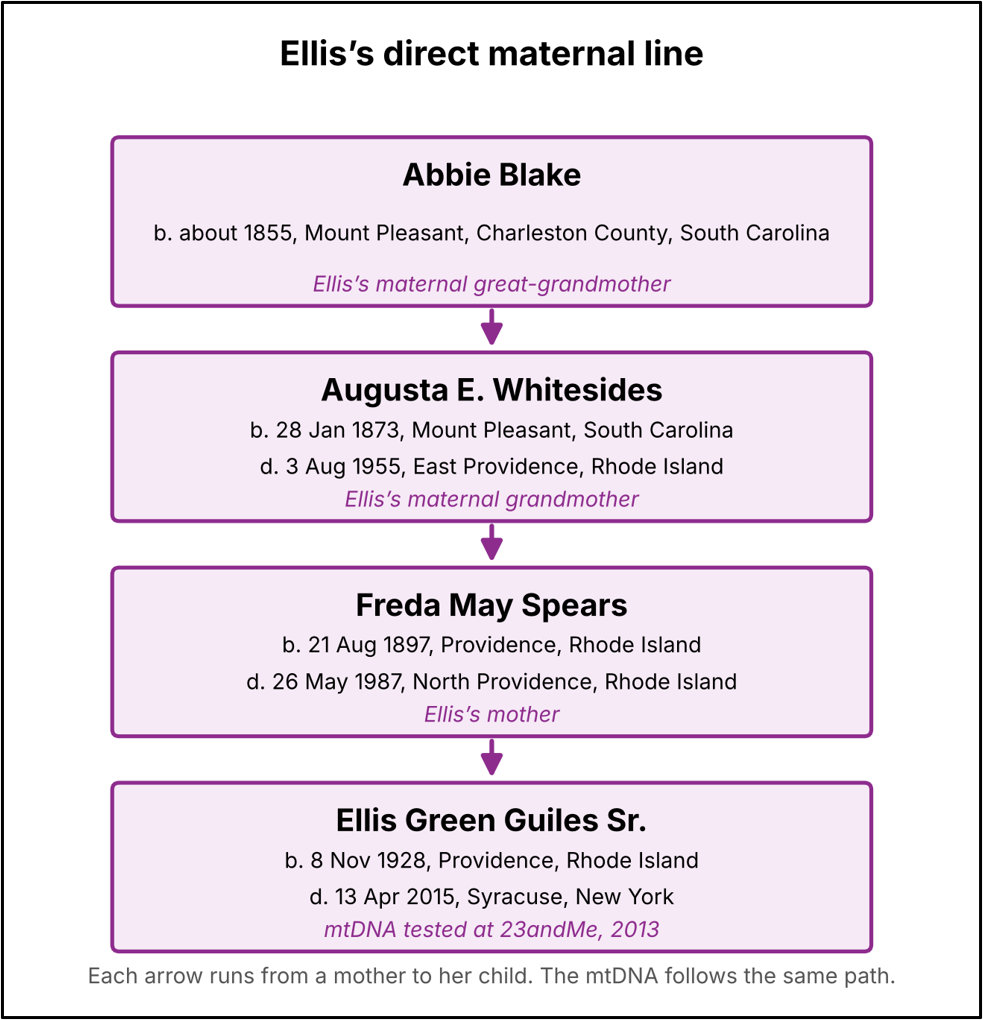
Figure 2. Ellis’s direct maternal line, from his great-grandmother Abbie Blake to Ellis.
KEY TAKEAWAY
A good objective names the person, the place, the time, and the kind of evidence you plan to use.
Build the research plan
A research plan breaks an objective into smaller pieces called steps. Each step answers one research question, a question that asks one thing only, such as who, where, when, or whether. A research question that contains the word “and” might need to become two steps. For each step, the plan also names the activity (the work needed to answer the question), the general record types (the kinds of records likely to hold the answer), and the specific record sets (the named collections to search).
Ellis’s objective needs five steps (Table 4). Steps 1 through 3 test the paper trail one generation at a time, from Ellis back to Abbie Blake. Each of these steps depends on the one before it. Step 4 identifies Ellis’s mtDNA haplogroup and can be worked at the same time as Steps 1 through 3. Step 5 compares Ellis’s haplogroup with the proven Native American haplogroups. Step 5 needs the answer from Step 4, and that answer applies to Abbie only if Steps 1 through 3 show that Ellis carried Abbie’s mtDNA.
| Table 4. Research steps, research questions, activities, and general record types for Ellis’s objective. | |||
| Step | Research Question | Activity | General Record Types |
|---|---|---|---|
| 1 | Was Freda May Spears Ellis Guiles’s mother? | Locate records created during Ellis’s life that name his mother. Ellis was born on 8 November 1928 in Providence, Rhode Island. | Birth certificate, censuses, death certificates, and obituaries |
| 2 | Was Augusta Whitesides Freda May Spears’s mother? | Locate records created during Freda’s life that name her mother. Freda was born on 21 August 1897 in Providence, Rhode Island. | Birth records, censuses, marriage records, Social Security application, death record, and obituaries |
| 3 | Was Abbie Blake Augusta Whitesides’s mother? | Locate records that place Augusta in Abbie’s household or name Abbie as Augusta’s mother. Augusta was born on 28 January 1873 in Mount Pleasant, South Carolina. | Censuses, marriage record, death certificate, and obituary |
| 4 | What is Ellis Guiles’s mtDNA haplogroup? | Review Ellis’s 23andMe maternal haplogroup report. | DNA test results and haplogroup reports |
| 5 | Is Ellis’s mtDNA haplogroup a proven Native American haplogroup? | Compare Ellis’s haplogroup with the haplogroups proven to be Native American and with where the haplogroup is found today. | Published reference books and mtDNA haplogroup trees |
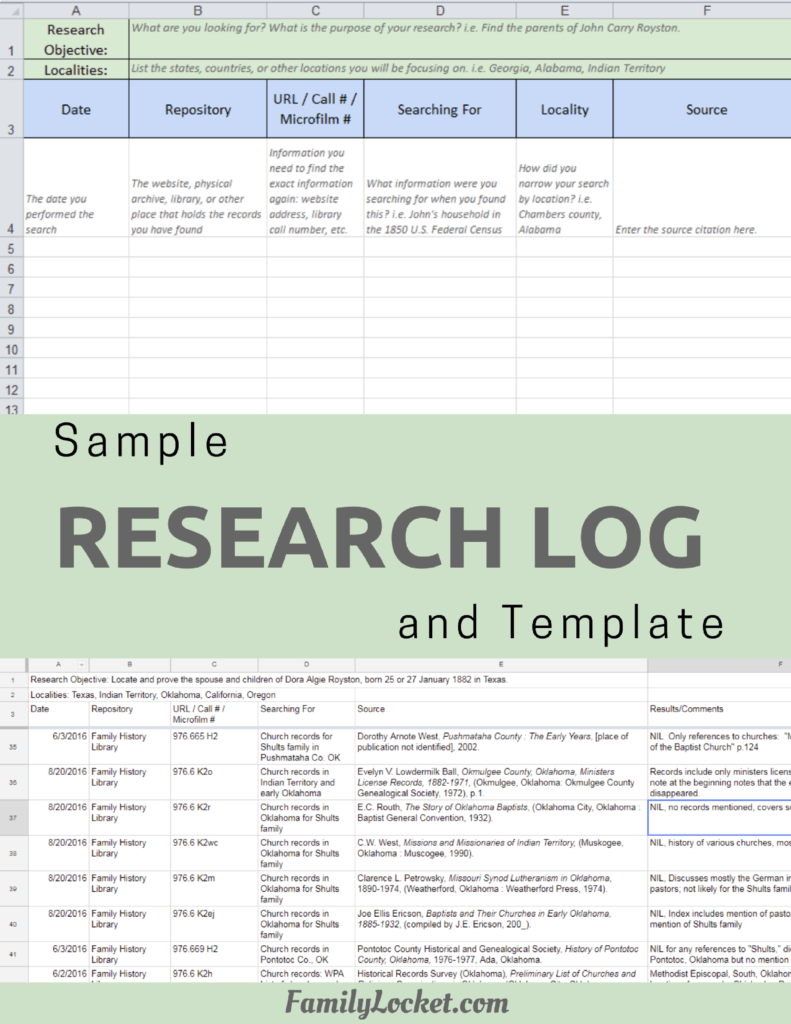
Table 5 lists the specific record sets for each step. The list is a starting point, not a complete search. As you search each record set, the list becomes a log of what you searched and what remains.
| Table 5. Specific record sets for each step. | ||
| Step | Specific Record Set | URL |
|---|---|---|
| 1 | 1928 Rhode Island birth certificate for Ellis Green Guiles, Rhode Island Department of Health | Rhode Island has a 100-year restriction on birth records[8] |
| 1 | 1930 United States Federal Census | https://www.ancestry.com/search/collections/6224/ |
| 1 | 1940 United States Federal Census | https://www.ancestry.com/search/collections/2442/ |
| 1 | 1950 United States Federal Census | https://www.ancestry.com/search/collections/62308/ |
| 1 | 2015 New York death certificate for Ellis Guiles Sr., New York State Department of Health | New York releases death certificates for genealogy after 50 years[9] |
| 1 | Obituaries for Ellis Green Guiles (2015) and Freda May Spears (1987) | https://www.newspapers.com |
| 2 | Rhode Island, U.S., Birth Registrations, 1846–1921 | https://www.ancestry.com/search/collections/62824/ |
| 2 | 1900 United States Federal Census | https://www.ancestry.com/search/collections/7602/ |
| 2 | 1910 United States Federal Census | https://www.ancestry.com/search/collections/7884/ |
| 2 | 1920 United States Federal Census | https://www.ancestry.com/search/collections/6061/ |
| 2 | Marriage record for Frederick Daniel Guiles Sr. and Freda May Spears | https://www.ancestry.com/search/collections/61406 |
| 3 | 1870 United States Federal Census | https://www.ancestry.com/search/collections/7163/ |
| 3 | 1880 United States Federal Census | https://www.ancestry.com/search/collections/6742/ |
| 3 | Marriage record for Ellis Green Spears and Augusta E. Whitesides | https://www.ancestry.com/search/collections/9105 |
| 3 | 1955 Rhode Island death certificate for Augusta E. Whitesides | https://www.sos.ri.gov/divisions/state-archives/VitalRecords |
| 4 | 23andMe maternal haplogroup report for Ellis Green Guiles | https://you.23andme.com |
| 5 | Roberta Estes, DNA for Native American Genealogy (2021) | Book available on Amazon |
| 5 | FamilyTreeDNA Discover, mtDNA haplogroup reports | https://discover.familytreedna.com |
| 5 | PhyloTree mtDNA tree | https://www.phylotree.org |
Two features of Ellis’s plan apply to anyone who tests a family story with mtDNA. First, the DNA answer depends on the paper trail. A haplogroup describes Ellis’s mother’s mother’s line, and only Steps 1 through 3 can show that the line leads to Abbie Blake. Second, the South Carolina records have a gap. South Carolina did not require birth certificates until 1915, so no state birth record names Augusta’s mother.[10] Census records, Augusta’s marriage record, and Augusta’s death certificate must fill that gap. Church records and Freedman’s Bank records are good sources for future research.
KEY TAKEAWAY
Break your objective into steps that each answer one question. When a DNA test depends on a family line, plan the paper trail for that line too, because the DNA result applies to an ancestor only if each generation in between is proved.
Part 4 puts this plan to work. It traces Ellis’s direct maternal line one generation at a time, then identifies his mtDNA haplogroup. Its final step compares that haplogroup with Native American haplogroups to see whether the family story holds up.
Notes
[1] “Ellis Green Guiles: Ancestral Regions,” November 2026, database report, Ancestry (https://ancestry.com : accessed 9 Nov 2026).
[2] “Ellis Green Guiles: Ancestral regions,” Processed October 2025, database report, Ancestry (https://ancestry.com : accessed 8 Oct 2026).
“Ellis Green Guiles: Ancestral Regions,” October 2026, database report, Ancestry (https://ancestry.com : accessed 21 Oct 2026).
[3] “Ethnicity & Origin,” Ancestry (https://www.ancestry.com/ethnicity/all-regions : accessed 11 Nov 2026).
[4] “Atlantic Northeast (Canada & USA),” Ellis Green Guiles Ancestral Regions, November 2026, database report, Ancestry (https://ancestry.com : accessed 11 Nov 2026).
[5] 1870 U.S. Census, Charleston County, South Carolina, population schedule, Christ Church, p. 16 (stamped), dwelling 289, family 298, Abby Blake household; imaged, “United States Census, 1870,” Ancestry (https://www.ancestry.com/imageviewer/collections/7163/images/4275951_00036 : accessed 11 Nov 2026).
1905 Rhode Island State Census, Providence Ward 1, E.D. 3, Voting District 1, p. 1965-1967, family 82, Augusta Spears; database with images, FamilySearch (https://familysearch.org/pal:/MM9.3.1/TH-1-159372-310996-51 : accessed 11 May 2016).
[6] Living Cousin, personal conversation with Yvonne Fenster, August 2018, transcript privately held by interviewer, [Address For Private Use], 2018.
[7] Roberta Estes, DNA for Native American Genealogy (Baltimore, Maryland: Genealogical Publishing Co., Inc., 2021), 82.
[8] “Birth, Death, and Marriage Records (Vital Records),” Rhode Island Department of Health (https://health.ri.gov/records/ : accessed 11 Nov 2026).
[9] “Genealogy Records & Resources,” New York State Department of Health (https://www.health.ny.gov/vital_records/genealogy.htm : accessed 11 Nov 2026).
[10] “Genealogy Resources at the State Library: Vital Records, South Carolina State Library (https://guides.statelibrary.sc.gov/genealogy/vitalrecords : accessed 11 Nov 2026).




Leave a Reply
Thanks for the note!