Do you write reports after you’ve completed some research on your family? Have you worked with DNA to prove a hypothesis that traditional research could only hint at? If so, you’ll want to get your conclusions out of your brain and on to paper. What does a research report look like? Today I’m sharing the report I wrote on my hypothesis of Benjamin Cox as the father of Rachel Cox. I used DNA as part...

You’ve analyzed your DNA, compared it with family history information and records, and worked diligently to gather information about your family—What’s next? The final step in the Research Like a Pro with DNA process is to write your conclusions and correlate the information in a report. This report may be written to yourself, family members, or clients. It’s a summary of the information about your DNA matches, common ancestors, and verification of biological connections to...

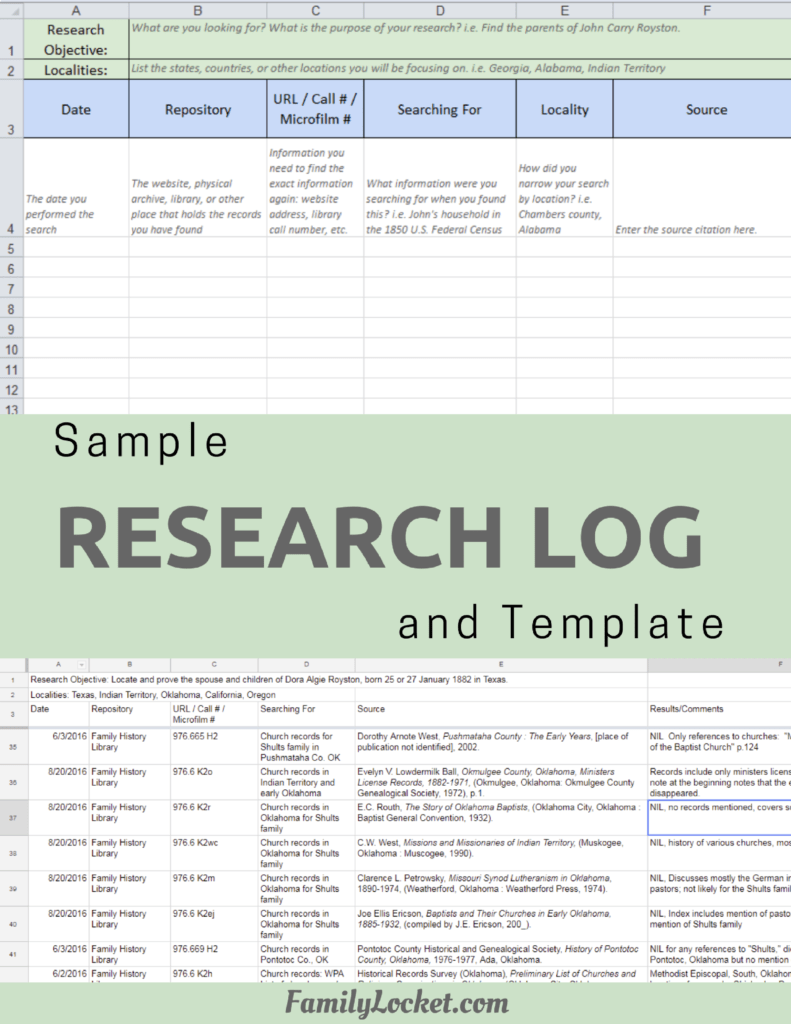
Have you discovered the value of using a research log? If not, you might want to experiment with using one for your next research project. Fine tuning a research log that worked for me was a major benefit of the accreditation process. When I started adding DNA as evidence in my research, I needed to tweak the log to reflect my correspondence with my DNA matches. I’ve shared each step of my DNA research project...

Updated 24 February 2022 When working on a case involving DNA test results, it may feel like you look at hundreds of DNA match pages, reports, family trees, and shared match lists each time you sit down to research. Do you want a better way to keep track of all the sources you consult in a DNA research project? It’s time to take your research log to the next level. In the Research Like a...

I am new to genetic genealogy. I began to realize several months ago that I needed to add DNA research to my list of skills, so I purchased Ancestry DNA kits for myself and my husband at RootsTech in February. I received my results and didn’t really know what I should do next, so I started reading the articles about DNA right here at Family Locket and listening to all of the Research Like a...

This series is about how I found my grandmother’s father with DNA. To read the other posts in the series, click below: Part 1 Part 2 Part 3 Part 4 Part 5 For many people working on genealogical projects for adoptees, connecting with the biological family is the end goal. You never know how people will react to this kind of news, but it’s hard not to get excited about the possibilities of a relationship....

How do you give credibility to your research that includes DNA evidence? The same way that you give credibility to research using evidence from traditional genealogy sources such as census and probate – with a source citation. Creating a source citation for the DNA matches, ethnicity reports, chromosome browsers, cluster reports, etc. that you use in your research project will back up the conclusions that you’ve drawn from your DNA analysis. Traditional Genealogy Source Citations...

This series is about how I found my grandmother’s father with DNA. To read the other posts in the series, click below: Part 1: Who to Test? Part 2: Shared centiMorgans and DNA Research Logs Part 3: Identifying a Familial Cluster Part 4: Combining Traditional Research with DNA Analysis Part 5: Using Multiple Databases Epilogue: Meeting New Family Did you know that you can upload your Ancestry DNA test results to other select databases for...

Are you ever frustrated while writing citations? Many people are! Learning about a simplified formula for citations can lift the frustration and bring calm to an essential part of genealogical research. In a previous blog post, DNA Sources, Information, and Evidence: Sorting it All Out, I wrote that you are a source—you share your DNA with a testing company. The DNA testing company extracts DNA from the saliva, or the cheek swab you sent back...

What should your research plan look like if you want to test a hypothesis with DNA evidence? Each project is unique, but all can follow the same guiding principles. In the Research Like a Pro with DNA process, we have already discussed the following steps: Step 1 Take a DNA Test: Which DNA Test Should I Take? and DNA-Recommended Testing Strategy Step 2 Assess: Understanding and Using Your DNA Results – 4 Simple Steps Step...