
As genealogists and family historians, we love original records such as birth certificates, court records, family bibles, and deeds. We’re always hoping that a record will state a family relationship and clues to birth, marriage, and deaths – so key in our research. If we’re researching British Colonial America, we may become frustrated by the lack of records or wonder about the accuracy of the records we do find, especially if they seem to be copies of originals. For this early period, we may only have a published genealogy to go on and wonder about its provenance.
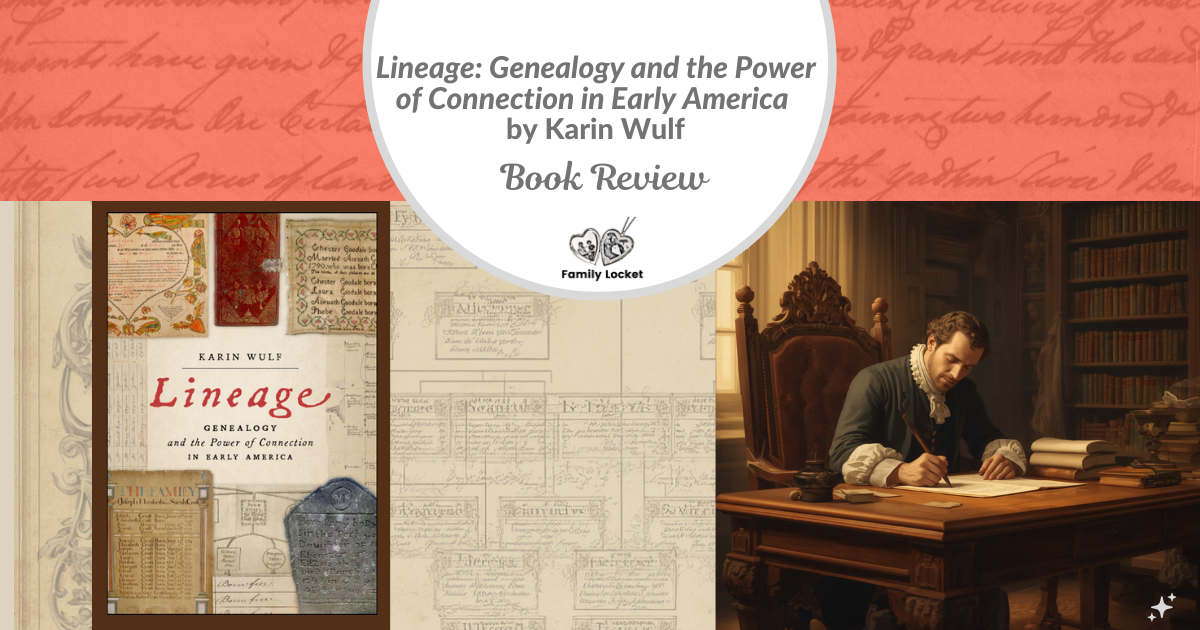
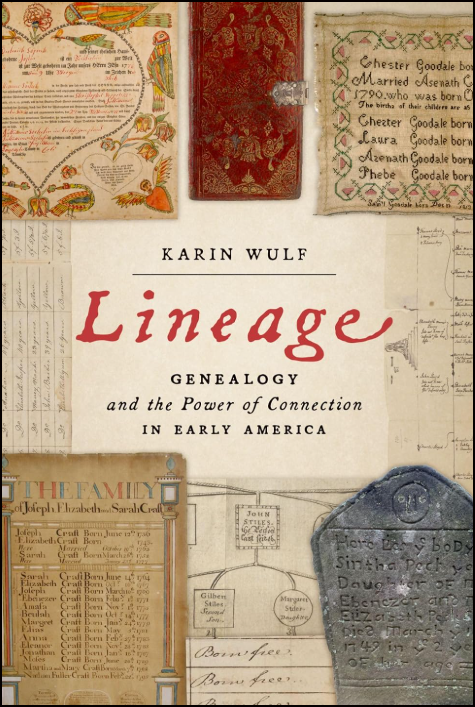 In Dr. Karin Wulf’s new book, Lineage: Genealogy and the Power of Connection in Early America, we get valuable insight into those early records, the people who kept them, and the intersection of family, church, and state. Lineage‘s bibliography provides the scope of the author’s study: manuscript materials in archives and libraries across the country, original sources, and books and articles by other scholars. Extensive footnotes guide the reader to additional reading and further study. We’re reading Lineage for our summer Family Locket Book Club selection on Goodreads.
If we’re seeking a good understanding of record-keeping in British Colonial America, Lineage is the perfect place to start. I was introduced to Dr. Wulf and her work when she visited Brigham Young University as the speaker for the 2026 Marjorie Pay Hinckley Endowed Lecture, Genealogy at America’s Founding.” For a quick introduction to the book, you can view Dr. Wulf’s webinar titled “Lineage: Genealogy and the Power of Connection in Early America” on the American Ancestor’s website. Another webinar, “Lineage: The Power and Promise of Genealogy in Early America,” is hosted by the Connecticut Museum of Culture and History. She introduces the book and shares fascinating examples of the types of sources that provide genealogical information. Watching either or both will provide a flavor of Lineage. For a quick overview, see the video clip from Brown University where Dr. Wulf is a professor of history and director and librarian of the John Carter Brown Library.
What did I learn from my study of Lineage? That genealogy was everywhere in British Colonial America. As we know, most records were not created for our use as genealogists. Instead, they served a purpose, generally for the government, church, or other institution. However, then as now, some people were highly interested in preserving their heritage and recorded their genealogy in account books, almanacs, Bibles, letters, notebooks, diaries, and more.
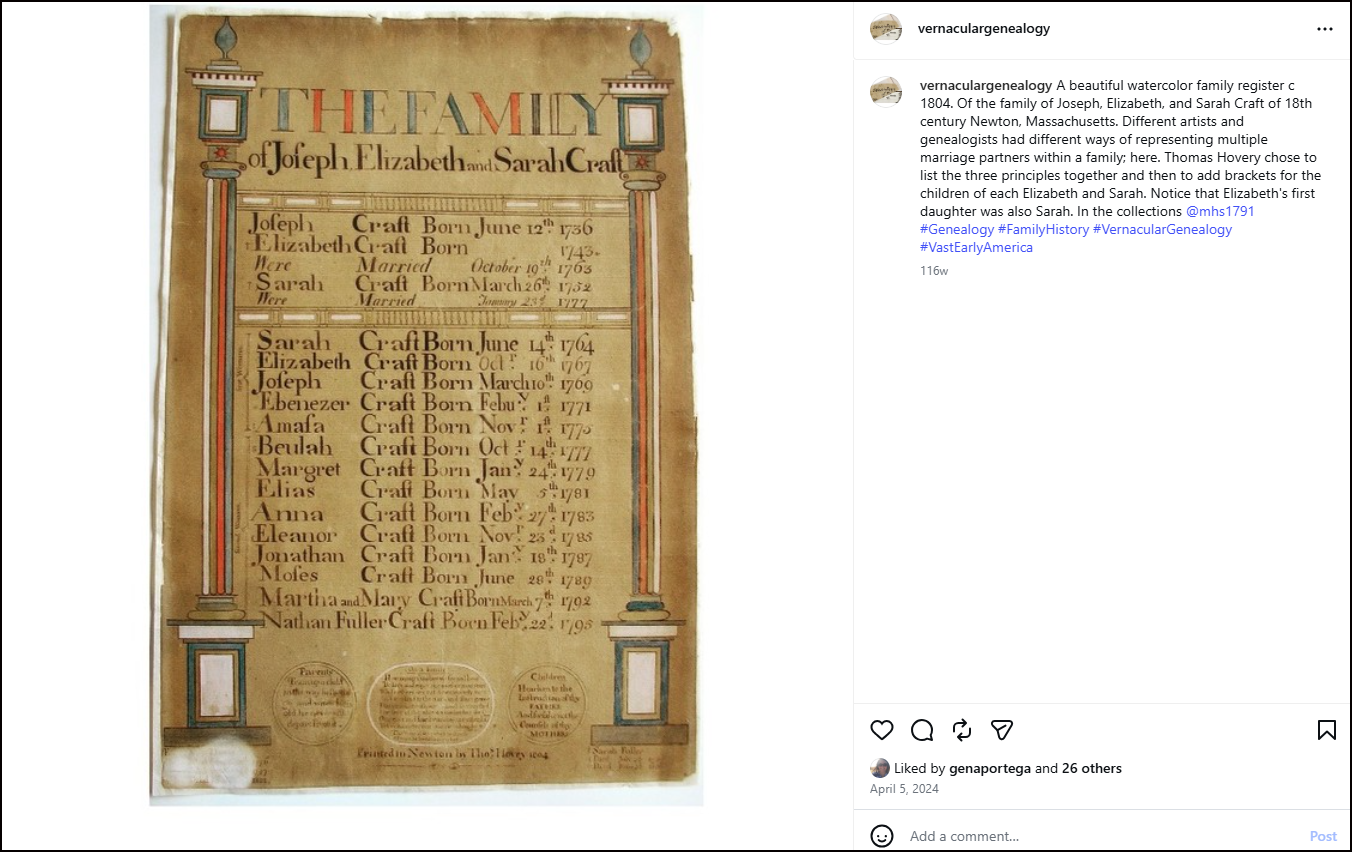
Dr. Wulf studies families and records and tells the stories, providing historical context and explanations for the records. Numerous images throughout Lineage illustrate the chapters, and Dr. Wulf’s Instagram account, Vernacular Genealogy, features full-color images of fascinating records and their stories. See the image below for one example of the rich offerings on Instagram.
The introduction to Lineage states the following:
Lineage tells the mutual history of family stories and the genealogical foundations of British American culture and society. It roots that mutual production of genealogy by families and by state institutions and institutional actors in its simultaneous emotional resonance and political potency.
If genealogy is meaningful to families in the ways it can represent and remember connections, it is useful to the state in the way that it asserts and confirms those connections.
Reviewing the chapter headings gives a peek into the broad scope of Lineage.
- Introduction: Genealogy as Statecraft
- Bible, King, and Common Law
- Vernacular Genealogy
- Death and the Ancestral Connection
- The Chroniclers
- Oceans of Kin
- Always Mama’s Baby
- Founders on Foundings
- Lineage in a New Nation
- Epilogue: The High Stakes of American Ancestry
For anyone interested in tracing their ancestors in British Colonial America, Lineage is well worth the investment of time and money.
Best of luck in all your genealogical endeavors!


Leave a Reply
Thanks for the note!