
As family historians, we don’t know what we don’t know! For example, the idea to research Catholic Nuns in the United States had never occurred to me because I’ve never run into that scenario. However, we may have clues in our family history that a woman may have entered a religious order and need guidance on how to research her. Sunny Jane Morton’s newest book, Searching for Sisters: A Guide to Researching Catholic Nuns in the United States, provides that guidance. This important guide can help us identify a sister or nun and then find the records that tell her unique story. The book also discusses others who might be in the archives of women religious, such as church leaders, employees, volunteers, enslaved people, and Native Americans.
Why This Book
The introduction to Searching for Sisters begins with an overview of the subject’s scope and the unique challenges of researching Sisters.
An estimated 350,00 Catholic nuns and sisters have served people of all backgrounds in the United States. They have staffed thousands of schools; administered hundreds of hospitals; cared for epidemic-ridden communities when nobody else could or would; and tended the wounded in war, especially the Civil War.
Most of them did not have descendants to honor their legacies within their own families. The result is that their lives and contributions – individually and collectively – are often less-documented in local, parish, diocesan, women’s, social, religious, ethnic, and other histories.
Sunny has long been interested in using church records for genealogy. Her previous book, How to Find Your Family History in U.S. Church Records: A Genealogist’s Guide, was co-authored with Harold A. Henderson and covers the major Christian denominations before 1900.
What is in the Book
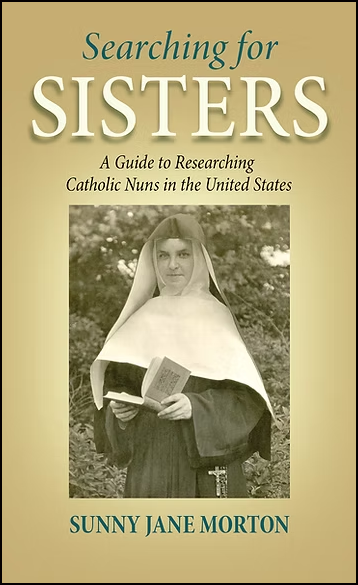 Searching for Sisters is a small book at just 134 pages, but it is packed with useful information. The first chapters provide an introduction to religious life for women and explain how to determine whether a woman took vows.
Important in the research is identifying the right order a Sister belonged to, then finding the archive that could hold her records. We learn the specific types of records that might be available in a religious archive, and then how to use general genealogy sources, such as the census and newspapers, to find her in those records.
The book concludes with ideas on how to tell their stories and five case studies about researching Sisters. An appendix of selected archives and an index help the family historian find the information they need to be successful. The author has meticulously sourced the text with footnotes and included snippets of records to illustrate a point.
Learn More
Sunny presented a webinar titled “Searching for Sisters? Researching Catholic Nuns in the United States,” through Legacy Family Tree Webinars, which you can view. You can also watch her discuss the book on YouTube on the GenFriends Genealogy Chat Show: Searching for Sisters with Special Guest Sunny Jane Morton.
I reached out to Sunny to learn more about her interest in research. Here are her answers.
Interview with the Author
How did you get started in family history? Do you remember an initial “spark” or incident that inspired you? Did you have any experiences as a child/teen in school or at home that helped you be more inclined toward family history?
I grew up with five brothers and no sisters. Most of the time, I loved the energy and fun. But sometimes I felt a little lost and lonely with all those boys. One day, I had a rare, quiet moment with my mom. She drew a stick figure picture of a chain of women: me connected to her, connected to her mother, and so forth. She wrote our names: Sunny Jane, Cheryl Jane, Barbara Jane, Jo (her sister was Sally Jane), and Seneca Jane. For four generations, the women have been connected by the matrilineal middle name of Jane. That made me feel part of something special. More “seen.”
I have a daughter now, too. Her name is Seneca Jane. She has two brothers, so she’s also an only daughter. 🙂
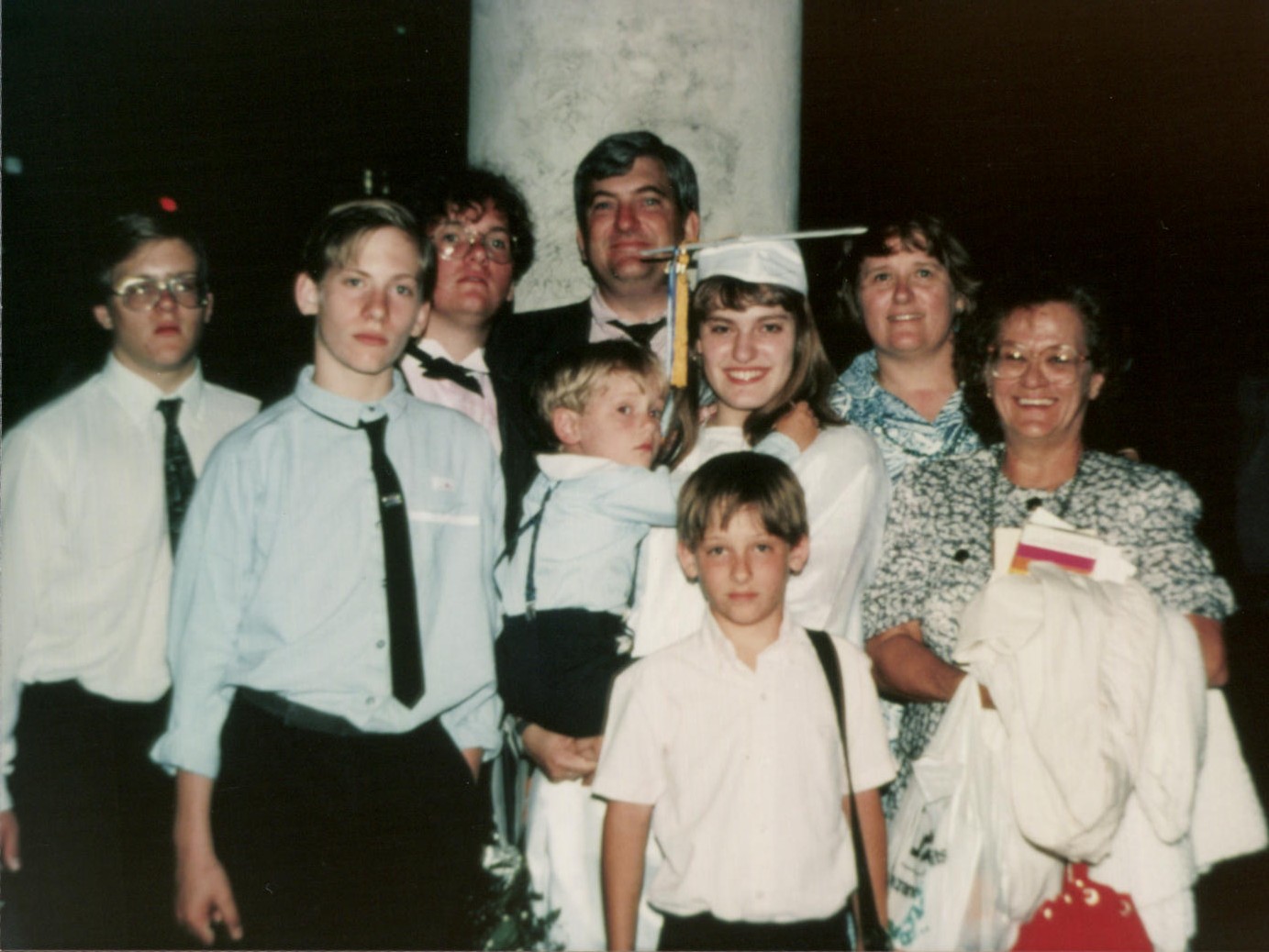
Sunny’s high school graduation, surrounded by her five brothers, her parents, and her maternal grandmother, Barbara Jane
What mentors influenced you to get started in family history and genealogy research?
My college mentor was historian Maureen Ursenbach Beecher, who studied women’s diaries and personal writings. She challenged me to read between the lines for what nineteenth-century women were not saying about themselves and their own experiences.
Both of my parents encouraged me when I eventually started applying my interest in history to my own family. They have worked on each other’s family history since they were in college. My mother retired a few years ago as her county public library’s genealogist. My mother’s younger sister, Judie, is also a dedicated researcher and family archivist. Every time I visit Judie, she has a new story, artifact, or document to share with me.
Why do you do genealogy? Why do you think it’s important?
History explains how we ended up where we are today in the world. It can inspire us in becoming our best selves and avoiding being our worst selves. Family history is the same thing on a more personal level. Family history essentially gives me case studies of how people like me have behaved in different ways, and how it turned out—and I can learn from that.
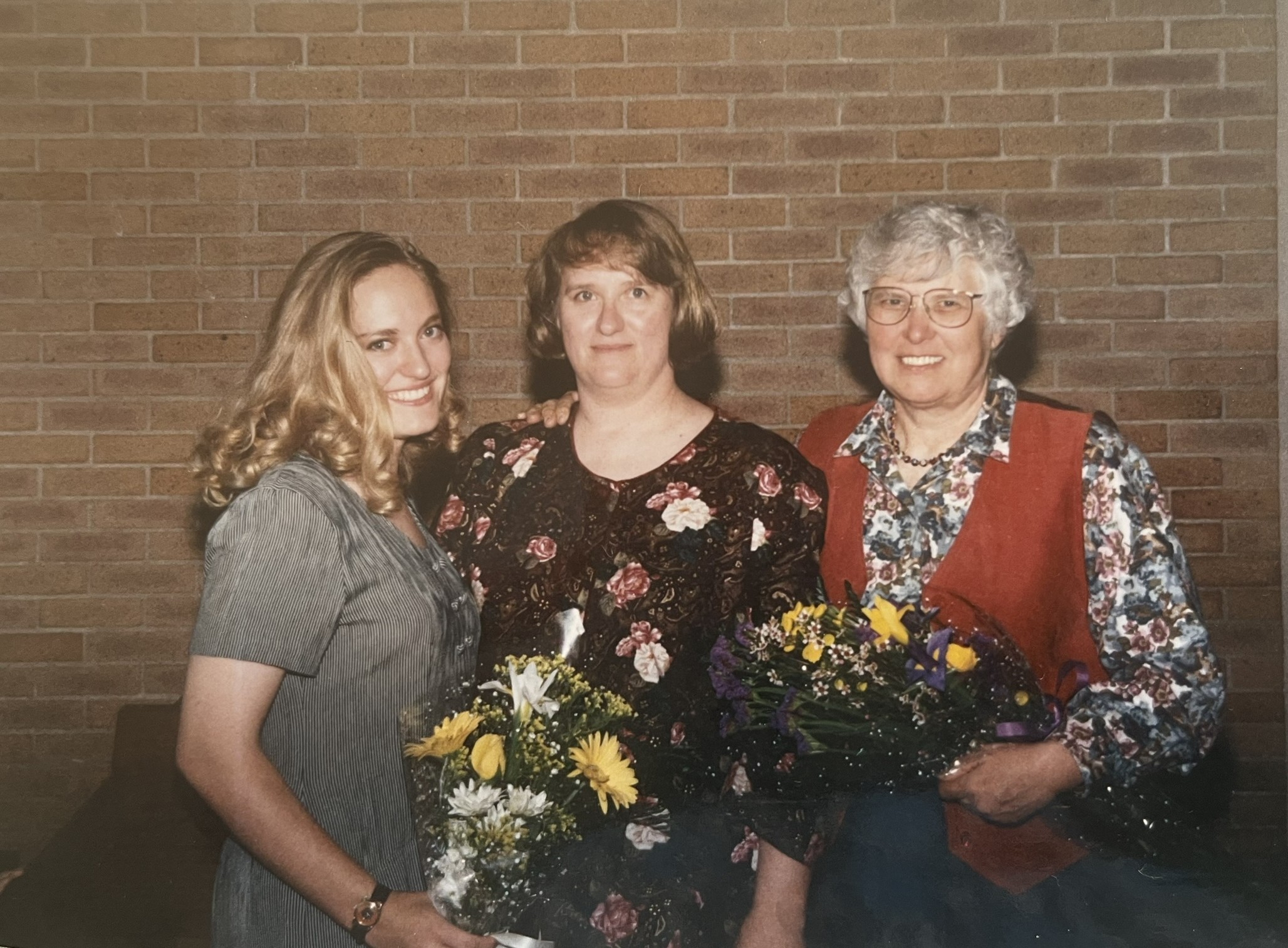
Sunny’s college graduation, with her mom (center) and mentor, Maureen Ursenbach Beecher
What is the most rewarding part of researching your family’s history?
Discovering something that explains something important about why my family is the way they are.
What has been the most difficult part of your genealogical journey?
Discovering something that explains something important about my family, but realizing the timing or circumstance isn’t right to share it.
What are your research interests?
Records of US religious denominations, because there is so much religious variety in the United States and because these records are relatively more inclusive of women, children, the impoverished, the enslaved, the non-English-speaker, and others who are so often excluded from other U.S. records. I’m also interested in story-building techniques and the different ways genealogists successfully transmit those stories.
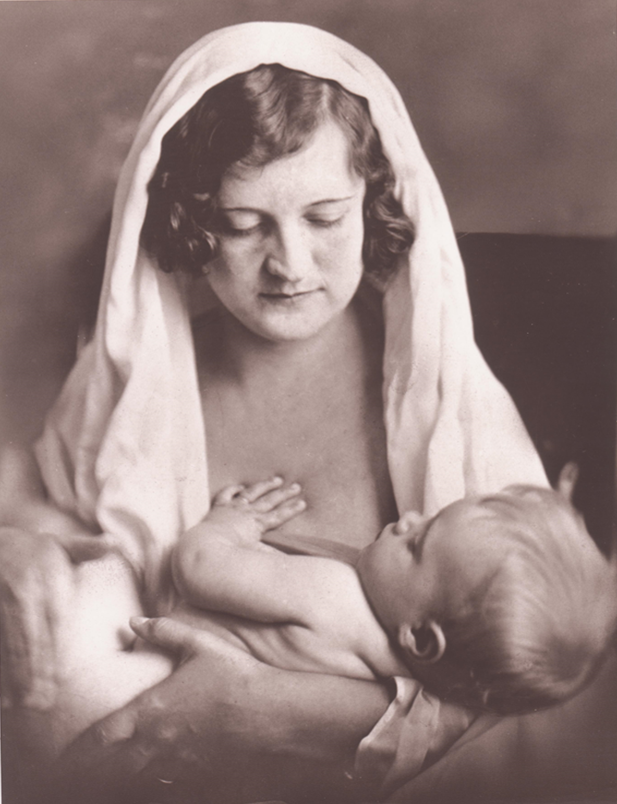
“Madonna and child,” Jo Henderson Hall with Barbara Jane Hall, probably Christmas 1929
How do you preserve your family history?
I tell stories when I think people want to hear them. If they don’t seem interested now, I try to put stories where they could find them later on if they become interested. I’ve put stories in FamilySearch, in scrapbooks for my children, in video snippets, and in printed booklets.
What is your favorite way to share genealogy and family history with others?
Short stories over a campfire or a long, leisurely dinner.
If you had all the time in the world to spend on family history, what would you do?
I would travel to all the places my family lived and make short video documentaries about those places.
What’s the best discovery you’ve made about your family?
That we take care of each other through hard things.
Who is your most interesting ancestor?
My great-grandma Jo, who was given a Brownie Box camera as a teenager and showed off her personality with the pictures she took. Like on her brother’s motorcycle, and of her fellow basketball players in their bloomers, and of her girlfriends baptizing each other in a lake. My favorite is a posed madonna and child photo of her with my grandma, who was born on Christmas Eve. Grandma Jo has finger waves in her hair–she’s a 1920s madonna–and you can see her skin dimple where the baby’s fingers press into her. It’s beautiful. I wish I had known the big personality behind all those poses.
Thanks, Sunny, for researching and writing the book and sharing your story!


Leave a Reply
Thanks for the note!