
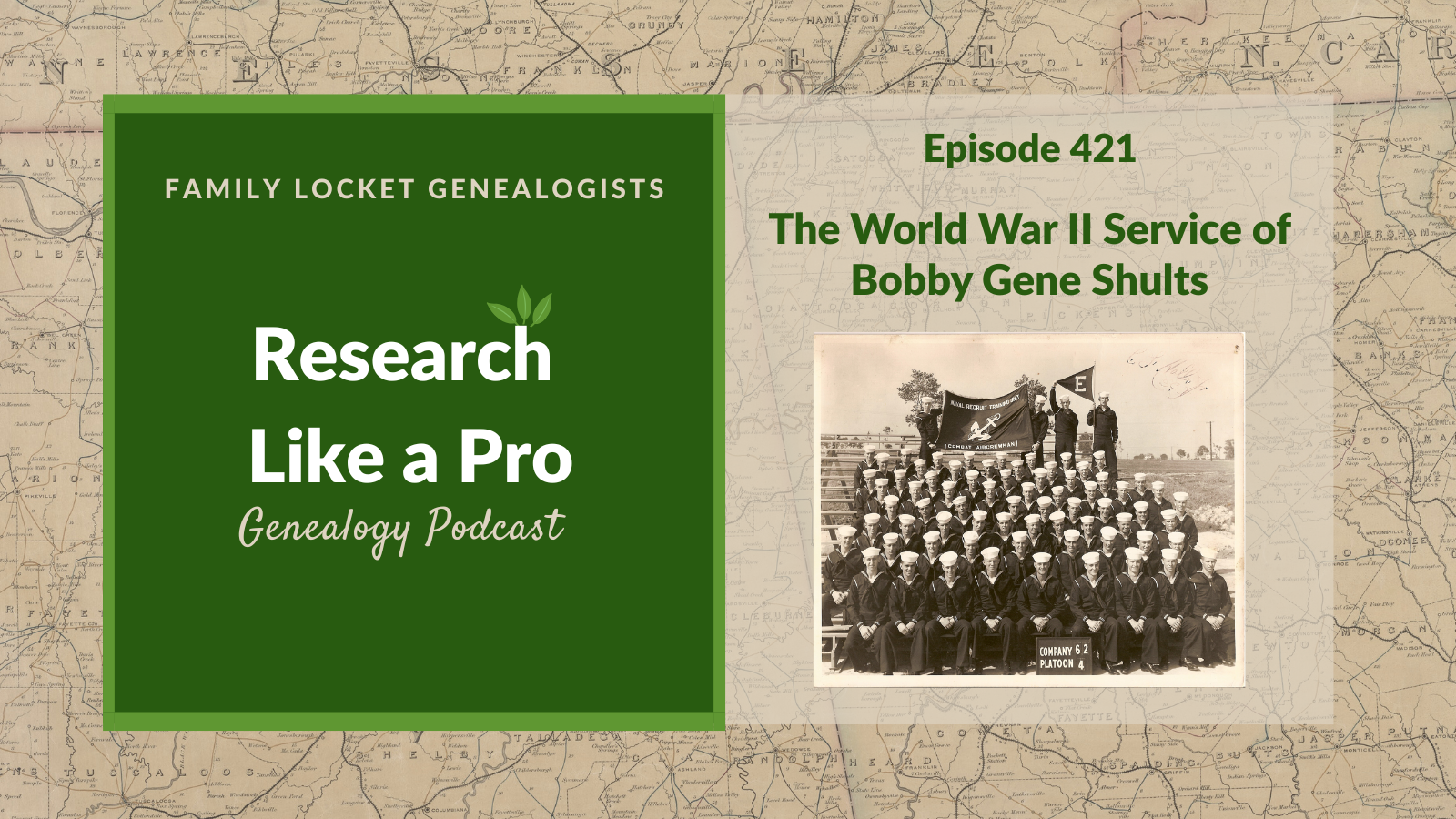
Diana Elder and Nicole Dyer explore the value of writing an ancestor’s military story by correlating multiple sources. Diana uses her father Bob Shults’s World War II Navy records as a case study. She demonstrates how to use AI to cross-reference personal oral histories with official documents like muster rolls and discharge papers. Listeners learn how to build a comprehensive timeline that bridges the gap between limited personal recollections and formal military service records.
The discussion highlights the use of the FamilySearch Simple Search tool to locate unindexed muster rolls that reveal specific locations and dates of service. Diana shows how she organizes this research in Airtable to track her father’s path through training in Tennessee, Oklahoma, and Florida, and his eventual deployment on the USS Antietam in the Western Pacific. By integrating this specific documentation with historical context about training bases and ship operations, researchers can effectively flesh out an ancestor’s service experience and uncover new avenues for future investigation.
This summary was generated by Google Gemini.
Transcript
Nicole (1s):
This is Research Like a Pro, Episode 421: The World War II Service of Bobby Gene Shults. Welcome to Research Like a Pro a Genealogy Podcast about taking your research to the next level, hosted by Nicole Dyer and Diana Elder accredited genealogy professional. Diana and Nicole are the mother-daughter team at FamilyLocket.com and the authors of Research Like a Pro A Genealogist’s Guide. With Robin Wirthlin they also co-authored the companion volume, Research Like a Pro with DNA. Join Diana and Nicole as they discuss how to stay organized, make progress in their research and solve difficult cases. Let’s go.
Nicole (42s):
This episode is sponsored by Newspapers.com. Hi everyone. Welcome to Research Like a Pro.
Diana (49s):
Hi Nicole. How are you doing today?
Nicole (51s):
Hey mom, I’m doing well. How are things going with your Dillard research?
Diana (55s):
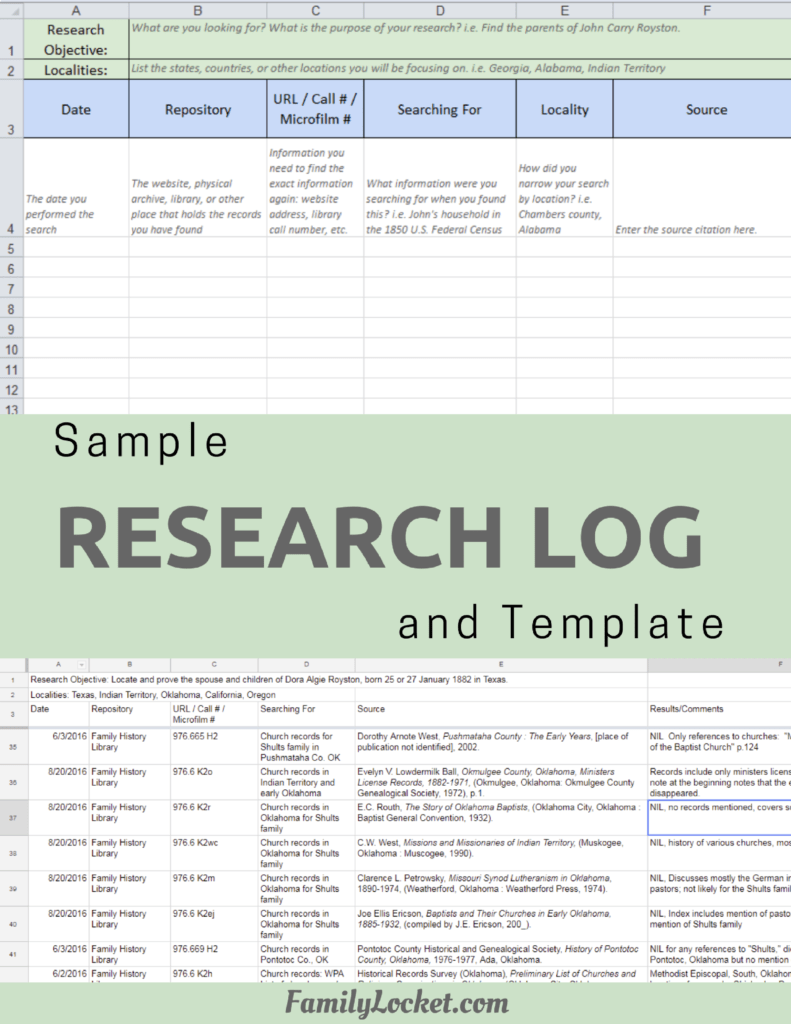
Well, I’ve been doing Descendancy research, which has been fun. And yesterday I was working on this and realized I hadn’t been keeping my correspondence log in Airtable at all, and I was just basically building the trees down, you know, on Ancestry. And I was starting to find contact information on the People Finder websites online, and I realized I need to start logging this. I’m so used to doing my research log for, you know, research tax records, probate records, but not as much on doing something like this. So opened up my Airtable base, went to the correspondence logs started putting in the people and a link to their page on Ancestry, you know, the page profile I created for them.
Diana (1m 41s):
And you know, living people don’t show up anywhere, but just on my own account and then putting the link to the People Finder website that I was using and then their addresses when I found them and locations and it’s been so helpful. And then the other thing I did was draw out the lines using Lucidcharts. So I had the clear diagram coming down of where they all fit in the tree and I realized that I had found, you know, several of these men, but I wanted to make sure I was covering specific lines, you know, covering different lines of descendancy coming down from Elijah Dillard. So having it drawn out makes it really easy for me to see who exactly do I want to test.
Diana (2m 25s):
So I’ll probably send out letters to all of them and see who responds, but then kinda be judicious with who I actually ask to do the testing, if that makes sense.
Nicole (2m 36s):
Yeah, once you have all the information, then you can decide which people you wanna ask to test. But that’s great that you’re tracking that now in your Airtable log and not feeling scattered.
Diana (2m 48s):
Yeah, it’s funny how sometimes you know, the light doesn’t turn on your brain that you need to be logging this as you’re doing the work. So it just feels so much better to have it all recorded and links to quickly click and get to things where you want to check on something. So I’m feeling very accomplished,
Nicole (3m 6s):
Right, I start to get that feeling of, oh, if I don’t keep track of this link, I’m gonna have to find it again later. Like I
Diana (3m 13s):
Exactly.
Nicole (3m 13s):
I need to put this somewhere safe.
Diana (3m 16s):
Exactly.
Nicole (3m 17s):
Well, our announcements today are that the next webinar in the Research Like a Pro Webinar Series is on Tuesday, August 18th at 11:00 AM Mountain Time. And it’s by Torhild Shirley, who’s an Accredited Genealogist, and it’s titled, Tracing Mathilda: Finding an Ancestor’s Swedish Birthplace through American Records. And it’s gonna be about identifying an immigrant ancestors’ birthplace and how this is key to crossing the ocean in genealogical research. This particular case study follows Mathilda A. Nelson through a variety of American sources to gather the details needed to locate her in Swedish records. The research demonstrates effective strategies for bridging the gap between U.S.
Nicole (3m 56s):
and Scandinavian sources. And beyond just the research topics of Sweden, and church records, passenger list, and that kind of thing, it’s, every webinar in the webinar series has the research report with it. So if you’re wanting to learn how to write research reports, then coming to our webinar series, the Research Like a Pro webinar series, every single webinar is accompanied by a well-written research report that can give you ideas for how to write your own reports. A little more about Torhild , she’s a native Norwegian and an Accredited Genealogist® professional. She’s the owner of ScandinavianFamily.com and has an associate’s degree in technical translation from the University of Agder in Norway and an associate’s degree in Family History Research from Brigham Young University – Idaho.
Nicole (4m 42s):
Torhild has over 30 years of experience researching, and speaks five languages, and is fluent in all Scandinavian languages. So she is a wealth of knowledge for this type of research. So we hope you can come to that webinar on Tuesday, August 18th. It should be fun. The next Research Like a Pro study group is this fall and it’s with Diana. I won’t be teaching, I will be working on my portfolio. So although I’m gonna miss it, I won’t be participating this time. And the registration is still open. It’s open until the end of this month. You can register all the way up until August 26th, let’s see, August 20th, it starts on August 26th, and after it starts on August 26th, you’ll be meeting every Wednesday for nine lessons.
Nicole (5m 25s):
But some weeks we have a break week for extra time to research and write. So make sure you sign up for that. And that will be our 12th Research Like a Pro study group, which is hard to believe we’ve done so many. Yeah, make sure you get registered and that’s coming up really soon. And then of course, join our newsletter that comes out every Monday to see any new blog posts, upcoming lectures, and sometimes we send out coupon codes as well. As far as upcoming conferences, we will hopefully see a lot of you virtually at the Association of Professional Genealogist, Professional Management Conference, the APG PMC, and that’ll be October 14th through the 17th. So we’re both speaking, Diana’s talking about Managing Client Projects with Airtable and a panel about teaching classes.
Nicole (6m 10s):
And then I’m talking in a panel about podcasting, and doing a workshop about Airtable and AI and transcription of research logging. So that should be a fun workshop. So we hope to see a lot of you there, especially if you’re hoping to become a professional or you are a professional Genealogist already.
Diana (6m 26s):
Well, thank you for going through all of those fun announcements. Yes, we are looking forward to that conference this fall. It’s always exciting to, you know, talk about professional research. Well, today we are going to talk all about my dad’s military service. And it’s so interesting when we go to write the story, we have to dig in and learn more and it really helps us better understand those experiences. And the great thing we have as Genealogists is this ability to find the records. So once we find those, we can correlate those that mark their service and then we can use the ancestors’ recollections. In this case, we’ll be using my dad’s remembrances, his stories, and then we can dig into historical context to get a fuller picture than just any one of those three items alone.
Diana (7m 17s):
And the fun thing is that that process also can lead us on the hunt for additional records. So I had previously found some new records for my dad’s Navy years, and so I decided to write a blog post for Memorial Day and use artificial intelligence to help correlate all of those World War II Navy records with his actual history. And of course, AI is also so good at searching historical context and giving sources, and it was really neat to see how all the information came together. And interestingly, AI also pointed me to new research possibilities.
Diana (7m 57s):
So used appropriately, AI can be so helpful in tackling a complex task. And this was one of those that I really enjoyed using all the tools that AI gives us as I put things together for this new version of his history basically.
Nicole (8m 14s):
That’s such a great example of how AI can help you with something in your research, and correlating a lot of data from Muster rolls is such a good idea.
Diana (8m 24s):
Yeah.
Nicole (8m 24s):
Well, let’s talk more about these records that you found. So you located five new records from grandpa’s Navy years, these muster rolls, and they recorded the specifics of his movements through his military service. It’s so cool how you found these with Simple Search. That was fun talking about that last week.
Diana (8m 41s):
I know.
Nicole (8m 42s):
The prompt that she used was, I am researching Bob Shults, who was born in 1927 in Sanger, California and died in 2011 in Burley, Idaho. And this brought up three records that were all correct. And then you asked for searches with your dad’s full name Bobby Gene Shults, which picked up his Navy Muster rolls among some other records. And so you can go back and listen to last week if you haven’t yet, but we talked all about how the Simple Search worked and there’s a blog post with tips about it. So without the AI search feature on FamilySearch, trying to find these muster rolls would’ve been way more difficult. These records are not indexed on FamilySearch and they have no internal index to search.
Nicole (9m 24s):
Bob was in several different locations throughout the 1945 and 1946 years. And although you had his personal history mom, you didn’t have many specifics about where to start looking for these type of records. So it was so neat to see that the Simple Search tool helped find these, right. So for an example, one of the master roles has the names listed by surname first, and we’re looking at the Ss here because his last name is Shults. And going down the list, we can see Schumann, Shumway, she all the way down to Shults. And there’s, well, Shults is before Schumann I guess, and it has their service number and then it has a few more things like a column for the date of enlistment, which is actually empty.
Nicole (10m 16s):
And their present rating, which has some code numbers and things, the date they first received, were received on board. So there’s quite a bit of things that I have questions about when I see this muster roll. So it’s exciting to find these records and then it’s also exciting to figure out what they all mean and how to correlate it with what we already had.
Diana (10m 40s):
Right? They’re not really easy to read, are they, these muster rolls? There’s a lot of little interesting things that you’re just not sure what exactly, what does all this mean? But I knew I wanted to get all of the information into my Airtable research log, and I wanted the full transcription of the record, all the details, and I wanted to have my comments in there. And so what I did was, I also had my dad’s discharge papers, and certificate, and that added some additional details and he’d written his life history and recounted his time in the Navy. So that also became part of the project. And I set up this project in Claude AI, which is wonderful because you can just put all of the information you have there.
Diana (11m 25s):
And so I used my research log, I had put everything into Airtable and I had the source citation in there, and as I said, the transcription, and then I put in the history and then I worked with Claude to correlate the different dates and make a timeline. And that was very, very helpful. So I had a great timeline that Claude generated. And of course, you know, this is something that AI can do pretty well, taking all the information and especially if it has already been transcribed, you know, it was in my log, so it could clearly read all the dates and I would have to go check those.
Diana (12m 7s):
But what I found was a nice table. So we’ll just go through what the records say and then we’ll talk about the story. So on March 12th, 1945, Bob enlisted in the US Navy where he was living Sanger in Fresno County, California. And that was actually from his discharge certificate and notice of separation. So that’s the place we found where he enlisted the date. And then on April 27th, 1945, he entered active service there in Sanger, also, from that notice of separation. The notice of separation is when he was basically separated from the Navy, go back to real life.
Diana (12m 51s):
And then on April 27th through June, 1945, he was in bootcamp at the Naval Training Center, and this was in Memphis, Tennessee. He was there for six weeks. And that was from his oral history as well as the notice of separation. And then April 27, or no, June 27th, 1945, he was received at the Naval Air Technical Training Center, NATTC. So you know, the muster rolls have all these little abbreviations that had to figure out. And this was in Norman, Oklahoma. So he is in Tennessee now, he is in Oklahoma. And this was from one of those muster rolls.
Diana (13m 32s):
And then from the his time there, from June to December of 1945, he was in aviation machinist training. So he was there 21 weeks plus a two week AROS course. And I noticed that was from a muster roll as well as notice of separation. Then in December 20th, 1945, he was admitted to the US Navy Hospital there in Norman and he was on a muster roll there for the Naval Hospital. And it was the dated January, 1946. And then by February 16th, 1946, he was transferred from the hospital back to the Naval Air Technical Training Center there in Norman, Oklahoma.
Diana (14m 21s):
And that was on the Naval Hospital of the next month in February. So I had actual records of his time in the hospital, because he did talk about that. We’ll, we’ll get to that in a minute. And then after Norman, he was sent to Jacksonville, Florida for Naval Air Gunner School and there was no record that said that, only his oral history. After Jacksonville, he was awaiting his ship assignment at the Naval Air Station in San Diego, Coronado Island, California. And that was from his oral history and his notice of separation. And then he is finally received aboard the USS Antietam on April 28th, 1946.
Diana (15m 4s):
And that was in the Pacific, en route was he was received aboard. So it was already out to sea when he, they took him out there. And that was from the muster roll of the Antietam in May, 1946. And then from April to June, he was deck crew duty on the Antietam and they had ports of call in Tsingtao and Shanghai, China, in the Western Pacific, from his history and the muster roll. And then June 21st, 1946, he was transferred from the Antietam to the Navy Personnel Separation Center in Camp Shoemaker, California. And that was on the Antietam’s Muster roll. And then in July 19th, 1946, he was honorably discharged at Shoemaker California.
Diana (15m 49s):
And that’s from his certificate. So wow, that was so amazing to have AI, can I just say help do that table, that would’ve been so confusing and so difficult for me to have to go through every single one of those and pull out all those dates. And I shouldn’t say it would’ve been difficult, it would’ve been time consuming. So AI was my best friend there.
Nicole (16m 14s):
Yeah, that is a great usage for AI, when something you, you have all the data and you just wanna organize it, it’s so good at doing that. So if you want to see the table, I know it’s hard to understand it when you’re hearing it. There’s, obviously, we’ll have a link to the blog post on the same topic in the show notes. So you can just go to that. Or you can Google search, A Navy Life, the World War II Service of Bobby Gene Shults, and you’ll find it there. So Grandpa Bob wrote his life story in 1968, and in that story he talked about his Navy experience. And it was only 22 years later when he wrote this, but he didn’t really provide that many details, just kind of the basics.
Nicole (16m 58s):
His recollection correlated pretty well with the records. He said early in 1945, I joined the Navy before my 18th birthday, bootcamp was in Memphis, Tennessee. I went to Aviation Machinist School at Norman, Oklahoma. The last three weeks of school I got Scarlet Fever and spent three weeks in the hospital. In the Aug in August of that year, 1945, the war ended. I was in sick bay at that time with pneumonitis, I guess that’s how you say it, pneumonitis.
Diana (17m 30s):
That’s what he wrote.
Nicole (17m 31s):
From there, I was sent to Naval Air Gutter School at Jacksonville, Florida. After completing training, I was transferred to Coronado Naval Air Station, San Diego to await assignment to a ship. After two weeks, we received an assignment to the USS Antietam. It was already at sea, so we had to hitch a ride on a destroyer. After we caught up with the Antietam, we were transferred by boatswain chair to our new home. While on the Antietam we visited Tsingtao, China and Shanghai, China. When it was time for me to be mustered out of the Navy, they dropped us off at Guam and we caught a troop transport for San Francisco.
Nicole (18m 11s):
I was discharged at Camp Shoemaker, California and hitched a ride home to Sanger.
Diana (18m 16s):
So it was fun to read that and see that it correlated really well with everything I had found in the records. But there were so many different places I wanted some context to really understand what was going on. And I did have some pictures. It was fun to try to correlate the pictures I had with his story. So Bob indicated first he went to Memphis, Tennessee for bootcamp, and the records did show this as the Naval Training Center, which was actually part with, actually was north of Memphis in Millington. And the base had been part of the Navy’s wartime aviation training ground. But by 1945, no flight training was taking place.
Diana (18m 58s):
And I had a fun picture of my dad and two of his friends in their Navy uniforms and they just look so young, but they’re all smiley. And then a fun picture of him with one other young man, and they’re on the boat, it says Rocking the boat in Memphis. So it’s like one of those, you know, pictures and you can go sit behind this little picture of a boat and have your picture taken. Anyway, I’ve always wondered about that. So it was fun to see that. Oh, okay. He was in Memphis and that’s where he was in bootcamp.
Nicole (19m 36s):
Nice. It’s so fun to have pictures. Well, let’s talk about the next place he went. Naval Air Technician Training Center in Norman, Oklahoma. He was there from June 27th, 1945 to February of 1946. So what historical context do we have about this place? Well, what we learned is that the NATTC Norman was the Navy’s Wartime Aviation Repair and Maintenance School at South Base in Norman, Oklahoma. It trained enlisted men and women for technical aviation work needed to keep Navy aircraft flying. The Navy base at Norman included the Advanced Aviation Machinist Mate program that Bob would’ve attended. An information article published in 1945 goes into great detail about, about what life was like at Norman for the AMMs.
Nicole (20m 24s):
The trainees spent an hour a day in conditioning with a variety of games and exercises to prepare them for combat duty. Basic gunnery was required of all trainees to prepare them for their service with the fleet. As an aviation machinist mate, Bob spent 80% of his time in the shops learning the jobs required of ground crew and air crewmen. And you can read more from this article at Oklahoma Naval Air History, that website.
Diana (20m 56s):
Right. I loved finding articles, especially ones that were published concurrent, you know, 1945. So that was really fun. And I had a picture of my dad in uniform with his whole unit, his Naval Recruit training unit. So it was fun to picture them being there in Norman, Oklahoma. And then a picture of what it looked like in the training center with them all working on these machines. So again, it was just fun to start getting the pictures put into proper context in place.
Nicole (21m 30s):
So did you have the Naval Air Technician Training Center picture already? Or was that one from the article that was published in 1944?
Diana (21m 39s):
I had that already, but I believe I found that years ago when I was doing some research just like on a Google search.
Nicole (21m 48s):
Oh, nice.
Diana (21m 48s):
So I might have run across that article years ago, but I, at that time, I was putting together his scrapbook and wanted a picture to put in there. So I’ve had that picture for a long time.
Nicole (21m 59s):
That’s fun. Well, I love the picture of his whole company.
Diana (22m 5s):
Yeah.
Nicole (22m 5s):
June or however, it says Company 62, platoon four, and then there’s like 40 guys,
Diana (22m 10s):
right.
Nicole (22m 10s):
Or something like around that number. But it’s cool that they’re holding the flag in the back, Naval recruit training unit, combat air crewman, and then it has like a symbol of a anchor and they’re holding up an E flag that says E on it. But they all look so handsome and so young. Like they’re all, they all look high school age.
Diana (22m 32s):
I know. They look so young.
Nicole (22m 33s):
Totally. And it’s funny because the picture of grandpa, he’s in the second row, looks so much like my brother, I think. I think he looks like grandpa.
Diana (22m 43s):
Yeah, it is fun. Well, and you have to remember, I mean, we know looking back that the war was going to be over and that they wouldn’t have to actually go fight. But this is, at this time they were training there, they were fully expecting to be sent out on the Pacific and entering the war. You know, that didn’t happen. But yeah, it’s interesting just to think about what they were preparing for.
Nicole (23m 7s):
So when grandpa would talk about why he joined the Navy is, why did he join before his 18th birthday? Was he trying to not be drafted and be able to pick which branch he was in?
Diana (23m 18s):
He didn’t ever say. His brother, Uncle CH had also joined the Navy. They were living in California. I think the Navy just sounded better to him than the Army. And maybe he did want to join before he was drafted before his birthday, or maybe he was just eager to get in the fight. You know, so many of ’em were just, let’s go, let’s go fight. The Navy, they were all in the Pacific fighting the Japanese. And so he never really said what his motivation was.
Nicole (23m 48s):
But he had already graduated from high school.
Diana (23m 51s):
No graduation wouldn’t have been till May. And he joined as soon as he had his birthday. So he enlisted in the Navy on March 12th. He actually had his birthday on March 16th. So he enlisted four days before his birthday. And so they, he had finished up all of his classes and they let him go early. And it’s fun because in his senior yearbook they all sign it and say, oh you know, you’re, you’re off now. And sorry you didn’t get to go through graduation and all that. So I suspect that there were other young men doing similar things and his birthday just happened to be right there in the spring where he could take off and be done with with high school.
Nicole (24m 32s):
Yeah. I wonder if there was just kind of like a feeling of let’s hurry and get done with high school so we can go and like leave as soon as we can type of thing.
Diana (24m 39s):
Yeah, I’m sure it was, and the teachers were probably used to it. There were probably others doing the same thing or maybe not. Yeah. Interesting questions, huh? Alright, well let’s have a word from our Sponsor. This episode is brought to you by newspapers.com, the ultimate resource for family history research. If you have ever hit a brick wall tracing your family tree Newspapers.com — the ultimate resource for family history research. If you’ve ever hit a brick wall tracing your family tree, Newspapers.com is the tool that breaks it wide open. With billions of historical newspaper pages from across the country — going back hundreds of years — you can find birth and death notices, wedding announcements, obituaries, immigration records, and stories about your ancestors you never even knew existed.
Diana (25m 20s):
Imagine reading a 1920s headline featuring your great-grandmother’s name, or discovering that a long-lost relative was mentioned in a small-town paper clear across the country. Those moments happen on Newspapers.com every single day. And the search tools make it surprisingly easy — just type in a name, a place, a date, and start digging. It’s not just data — it’s your family’s actual story, told in real time as history unfolded around them. Whether you’re just starting your family tree or you’ve been researching for years, Newspapers.com has something that will stop you in your tracks. Start uncovering your history today at Newspapers.com/FamilyLocket and enjoy 20% off your subscription.
Diana (26m 3s):
That’s Newspapers.com/FamilyLocket — your family’s story is waiting to be found. Well the next part of Bob’s story is his time at the Naval Air Gunner School in Jacksonville, Florida. And this was from February to April, 1946. So following his training at the NATTC, he was transferred to Naval Air Gunner School where he trained for aircrew duties involving anti aircraft mounted machine guns and related combat skills. And this was technically called the Yellow Water Naval Air Gunnery School, where trainees spent six weeks learning all phases of aerial gunnery.
Diana (26m 46s):
So I didn’t have a muster roll for this phase, but he had it in his history that he had gone there. And when I did the research, there was not very much about it. There was basically this one little article that’s titled Yellow Water N.A.G.S. & Weapons Storage, Abandoned Southeast. So apparently this place where they had it, has been abandoned and they have pictures of it, you know, kind of overgrown with plants and things. So that was an interesting little bit of his history that I didn’t have a whole lot and if he hadn’t mentioned it I wouldn’t even have known about it ’cause I didn’t have any record of it that, you know, with what I have right now.
Nicole (27m 27s):
Wow. What an interesting website. The Abandoned Southeast. And then it looks like maybe a blog or something.
Diana (27m 35s):
I know, yeah,
Nicole (27m 36s):
Like a photo blog of hundreds of abandoned, historic and forgotten places. That’s cool. This is a person who’s taking pictures basically in Florida.
Diana (27m 47s):
Yep.
Nicole (27m 47s):
That’s cool. I always appreciate it when someone does that because can’t always go to the place that you wanna see. But the pictures of this abandoned place, they’re, it’s crazy because it’s just like a big hole in the ground.
Diana (28m 3s):
I know, it’s crazy.
Nicole (28m 5s):
Some concrete buildings that are overgrown with grass. Oh, the hole in the ground was a pool, I think. Oh wow. It’s an old pool with a bunch of like trees and leaves in it now. That’s so funny. They did it or just let it kind of die off, I guess they didn’t need it anymore.
Diana (28m 24s):
Right.
Nicole (28m 24s):
Alright, well the next place that he went was Coronado, California, which is in San Diego at the Naval Air Station. This is located on North Island in Coronado and it was a major Pacific aviation base for the Navy during the war. It supported carrier aviation and it was the logical place for him to be sent as he awaited his assignment to an aircraft carrier. And to learn more about this, there was an article on San Diego History website and it just kind of had some history and pictures of this naval base in San Diego. So that was neat.
Diana (28m 58s):
Yeah, I have, I imagine he was probably glad to get back to California and especially since this was April and it was going to start being really hot back in Florida. So he is probably glad to go back to California. Not that it’s not hot there, but you don’t have quite the humidity and heat that you have have in Florida. So next he is going to the USS Antietam, and this was April 28th to June 21st. So when I did some research on the Antietam, that was actually kind of challenging. You would think that it would be really easy to find out about an aircraft carrier, but there were different versions of the Antietam and I had to learn about all those before I could figure out the correct one.
Diana (29m 43s):
So it was an Essex-class aircraft carrier that set out on its South Pacific mission from Pearl Harbor on August 12th, 1945. Three days later the Japanese surrendered and the original combat mission became an occupation support duty. The carrier arrived in Chinese waters on September 2nd, 1945 and remained in the area for the next three years. From April 1946 to August 1946, it was part of Carrier Air Group 19. So that was the exact time there, April to August. Dad was there from April to June. So that makes perfect sense that he was in Chinese waters and his history said he, they saw Tsingtao and Shanghai and he had stories about Shanghai, how the people were starving and that they were in their little boats.
Diana (30m 38s):
I can’t think what they’re called. And yeah, the sailors, he, he had clear memories of that time. So he spent about eight weeks on the USS Antietam. And the interesting thing that he always said about that was he always felt his best at sea because he had severe allergies and there were no plants out at sea. And he felt so good, which always kinda made me smile.
Nicole (31m 5s):
I can relate, I mean my, myself and my kids also have allergies and that’s such a great point that when you’re on the ocean you don’t have plants.
Diana (31m 16s):
However, I have toured some of those big aircraft carriers and I would get so claustrophobic in those little areas underneath, you know, where their bunks are. So I guess he was young and he didn’t care. He just was doing what everybody did. So he indicated in his history that when he had completed his service, he was dropped off on Guam and caught a transport home. And we don’t have any information about a transport, but I have a picture where he looks very happy and he is obviously on an island with a bunch of palm trees behind him. And I think that must have been the Guam-era. I was thinking about it and I thought, well it could have also been Florida because Florida has the palm trees and sand and beaches as well.
Diana (31m 59s):
But it seems more likely it was Guam. So that’s what I’m saying, you know, oh, maybe, maybe I need to do more research on that, see if there’s some little clue here. But it looks pretty much like Guam to me. What do you think?
Nicole (32m 15s):
I’m just gonna put it in ChatGPT and say, is this Florida or Guam? And see what it says
Diana (32m 20s):
Oh that’s a great idea
Nicole (32m 22s):
Palm trees might be better clues. It says more likely to be Guam or another Pacific island than Florida. The strongest clues are very dense coconut palms immediately behind the beach, bright coarse looking coral sand. And the men appear to be US servicemen in a tropical military setting. The rustic background and vegetation look more like a Pacific military base than a developed Florida beach.
Diana (32m 44s):
Okay. See I, my instincts were right according to ChatGPT. That’s fun.
Nicole (32m 50s):
Well it also looks like an angle and maybe the photographer was just down, you know, below pointing up, but it kind of seems like the beach is, you know how on islands, I guess this is probably true in Florida too, but like islands seem to slope up more quickly from the beach to the land. It kind of seems like that could be happening in this picture a little bit.
Diana (33m 12s):
It’s true. It could be.
Nicole (33m 14s):
Who knows?
Diana (33m 14s):
And I kind of feel like I see an army jeep clear in the background, see like a jeep and that seems like that would be more, you know, on Guam on the beach,
Nicole (33m 26s):
The pictures that we saw of the Florida place where he was, was kind of in the jungle. It wasn’t on the beach, but I mean they could have gone to the beach.
Diana (33m 36s):
Yeah. But they weren’t there that long, only six weeks. So yeah, I think, I think our hypothesis, our conclusion of Guam makes the most sense.
Nicole (33m 46s):
Yeah. And they also look like they’re kind of wearing casual clothes. I don’t know if that means that they would be just taking a break at the beach, or it could be either again. But it also kind of makes me think that it would be Guam on the way home, rather than at the beginning of his training where he might be wearing his uniform more often.
Diana (34m 8s):
Could be. But they look very happy.
Nicole (34m 11s):
Yeah, they, they’re
Diana (34m 12s):
Like big smiles.
Nicole (34m 12s):
Big smiles. And does grandpa have a little goatee or is that a weird shadow?
Diana (34m 20s):
It kinda looks like he might, I have a bit of a beard there.
Nicole (34m 23s):
That’s funny. I don’t know that I’d ever seen him with, I’ve ever seen him with a beard. Did he have a beard ever?
Diana (34m 29s):
Not really. Only after a few days in the, you know, after deer hunting,
Nicole (34m 35s):
But his hair was so light kind of reddish, right?
Diana (34m 39s):
Yeah, it was, his beard was really red,
Nicole (34m 41s):
So it was, that looks so dark to me. Like it had to be a black beard. It looks weird. It must just feel like a weird part of the picture rather than his actual chin hair.
Diana (34m 55s):
Could be. Could be.
Nicole (34m 56s):
Now that you finished all of this, there’s probably some more research that you thought of doing. So let’s read these future research suggestions. First one you wrote down is, doing a more in-depth study of Bob’s experience during World War ii, such as ordering his complete Official Military Personnel File from the National Archives. So that could be something we do later. And I’m, I’m sure there’s other questions that would come up when we get more records. Just like when you found these muster rolls, there were more things to look into, like what, let’s get some historical context of all these things, which you did a great job with, with all these resources available online.
Nicole (35m 38s):
And with the help of AI, it was so great to see how you were able to verify your dad’s history and learn more about his years in the Navy. So great job doing that. And it was fun to review this with you today.
Diana (35m 50s):
Right. I really appreciated having those new sources. And I didn’t apparently know that they would be out there. I mean I, I’ve seen muster rolls from other wars, but I just hadn’t thought about searching those. So it was really great to have Simple Search, find those for me so I could continue the research on my dad. And I really do need to get that OMPF file from the National Archives. And I’m lucky because he was in the Navy and they have those files, the, the Army files, most of those were destroyed in a fire. So the Navy records are there, though. I think you ordered some Navy records, didn’t you?
Diana (36m 31s):
For
Nicole (36m 31s):
Yes.
Diana (36m 31s):
For your grandfather in-law.
Nicole (36m 32s):
Yeah, My husband wanted to get them for his grandpa who he didn’t really get to know because he passed away when my husband was just a little kid. And so he had always wanted to learn more about him. So we did order that and it was not too difficult to do and gave us some interesting things to learn about.
Diana (36m 54s):
Nice. Well I think we want to just get every record. So I, I have to say that when I was doing this research, I was working off two histories. One that my dad wrote and one that I wrote. And I realized as I was correlating everything, that I had some things wrong in my history, and I had to go back and change it. I had put it down on FamilySearch and I don’t know what I was thinking. I think I made some assumptions that weren’t correct. So it made me really realize the importance of seeking out the real records and don’t assume things that you really don’t know.
Nicole (37m 27s):
That is so funny. Was it like locations or things like that?
Diana (37m 32s):
Yeah, it, yeah, and it, I was confused about his time in the hospital and just some things I got a little confused on. I, I think it was because I was confused in my head about, I hadn’t really put together the timeline very well. For some reason I thought he was out in the Pacific a lot longer for one thing. And it just really helped me to see it all in the timeline and say, oh, he was only there, he was only out in the Pacific, you know those, those two months and the rest of the time he was either in the hospital or training.
Nicole (38m 11s):
Well, I think that’s just a common way of thinking about it. When someone joins the Navy, we just assume they’re out at sea the whole time. So it’s really, it’s just important to make a timeline like you said, and really look at the dates and understand it more fully. And I think that was such a good example of how you did that.
Diana (38m 30s):
Well thank you. It was a fun little project to do.
Nicole (38m 34s):
Well thanks everyone for listening today. That was so fun to be here and talk about my grandpa, my mom’s dad.
Diana (38m 40s):
Yes. Thank you for listening and I think this just goes to show even when you think you know the story, there’s always more to be discovered. So we hope everyone can go make some discoveries this week. Thanks for listening and we’ll talk to you next time. Bye-bye.
Nicole (38m 56s):
Alright, Bye-bye. Thank you for listening. We hope that something you heard today will help you make progress in your research. If you want to learn more, purchase our books, Research Like a Pro and Research Like a Pro with DNA on Amazon.com and other booksellers. You can also register for our online courses or study groups of the same names. Learn more at FamilyLocket.com/services. To share your progress and ask questions, join our private Facebook group by sending us your book receipt or joining our courses to get updates in your email inbox each Monday, subscribe to our newsletter at FamilyLocket.com/newsletter. Please subscribe, rate and review our podcast. We read each review and are so thankful for them. We hope you’ll start now to Research Like a Pro.
Links
A Navy Life: The World War II Service of Bobby Gene Shults – https://familylocket.com/a-navy-life-the-world-war-ii-service-of-bobby-gene-shults/
“Formal Naval Air Station Memphis,” NAVFAC – https://www.bracpmo.navy.mil/BRAC-Bases/Southeast/Former-Naval-Air-Station-Memphis/
Technical Training, Naval Aviation News, November 15, 1944; imaged, Oklahoma Naval Air History – https://www.oklahomanavalairhistory.com/techarticle01.php
Lelan Kent, “Yellow Water N.A.G.S. & Weapons Storage,” Abandoned Southeast – https://abandonedsoutheast.com/2023/10/11/yellow-water-n-a-g-s-weapons-storage/
Andrew Bucholtz, “San Diego in WWII, Part IV: Home Base of the Pacific,” posted 11 October 2023, SDHist – https://sdhist.com/home-base-pacific-san-diego-wwii-iv/
CV 36/CVA 36 / CVS 36 – USS Antietam, Seaforces-online – https://www.seaforces.org/usnships/cv/CV-36-USS-Antietam.htm
Sponsor – Newspapers.com
For listeners of this podcast, Newspapers.com is offering new subscribers 20% off a Publisher Extra subscription so you can start exploring today. Just use the code “FamilyLocket” at checkout.
Research Like a Pro Resources
Airtable Universe – Nicole’s Airtable Templates – https://www.airtable.com/universe/creator/usrsBSDhwHyLNnP4O/nicole-dyer
Airtable Research Logs Quick Reference – by Nicole Dyer – https://familylocket.com/product-tag/airtable/
Research Like a Pro: A Genealogist’s Guide book by Diana Elder with Nicole Dyer on Amazon.com – https://amzn.to/2x0ku3d
Research Like a Pro with AI Workbook – Second Edition (eBook) – https://familylocket.com/product/research-like-a-pro-with-ai-workbook-second-edition-ebook/
14-Day Research Like a Pro Challenge Workbook – digital – https://familylocket.com/product/14-day-research-like-a-pro-challenge-workbook-digital-only/ and spiral bound – https://familylocket.com/product/14-day-research-like-a-pro-challenge-workbook-spiral-bound/
Research Like a Pro Webinar Series – monthly case study webinars including documentary evidence and many with DNA evidence – https://familylocket.com/product-category/webinars/
Research Like a Pro eCourse – independent study course – https://familylocket.com/product/research-like-a-pro-e-course/
RLP Study Group – upcoming group and email notification list – https://familylocket.com/services/research-like-a-pro-study-group/
Research Like a Pro Institute Courses – https://familylocket.com/product-category/institute-course/
Research Like a Pro with DNA Resources
Research Like a Pro with DNA: A Genealogist’s Guide to Finding and Confirming Ancestors with DNA Evidence book by Diana Elder, Nicole Dyer, and Robin Wirthlin – https://amzn.to/3gn0hKx
Research Like a Pro with DNA eCourse – independent study course – https://familylocket.com/product/research-like-a-pro-with-dna-ecourse/
RLP with DNA Study Group – upcoming group and email notification list – https://familylocket.com/services/research-like-a-pro-with-dna-study-group/
Thank you
Thanks for listening! We hope that you will share your thoughts about our podcast and help us out by doing the following:
Write a review on iTunes or Apple Podcasts. If you leave a review, we will read it on the podcast and answer any questions that you bring up in your review. Thank you!
Leave a comment in the comment or question in the comment section below.
Share the episode on Twitter, Facebook, or Pinterest.
Subscribe on iTunes or your favorite podcast app.
Sign up for our newsletter to receive notifications of new episodes – https://familylocket.com/sign-up/
Check out this list of genealogy podcasts from Feedspot: Best Genealogy Podcasts – https://blog.feedspot.com/genealogy_podcasts/









Leave a Reply
Thanks for the note!