
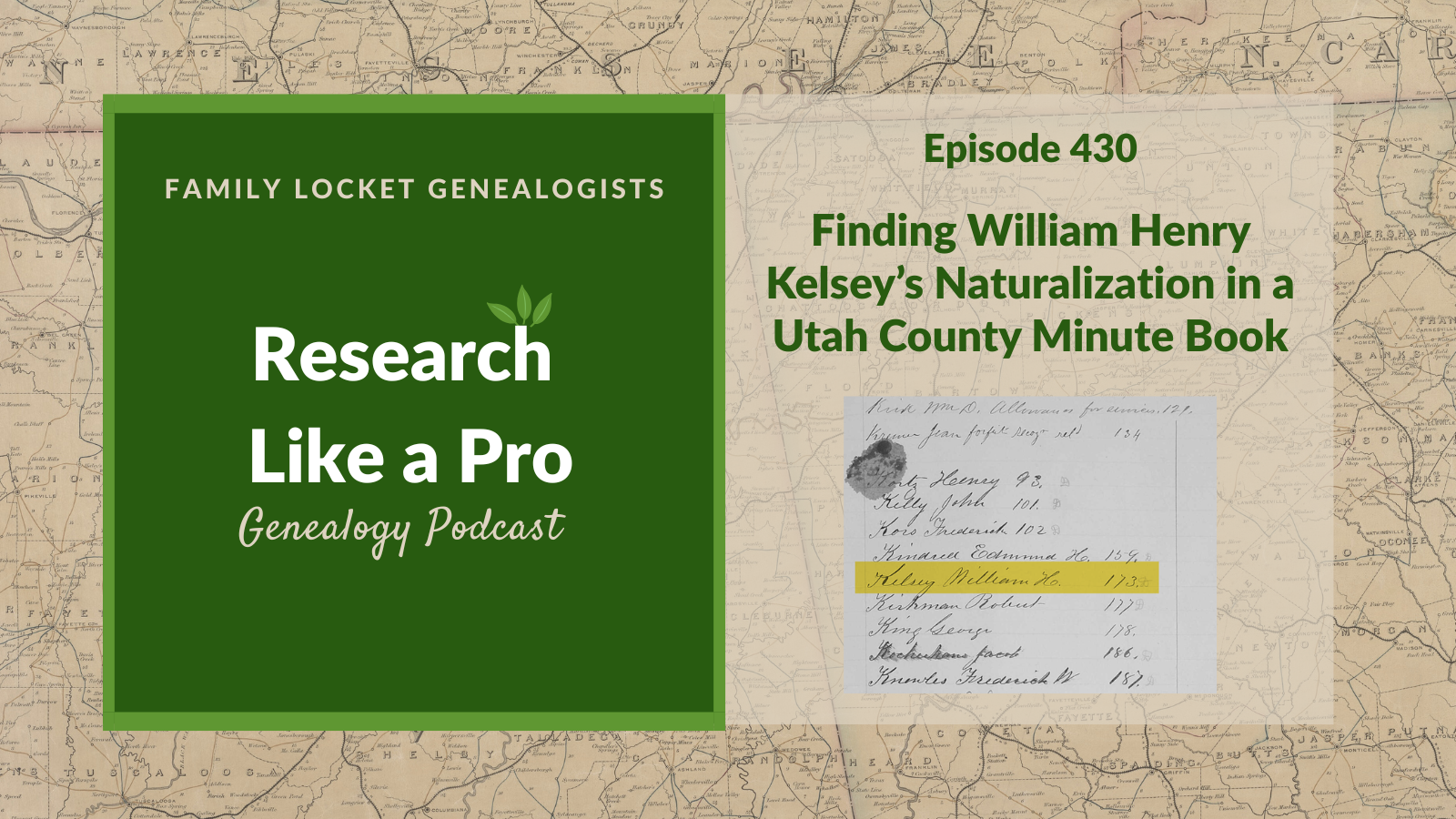
In this episode of Research Like a Pro, Diana Elder and Nicole Dyer explore the process of finding naturalization records in territorial Utah through a real-life case study. Nicole shares the story of her immigrant ancestor, William Henry Kelsey, who arrived in Utah from England in 1861 and became a citizen in 1877. She details finding his naturalization entry in a Utah County district court minute book presided over by Judge Philip H. Emerson. Diana and Nicole explain how naturalization procedures changed over time, specifically detailing how the Poland Act of 1874 shifted naturalization jurisdiction from local probate courts to federal district courts. They also examine how political rivalries and polygamy laws affected LDS immigrants seeking citizenship during the territorial period.
The hosts discuss strategies for locating surviving records and address common research hurdles. Nicole highlights a situation where full-text search indexed her ancestor’s declaration of intention, but a digitization error skipped the actual page on FamilySearch, demonstrating why researchers must verify page numbers and consider visiting county repositories directly. Listeners will learn how to navigate gaps in digitized collections, check general court minute books for hidden naturalization entries, locate both declarations of intention and final admission orders, and search territorial court records effectively.
This summary was generated by Google Gemini.
Transcript
Nicole (1s):
This is Research Like a Pro Episode 430: Finding William Henry Kelsey’s Naturalization Record in a Utah County Minute Book. Welcome to Research Like a Pro a Genealogy Podcast about taking your research to the next level, hosted by Nicole Dyer and Diana Elder accredited genealogy professional. Diana and Nicole are the mother-daughter team at FamilyLocket.com and the authors of Research Like a Pro A Genealogist’s Guide. With Robin Wirthlin they also co-authored the companion volume, Research Like a Pro with DNA. Join Diana and Nicole as they discuss how to stay organized, make progress in their research and solve difficult cases.
Nicole (42s):
Let’s go. Today’s episode is sponsored by Newspapers.com. Hi everyone. Welcome to Research Like a Pro.
Diana (50s):
Hi Nicole, how are you doing today?
Nicole (52s):
Hey, I’m doing well. Hey, how’s your study group project coming along?
Diana (57s):
It’s coming along well. I am excited to be working on Mary Baker and getting used to calling her by that name ’cause we have been calling her Polly Cessna forever with her married name, but she really is Mary Baker and I’ve been doing the timeline and then the analysis and yesterday I realized that I had not even put in my timeline yet my evidence for her birth year and her birthplace. So I put that because obviously that’s a really important piece of information if I’m going to start looking for records that could be, you know, for her family. So I’ve got her nailed down to being born between 1760 and 1770 in Virginia because her daughter Sarah Baldwin Royston Irwin, lived long enough to have the 1880 census where she names her parents born in Virginia.
Diana (1m 48s):
So that’s nice to have and I, I knew that, I just couldn’t remember where was the evidence for that. And then she, Mary is in the 1840 census and so that’s where the 1760 to 1770 birth year comes from, as well as she was married, we think, well for sure by 1793, maybe just a little bit earlier, 1792, I’m not really sure, but you know, often we think that our women married really, really young. But I have found in Georgia that especially with this more of the planter class, that they didn’t marry quite that early. I don’t know, I’m really not sure, but I’m thinking she, she may be have been, was more like 20.
Diana (2m 33s):
I don’t know for sure. We’ll find out more as we go, but, but it’s hard to estimate, isn’t it, when how old a woman was when she got married. That’s a tricky thing.
Nicole (2m 43s):
Yeah, that has come up more than once and it’s good to think about it because it gives you a range, right? So you can think what might fit and what might not fit. And if you don’t think about it, then you find a record and you’re like, how am I supposed to know if this is right? So it’s good to, to just do that thought work.
Diana (3m 2s):
Yeah, it is. And to have it in your research log, your, your your table timeline to have all of that information right there so you can go back to the record, read it again, see what it’s telling you. And often we don’t analyze these records correctly the first time, but when we get them combined with all this other evidence, things become more clear, which is what I highly suspect will happen in this case. Things will really clear up. And so I’m excited to to dig in, You know, these preliminary steps in the Research Like a Pro process are so important, but you don’t really start researching for a bit.
Nicole (3m 38s):
Yeah.
Diana (3m 39s):
Well let’s do our announcements. Our Research Like a Pro Webinar Series for October will be on Tuesday, October 20th at 11 am Mountain time and the title is, When DNA Reveals Hidden Identities: Investigating Whether Minnie James Was Born Fannie Tattoon. This is by Yvonne Fenster, and the description reads, Could Fannie Tattoon and Minnie James be the same person? This investigation examines a compelling hypothesis that emerged when DNA matches revealed shared ancestry through both Gilbert Tattoon (Fannie’s father) and James H. Clayton (Minnie’s husband)—connecting two seemingly unrelated Connecticut families.
Diana (4m 21s):
With Fannie vanishing from records after childhood and Minnie appearing as an adult without prior documentation, the analysis draws on genetic data, Connecticut records, and other documents to determine whether they are separate individuals or one woman who changed her identity after being orphaned. So we have a lot of interesting topics. This webinar will cover Connecticut records, Dana Leeds method, misattributed Parentage, Identity research, name change investigation, orphaned Children, DNA Analysis, disappearing Ancestors, vital records, Social Security Records, church Records, BanyanDNA, comparative timeline analysis, African American Research, City Directories, maps, and Fan Club.
Diana (5m 4s):
So if anything in there struck your fancy, you’ll want to join us because this will be just full of really interesting research and analysis. A little about Yvonne. She is an AG, an RN and a PhD. She’s accredited in the Upper South region of the United States and she brings expertise in DNA analysis, particularly in cases in involving cousin marriages and Y-DNA research. She’s a graduate of both of our Research Like a Pro study groups and has served as a mentor for both groups. She holds an Associate of Science in Nursing from Onondaga Community College, a Bachelor of Science in Biology from Bridgewater State College, a Doctor of Philosophy in Neuroscience and Physiology from the State University of New York at Upstate Medical University in Syracuse, and Postdoctoral training at Cornell University.
Diana (5m 54s):
So when not uncovering family histories, Yvonne enjoys quilting, cooking and spending time with her grandchildren and husband. We are looking forward to the next study group, which will actually be a DNA study group starting in February of 2027 and registration will open for that in December. So you can be thinking now if you’d like to join us. And as always we’ll have a peer group leader application on our website for any returning study group members who would like to be a peer group leader, join the newsletter that comes out every Monday where you’ll get new posts, upcoming lectures and coupon codes. And we are looking forward to the next big conference, which is for the Association of Professional Genealogists and it’s their Professional Management Conference October 14th through the 17th where I will be talking about managing client projects and contractors as well as doing a panel on building courses.
Diana (6m 51s):
And Nicole has a panel about podcasting and a workshop on Airtable and AI. So that should be fun.
Nicole (6m 58s):
Yeah, that’ll be fun. Also, our Merging and Separating identities course is ready for registration. So this is part of our Research Like a Pro Institute and Jan Joyce will be coordinating that course again. Last year the course sold out, so make sure that you sign up before it’s too late and it begins in January of 2027. So go ahead and go to the FamilyLocket website, click shop, and then click institute courses and then you can read an overview and see the description of each session and all the instructors. So we hope you’ll join us if you haven’t done that before.
Diana (7m 34s):
Right. I’m looking forward to that institute course. Again, that’s such a tricky topic where we have people of the same identities, or not, and who have been merged. Well, today we’re going to talk about naturalization records and these are some of the most exciting finds when we are researching our immigrant ancestors. They can tell us where our ancestor was born, when they arrived, and when they became a citizen of the United States. So recently you Nicole found a record for William Henry Kelsey’s citizenship and a Utah County Minute Book on FamilySearch. So this is one of our direct line ancestors and it’s so neat that you found that, but it did make you think about the complex history of naturalization records in Territorial Utah and whether more records might survive.
Nicole (8m 25s):
Yeah, you know, it was interesting because, well the reason I was thinking about naturalization records is that a friend of mine was researching NARA records at the National Archives and she was looking into a certain type of naturalization citizenship, certain thing, and I wanted to see if any of my ancestors fell into the time period she was researching. And so I was just going through all of our immigrant ancestors looking at their naturalization records. And I had found that one of them, William Henry Kelsey, we didn’t have any record of his naturalization. So I just wanted to research in FamilySearch Full Text Search to see if I could find it. And so it was fun to be able to do that and to kind of figure out where to look and which repositories would have more information.
Nicole (9m 10s):
And just thinking about, you know, if it’s gonna be at the Utah Archives, is it gonna be at the Federal level? You know, you never really know if it’s before 1907, I think it is, that you need to, where everything gets consolidated under the Federal law, but before that it could have been at any court. So anyway, before we talk about that, let’s go into the life of William Henry Kelsey, just to get a background on him. So he was born on November 21st, 1830 in Dover, Kent, England, the son of Edward Kelsey, age 44, and Anne Gibbons, age 39. He was christened on January 30th, 1831 at Dover, St. Mary the Virgin. And he grew up in Dover with his parents and siblings, including his sisters, Mary, Matilda Louisa, and Eliza Ann.
Nicole (9m 56s):
By his late teens, his life had changed dramatically. He was baptized into the church of Jesus Christ of Latter Day Saints on February 16th, 1848. Tragically his dad died that year, Edward Kelsey, in July of 1848. Despite losing his father, he was clearly committed to his new faith because in 1851 he was listed as a Latterday Saint Elder in the census. He was 21 and he was lodging in Croydon. On September 27th, 1852, William married Harriet Huggett in Norwood, Ealing, London. They began their family in the Croydon and London area where their first three children were born: Harriet Matilda in 1853, Ellen in 1855, and William Henry Jr.
Nicole (10m 44s):
in 1856. They also lost a baby in December 1858. The 1861 England census captured the Kelsey family at their home in Camberwell, Surrey, where William was listed as a “Dissenting Minister” living with Harriet and their three surviving children. But William was already preparing to leave England in May of 1861. The family sailed from Liverpool to New York on the ship Monarch of the Sea, arriving in June. From there they traveled overland from Florence, Nebraska to Utah Territory in the Sixtus E. Johnson pioneer company, arriving on 27 September 1861. The family settled in Springville, Utah County where their daughter Emma sarah was born in December, 1861.
Nicole (11m 30s):
Then in Utah, William practiced plural marriage and he married Hesther Huggett, or is it Esther and they just pronounced it with an H?
Diana (11m 38s):
It is Hester with an H, but they pronounced it Esther, “Es-stah”.
Nicole (11m 43s):
I could never remember this. We’ve, I know we’ve talked about this on the podcast before, the Hester versus Esther, but yes,
Diana (11m 49s):
The British accent, Esther
Nicole (11m 53s):
Hesther Huggett, which is Harriet’s twin sister, and they got married on July 26th, 1862 in Salt Lake City. He later married Laura Esther Street on March 13th, 1876, quite a bit later, also there in Salt Lake City. And William and Laura had several children together, including Esther Ruth in 1877, Josephine Victoria in 1879, and Dora Deborah in 1882. Before all those children were born, he served a mission back to Europe in 1872, being set apart in April of 1872. He continued to live in Springville until his death on August 5th, 1895 at the age of 64 and was buried in the Springville City Cemetery.
Diana (12m 35s):
Okay, so that’s a good foundation for him. Now let’s talk about the actual naturalization record. So this was found in the Utah, Utah County records, 1850 to 1962 collection at FamilySearch. And it was a volume titled “Minute Book of Naturalization: Utah. Naturalization Records 1873–1880.” And the header reads, “At the regular September Term of the U.S. District Court Commenced & held Sept. 17, 1877, Present Hon. P.H. Emerson Judge.” So that’s always so neat to just dive into the records and learn a little bit more about them.
Diana (13m 21s):
So this was a brief entry and from this we learned that William was a native of England and was living in Utah County, Utah Territory at the time of his naturalization. He appeared alongside another man, Robert Shine, who was naturalized in the same session. And the ditto marks after Robert Shine’s name indicate that the same phrase about being a native of England applied to both men and was the same presiding judge Judge Emerson. William was naturalized in September, 1877 and it was about 16 years after arriving in Utah, which is really interesting. Sometimes we think people might naturalize earlier, but this was at a time when elections in Utah had become fiercely contested between the Mormon-controlled People’s Party and the anti-Mormon Liberal Party.
Diana (14m 13s):
So maybe he just felt a desire to vote during the political conflict and so he decided he’d better get naturalized. Now what about this Philip Emerson, who was the judge while he was a justice of the Territorial Supreme Court of Utah, first appointed by President Ulysses S Grant in 1873 and reappointed by President Rutherford B Hayes in 1877 as a Territorial Supreme Court justice, he also served as a district court judge presiding over the court covering Utah County.
Nicole (14m 47s):
Alright, so the naturalization process in Utah territory was complicated by those tensions you mentioned, the political and religious tensions of that time period. From the 1850s through 1874, immigrants in Territorial Utah typically filed for naturalization in probate courts. And the probate courts were under local control and their judges were often members of the Church of Jesus Christ of Latter-Day Saints. Because of ongoing conflicts between the federal government and the LDS church members, many Latter-Day Saints preferred the local probate courts over the federally appointed district courts. So it was interesting to see that Philip Emerson was a federal district court.
Nicole (15m 31s):
So it’s not what I would’ve guessed, but you never know. I mean there’s always exceptions to the historical trend. So with the Poland Act of 1874, this stripped the probate courts of their civil and criminal jurisdiction and restricted them to matters of estates, guardianships and divorce. So I guess that’s the answer, right? Because he was naturalized after the Poland Act. Well after the Poland Act, naturalizations were processed through these territorial district courts like we see with William Henry Kelsey and the Territorial Supreme Court of Utah with Philip Emerson as the Justice.
Nicole (16m 13s):
William Henry Kelsey’s 1877 naturalization before Judge Emerson reflects that shift. Before 1874, he might have gone to a probate court whereas after when he did it in 1877, the citizenship was granted in the district court. It’s also worth noting that LDS church members who applied for naturalization during the 1870s and 1880s were sometimes denied citizenship because of polygamy and where William Henry Kelsey was polygamous, involved in polygamous marriages, it’s interesting to think about the effect that might have had and the fact that he was able to become naturalized. Well, the federal district court judges were often unsympathetic to the Latter-day Saints and naturalization hearings could become a flashpoint in the broader conflict over polygamy.
Nicole (17m 1s):
And William was living in a polygamous household at the time of his naturalization. He had married Harriet’s twin sister in 1862 and Laura Street in 1876. So it was just one year after that third marriage that he was naturalized. And so it’s interesting that his naturalization was granted without apparent difficulty. And so perhaps the court was not aware of his marital situation, or perhaps the issue wasn’t raised at his hearing. But more research into the specific court practices in Utah County during this period could shed some light on it. But we can read more about this at the FamilySearch Research Wiki they have an article on Utah Naturalization and Citizenship, which is where I kind of learned about some of this.
Nicole (17m 44s):
And also Utah Court records is another helpful article at the FamilySearch Research Wiki.
Diana (17m 51s):
That whole context is fascinating with the conflict of the political parties and the government versus the church that had had, you know, pretty much autonomous control over everything up to a certain point. So when you put that in context with your ancestor, that is really eye-opening, isn’t it?
Nicole (18m 12s):
It is. It’s so interesting. Okay, now let’s have a word from our sponsor: Ready to take your family history research beyond names and dates? Newspapers.com is a game-changer for genealogists of every level. With access to over a billion pages of historical newspapers, you can uncover rich, untold stories about your ancestors you won’t find anywhere else.Maybe it’s a detailed obituary that reveals the extended family you never knew about, a local news story that highlights your great-grandmother’s role in the community, or a photo that brings her to life in a way names and dates never could. Newspapers captured the everyday details—announcements, happenings, achievements, challenges—that paint a fuller picture of who your ancestors were and what their world was like. It’s the social history behind the names on your family tree.
Nicole (18m 53s):
Searching is simple and intuitive: explore by name, location, or date to unearth your own hidden gems. Visit Newspapers.com/FamilyLocket today for 20% off a subscription and start turning your family tree into a family story.
Diana (19m 7s):
Alright, well let’s return to our naturalization records and you know, once we find a record, we always wanna know if there is more. And in this case, you know what else could be found from Utah County about William’s naturalization? So the FamilySearch Catalog is always a really good place to go when you’re wondering about other collections. So there is a title that goes by Utah, Utah County Naturalization Records 1859 to 1927. And that includes declarations of intention spanning from 1859 through 1929 as well as the minute book where William’s entry was found.
Diana (19m 50s):
And these originals are housed by the Utah County Recorder in Provo and have been digitized by FamilySearch. So it’s encouraging, there are multiple volumes of declarations of intention that cover a broad time range. However, as with a lot of records, there are noticeable gaps. So the Minute book that you found covered only 1873 to 1880. But then the FamilySearch Wiki mentions a naturalization index for the district court covering Utah County as well as Juab, Millard, and Emery counties spanning 1860 to 1989 divided into two time periods. The district court minutes for Utah County covering 1852 to 1966 also contain naturalization entries embedded within the general court minutes.
Diana (20m 41s):
So it’s possible that additional naturalization entries exist in the broader court minute books, not just in the dedicated naturalization minute book. So this research is anything but simple, so complicated, you search the district court minute books for Utah County on FamilySearch using full text search, which is so helpful. And unfortunately there were no naturalization entries found beyond what was already in that dedicated minute book. But the search did find William on jury lists and other court business, which you know, gives us confirmation that he was an active participant in the civic life in Utah County after becoming a citizen.
Diana (21m 21s):
Well, after checking the Utah State Archives, something interesting was found. The digitized collection on FamilySearch has naturalization records for many Utah counties — Beaver, Box Elder, Cache, Carbon, Davis, Emery, Garfield, Grand, Iron, Juab, Millard, Piute, Salt Lake, San Juan, Sanpete, Sevier, Summit, Tooele, Wasatch, and Weber. Wow that’s so many. But Utah County is not there, the one that we want. So the Archives naturalization research guide confirms that some records may still be held by the court itself or have been transferred to US Citizenship and Immigration Services.
Diana (22m 1s):
And it also notes that the Rocky Mountain branch of the National Archives hold some naturalization records for the fourth district court, which is what Utah County was part of, starting from about 1939. So where are the Utah County naturalization records? It appears that many of them remained with the Utah County Recorder rather than being transferred to the Archives. And the volumes that FamilySearch digitized for the Utah County Recorder’s Office may be the primary surviving collection for the territorial period. So for researchers looking for naturalization records from Utah County before 1906, the key sources to check are the dedicated naturalization volumes in the FamilySearch collection, the general district court minutes, which can contain naturalization entries mixed in with other court business and the naturalization index of FamilySearch.
Diana (22m 59s):
Wow. So my big takeaway from all of that is that there are a lot of places to look for naturalization records and it’s not always easy to figure out where everything is
Nicole (23m 9s):
Right. It was a little tricky going through all these different options for where there might be more information and disappointing a little bit when I searched through some of them and didn’t find anything. But it is good to just be aware of the fact that there were different courts and different repositories that now hold them. So we have to keep digging. We can’t just say, oh, it’s not on FamilySearch, doesn’t exist. Using the Utah County Naturalization collection I found in the FamilySearch catalog, I located the digitized microfilm of the first volume of declarations for 1859 through 1865. I just guessed that that was about the time period when he probably would’ve created his declaration.
Nicole (23m 50s):
So I clicked on the paper with an AI symbol on it to search with full text search ’cause when you’re in the catalog, most of the digitized microfilms have that little symbol next to it. That means that you can use ful text search just for that collection. And I really like narrowing it down this way because it helps you to know that you’re searching only within that one microfilm basically. Anyways, so using that, I found William H Kelsey’s name in the front index of that book, the first volume of declarations 1859 to 1865. On that front index it said he would be found, his declaration should be found on page 173.
Nicole (24m 32s):
So I went ahead and navigated to page 173 or I tried to, but it wasn’t there. Sadly, the images skipped straight from page 171 to 174. And so it appears that the spread containing pages 172 to 173 was missed during the digitization process. I don’t know if the pages just stuck together or what, but the camera operator hadn’t captured that. So this is a good reminder that even when records have been digitized, pages can be skipped. So always check the page numbers as you browse, especially when you’re looking for a specific entry that should be there based on the index. I did email the Utah County Recorder’s office to ask whether they have the original volume and whether I could obtain an image of that missing page.
Nicole (25m 17s):
And sometimes I’ll get an email back with this kind of email, you know, and they’ll just send me the picture or they’ll say, oh, like we don’t have it anymore, but this time I didn’t get a response. So this is the kind of situation where an onsite visit to the repository might make all the difference. So if the volume is still housed at the County Recorder’s Office in Provo, I can go visit in person to view page 173 and take a photograph of the declaration of intention entry for William Henry Kelsey, myself. A declaration of intention from the early 1860s might reveal important details. It could say his name, his country of origin, names of witnesses which could help identify associates in the Springville community.
Nicole (25m 58s):
Or it might just say what we already have, which is that he was from England and you know, basically we already know a lot about him. So it’s just kind of one of those records that I want to have just because I wanna have everything about him. Not really expecting it to give me new information about him, but still fun to get it since he arrived in Utah in September, 1861 and this volume goes from 1859 to 1865, he may have filed his intention shortly after arriving in Utah territory. So since they never responded to my email, I’ll have to either send you mom or go myself, but I would, I think we would call first just to see if they have it before showing up.
Diana (26m 37s):
Yeah.
Nicole (26m 37s):
It’s easier sometimes to talk to somebody through calling rather than emailing.
Diana (26m 41s):
Very true. And to see what the procedure is. You know, they have certain hours for researchers, is it even available? What’s that research room room like? Hopefully it’s not in the old jail like in Oklahoma. So yes, all those, all those good things. Well I think it’s really interesting this whole process that you went through. So let’s give some tips. So if anyone is researching in Utah and if you’re in another location, just keep in mind the collections will be different, but they’ll be similar. So if you’re searching in Utah territory before 1874, checkout the probate court records for the county where your ancestor lived, the naturalizations could be right there in the probate court minutes alongside other civil matters.
Diana (27m 30s):
But after 1874, look in the territorial district court records and remember that district courts covered multiple counties. So your ancestor’s naturalization might be found in a neighboring county’s court records. And then check the FamilySearch catalog under the county name and the subject naturalization and citizenship to find available volumes and digital images. Don’t overlook general court minute books because naturalization entries were often recorded within this regular court minutes rather than in separate naturalization volumes. The naturalization indexes available at FamilySearch can be especially helpful.
Diana (28m 12s):
The Utah County Naturalization Index covers 1860 to 1989. So huge spread, and it draws from district court minutes, petition books, probate minutes, and also covers Juab, Millard, and Emery counties. And finally, look for the declaration of intention as well as the final order of admission. These were separate steps in the naturalization process and they could all be in different volumes.
Nicole (28m 38s):
Alright, great. Thanks for going through those tips. Well for future research, of course visiting the Utah County Recorder’s office to find that declaration of intention for William Henry Kelsey is on the list. It should be easy to go to volume one, page 173. And then another idea is to research that Robert Shine, who was naturalized alongside William to learn more about who he was and whether he had any connection at all with the Kelsey family. My guess is that he doesn’t, but I guess you never know. So that’s another idea for what to research. I already did a little research on the judge, but a little more could be done, like I said, about the process of naturalization within Provo with regard to that polygamy and, you know, did the judge, this judge in particular, did he ever care about seeing if the, the immigrants were living, you know, with more, more than one wife?
Nicole (29m 34s):
Or did he just naturalize people without looking into that? Maybe that particular court was easier than others? Who knows? It would be interesting. And I don’t think we know too much about the actual like way that the Kelsey family lived. Did they all, all three wives live in the same house? Do we know anything about that Mom?
Diana (29m 54s):
Yes we do know some of that. No they did not. There were different houses and the first wife was not happy about this. And so, you know, it was, it was a stressful, contentious situation in in that family. So as you can, as you can imagine it would be. But I know in the stories they talk about during the era when the federals were tracking down all men in plural marriages and putting them in jail, that William would come and hide. You know, he had to just be on the move continually so that they couldn’t find him. So there were some stories about that, yeah.
Nicole (30m 33s):
Well maybe the fact that they did all live in different houses was helpful for him in that way.
Diana (30m 41s):
Could be.
Nicole (30m 41s):
Who knows.
Diana (30m 42s):
Yeah.
Nicole (30m 42s):
But if they were already searching for him, it’s interesting that he was able to get naturalized. Maybe it wasn’t until the eighties.
Diana (30m 48s):
Yeah, I think that was later on. It would be really interesting to take those stories, you know, that are in the family histories that were written years after the event. And we know how that goes. People’s memories, things kind of blur together and then try to put that together with all the actual records and the facts we can nail down. Yeah. So that would be another really great project that, that we could do.
Nicole (31m 15s):
Interesting. I mean there’s certain parts of history that are kind of strange and like interesting to discover that your ancestors were part of and you know, learning that our ancestor was in a plural marriage, hiding from federals is kind of surprising. But at the same time, those of us with Utah heritage know that many of our ancestors participated in plural marriage at that time. And you know, just have to like realize that was the reality of their life. Whether or not it seems right or whatever. But how difficult to be hiding that part of his life must have been really challenging.
Diana (31m 50s):
Yeah, I agree. That would just not be very fun era so. Well, you know, we have to have a certain amount of critical thinking with our ancestors and the records, but you know, we can’t really be critical of them ’cause we didn’t live in their time and their place and know exactly what, what was what back then. So we do the research and do the best we can to understand the history from their perspectives.
Nicole (32m 16s):
Right. And it was fun to dive into this little part of his life with the naturalization records and just kind of focus on finding that and seeing what I could learn about that. I mean, my goal was to just kind of understand more about naturalization records using one of my ancestors as like my case study. So it helped me and I did learn more about that and I’m glad that I could do that. And it would be interesting to do this with more of our immigrant ancestors. We don’t have too many, I mean this is on your mom’s side. We usually research on your dad’s side and we do have some on my dad’s side that I could look into as well. So there’s a a couple.
Diana (32m 55s):
Yeah, that’s right. My early paternal ancestors definitely did not get naturalization records. They were here in the colonial era. I mean, maybe there was something, but you know, they were all British citizens. They came over before the revolution and they were citizens. They didn’t need to be naturalized. And so,
Nicole (33m 12s):
Except for your Germans.
Diana (33m 13s):
Well my Germans went to the courthouse and signed their oath of allegiance, you know, what they had.
Nicole (33m 18s):
See
Diana (33m 18s):
That’s what they had to do.
Nicole (33m 18s):
That’s cool.
Diana (33m 19s):
That is really cool. And we’re really glad we have that because we get some really good information from that. Yes, I wish all of them had to do that actually. Then we’d know when they actually came.
Nicole (33m 28s):
Right.
Diana (33m 29s):
It would’ve been very helpful.
Nicole (33m 33s):
Well, this was fun. Thank you for talking about this topic with me.
Diana (33m 40s):
It’s always so interesting to discover naturalization records in the 1800s. We often hope that they’re going to give us amazing information, but often they just give us the country and that’s about it. But we always want to search them because who knows, maybe that county clerk, if they’re getting naturalized in the the county, maybe he decided he’s gonna put in their actual, you know, town that they’re from in Germany or England or what have you. So you know, we search out every record we can think of and this is one of them. So thanks everybody for listening and we will talk to you next time. Bye-bye.
Nicole (34m 20s):
Bye-bye. Thank you for listening. We hope that something you heard today will help you make progress in your research. If you want to learn more, purchase our books, Research Like a Pro and Research Like a Pro with DNA on Amazon.com and other booksellers. You can also register for our online courses or study groups of the same names. Learn more at FamilyLocket.com/services. To share your progress and ask questions, join our private Facebook group by sending us your book receipt or joining our courses to get updates in your email inbox each Monday, subscribe to our newsletter at FamilyLocket.com/newsletter. Please subscribe, rate and review our podcast. We read each review and are so thankful for them. We hope you’ll start now to Research Like a Pro.
Links
Finding William Henry Kelsey’s Naturalization in a Utah County Minute Book – https://familylocket.com/finding-william-henry-kelseys-naturalization-in-a-utah-county-minute-book/
Utah Naturalization and Citizenship – https://www.familysearch.org/en/wiki/Utah_Naturalization_and_Citizenship
Sponsor – Newspapers.com
For listeners of this podcast, Newspapers.com is offering new subscribers 20% off a Publisher Extra subscription so you can start exploring today. Just use the code “FamilyLocket” at checkout.
Research Like a Pro Resources
Airtable Universe – Nicole’s Airtable Templates – https://www.airtable.com/universe/creator/usrsBSDhwHyLNnP4O/nicole-dyer
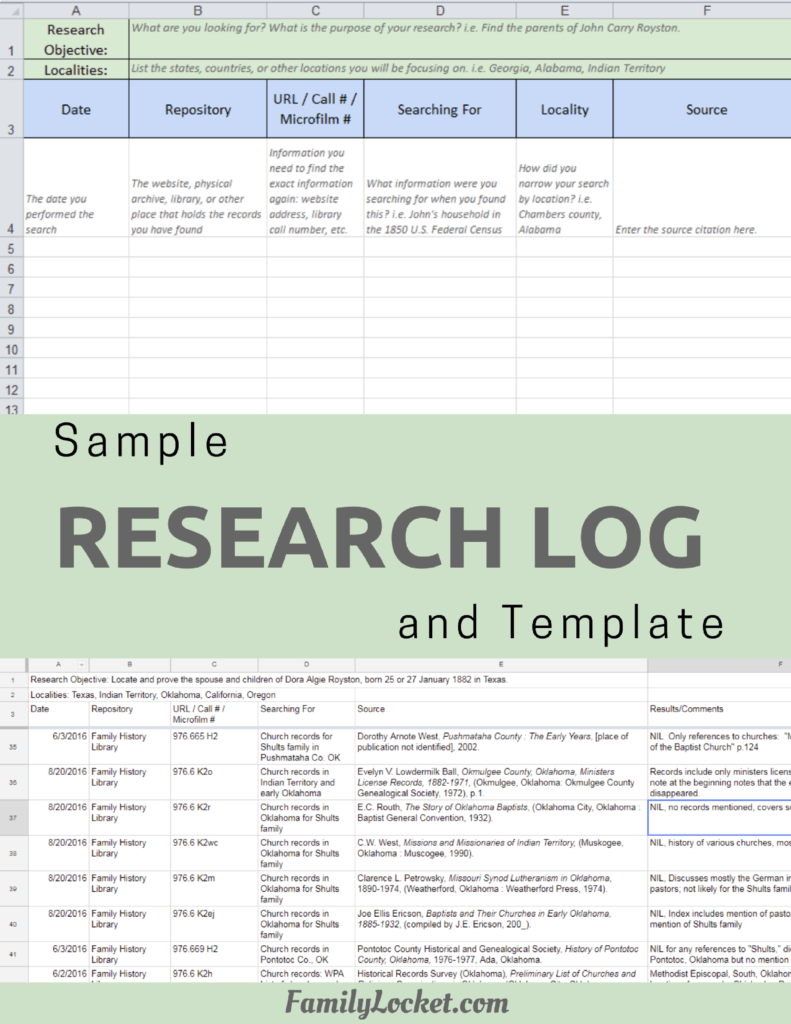
Airtable Research Logs Quick Reference – by Nicole Dyer – https://familylocket.com/product-tag/airtable/
Research Like a Pro: A Genealogist’s Guide book by Diana Elder with Nicole Dyer on Amazon.com – https://amzn.to/2x0ku3d
Research Like a Pro with AI Workbook – Second Edition (eBook) – https://familylocket.com/product/research-like-a-pro-with-ai-workbook-second-edition-ebook/
14-Day Research Like a Pro Challenge Workbook – digital – https://familylocket.com/product/14-day-research-like-a-pro-challenge-workbook-digital-only/ and spiral bound – https://familylocket.com/product/14-day-research-like-a-pro-challenge-workbook-spiral-bound/
Research Like a Pro Webinar Series – monthly case study webinars including documentary evidence and many with DNA evidence – https://familylocket.com/product-category/webinars/
Research Like a Pro eCourse – independent study course – https://familylocket.com/product/research-like-a-pro-e-course/
RLP Study Group – upcoming group and email notification list – https://familylocket.com/services/research-like-a-pro-study-group/
Research Like a Pro Institute Courses – https://familylocket.com/product-category/institute-course/
Research Like a Pro with DNA Resources
Research Like a Pro with DNA: A Genealogist’s Guide to Finding and Confirming Ancestors with DNA Evidence book by Diana Elder, Nicole Dyer, and Robin Wirthlin – https://amzn.to/3gn0hKx
Research Like a Pro with DNA eCourse – independent study course – https://familylocket.com/product/research-like-a-pro-with-dna-ecourse/
RLP with DNA Study Group – upcoming group and email notification list – https://familylocket.com/services/research-like-a-pro-with-dna-study-group/
Thank you
Thanks for listening! We hope that you will share your thoughts about our podcast and help us out by doing the following:
Write a review on iTunes or Apple Podcasts. If you leave a review, we will read it on the podcast and answer any questions that you bring up in your review. Thank you!
Leave a comment in the comment or question in the comment section below.
Share the episode on Twitter, Facebook, or Pinterest.
Subscribe on iTunes or your favorite podcast app.
Sign up for our newsletter to receive notifications of new episodes – https://familylocket.com/sign-up/
Check out this list of genealogy podcasts from Feedspot: Best Genealogy Podcasts – https://blog.feedspot.com/genealogy_podcasts/




2 Comments
Leave your reply.