
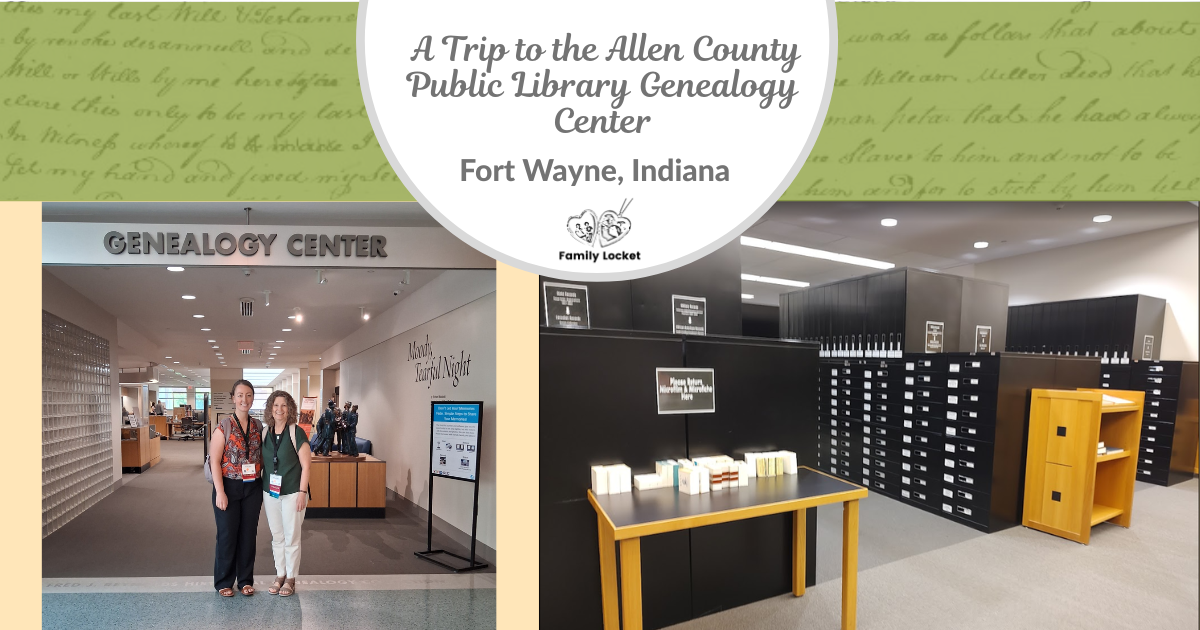
The Allen County Public Library (ACPL) Genealogy Center is one of the premier genealogical research resources in the United States. If you’re ever in the Fort Wayne, Indiana, area, you may want to schedule a few days of research at the center. Nicole and I were there as part of the National Genealogical Society Conference and spent an afternoon exploring the center. In this post, I’ll share some of the great resources available there, along with tips for preparing for research.
PERSI
The ACPL is known for its large collection of periodicals. Genealogy and historical societies have published newsletters, journals, and magazines over the years, each full of information that could further our research. PERSI is the Periodical Source Index, and it can be used to find articles through a variety of searches by locality, surname, keyword, or research techniques.
Experimenting with each search will bring the best results. It doesn’t hurt to try the surname search, especially if your surname is unusual. However, if it is common, you may have too many results. For example, the “Royston” search had only 22 results. The “Cox” search returned over 2,000 hits.
I decided to try the locality search for two of my counties – Chambers County, Alabama, and Izard County, Arkansas. I hoped I’d find historical information that could add context to my research on the Royston and Weatherford families.
In the Izard County Historian, I found a map of the Trail of Tears as it went through the area in 1838. This was precisely the time when my Weatherford ancestors, Clemsy and Henderson, lived in the county, and it adds to their story that they were likely affected by the thousands of Creeks and Cherokees passing through. 1
If a trip to Fort Wayne is not in your future, you can order any article for $7.50 and have it emailed or copies mailed to you. If you’re visiting in person, I recommend you peruse the catalog first to find the articles of most interest. Then, when at the library you can quickly pull them from the shelves and either scan or photograph them with your phone. Always image the title page first for citation purposes!
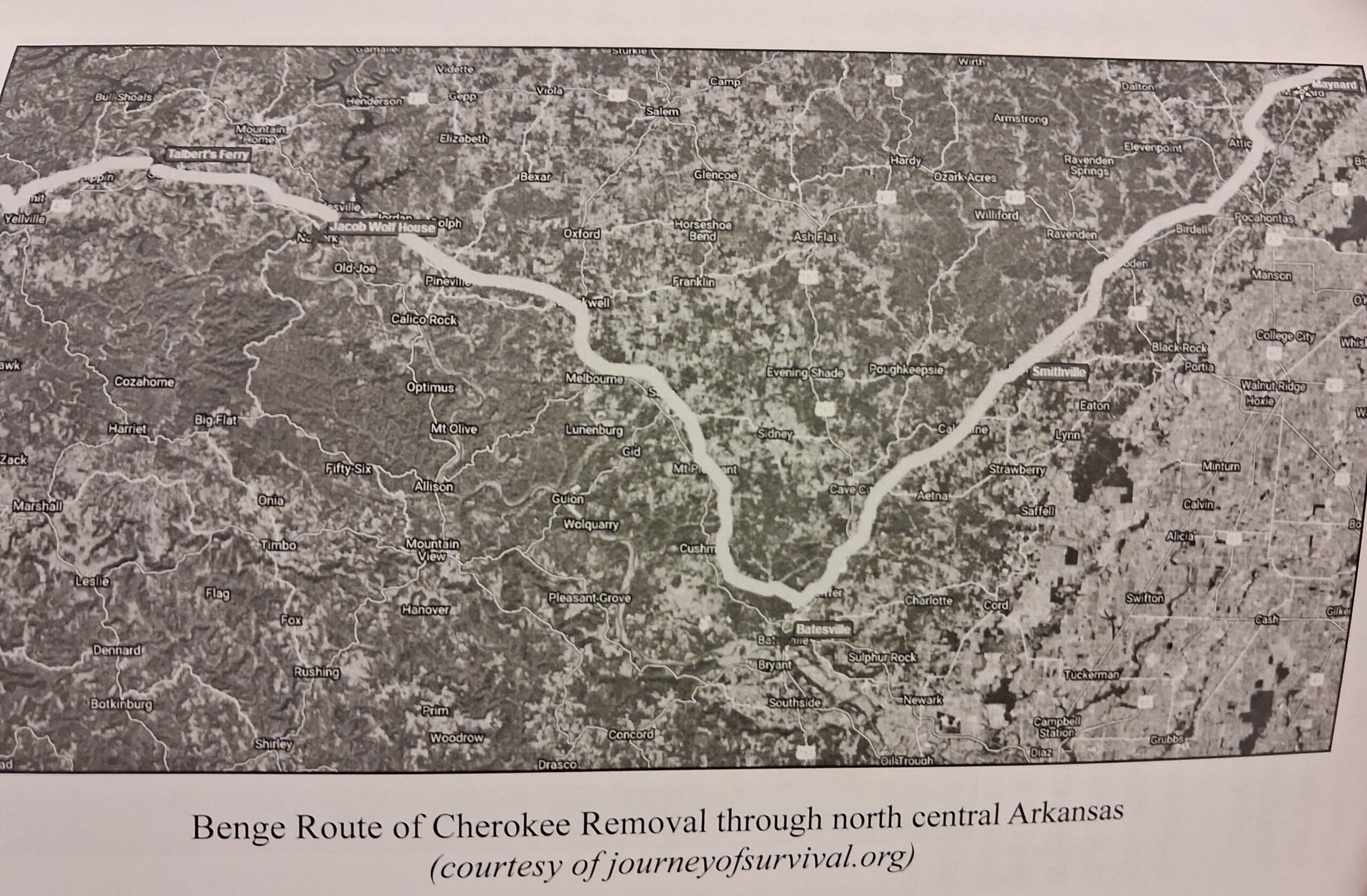
Map of the Trail of Tears
Directories
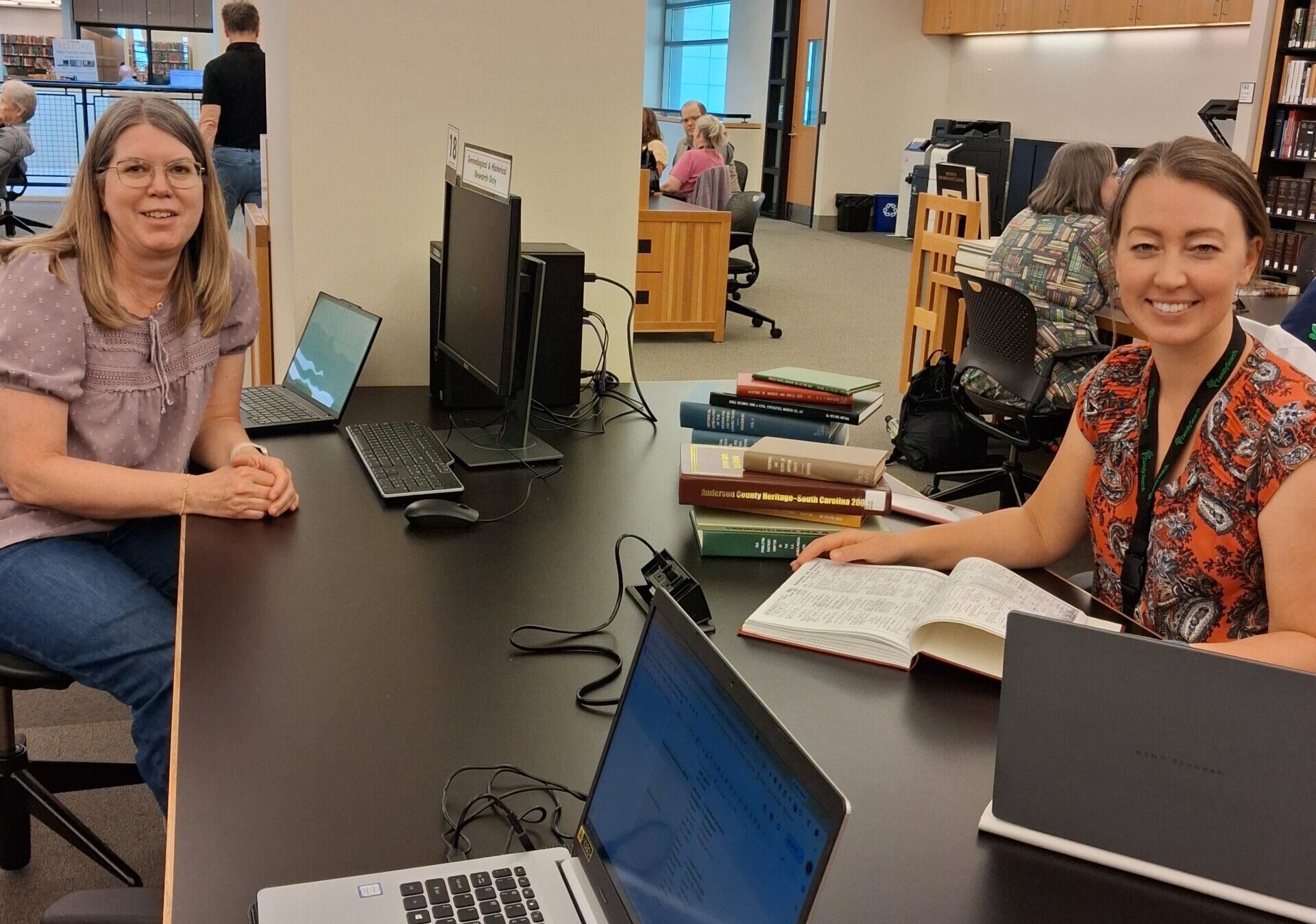
The ALCP has an impressive run of directories covering every state and major city. These directories start in the late 1800s and continue through the 20th century. Privacy concerns prohibit many ordering vital records in the 20th century. The latest U.S. census is 1950, so to track a person after 1950, a city directory is invaluable. You can pinpoint an individual or couple and learn their address and sometimes their occupation. Since the directories are alphabetical, searching for possible relatives in the city can yield good results. You can also find neighbors living on the same street.
Nicole found a directory for Seattle in 1977 and found her Elder grandparents, Bill and Renee. The director listed Renee’s maiden name initial, provided Bill’s occupation as a teacher at Denny Jr. High School, and gave the house address.
C. Wm & Renee H; tchr David T Denny Jr
High Sch h2652 46th Av SW
-
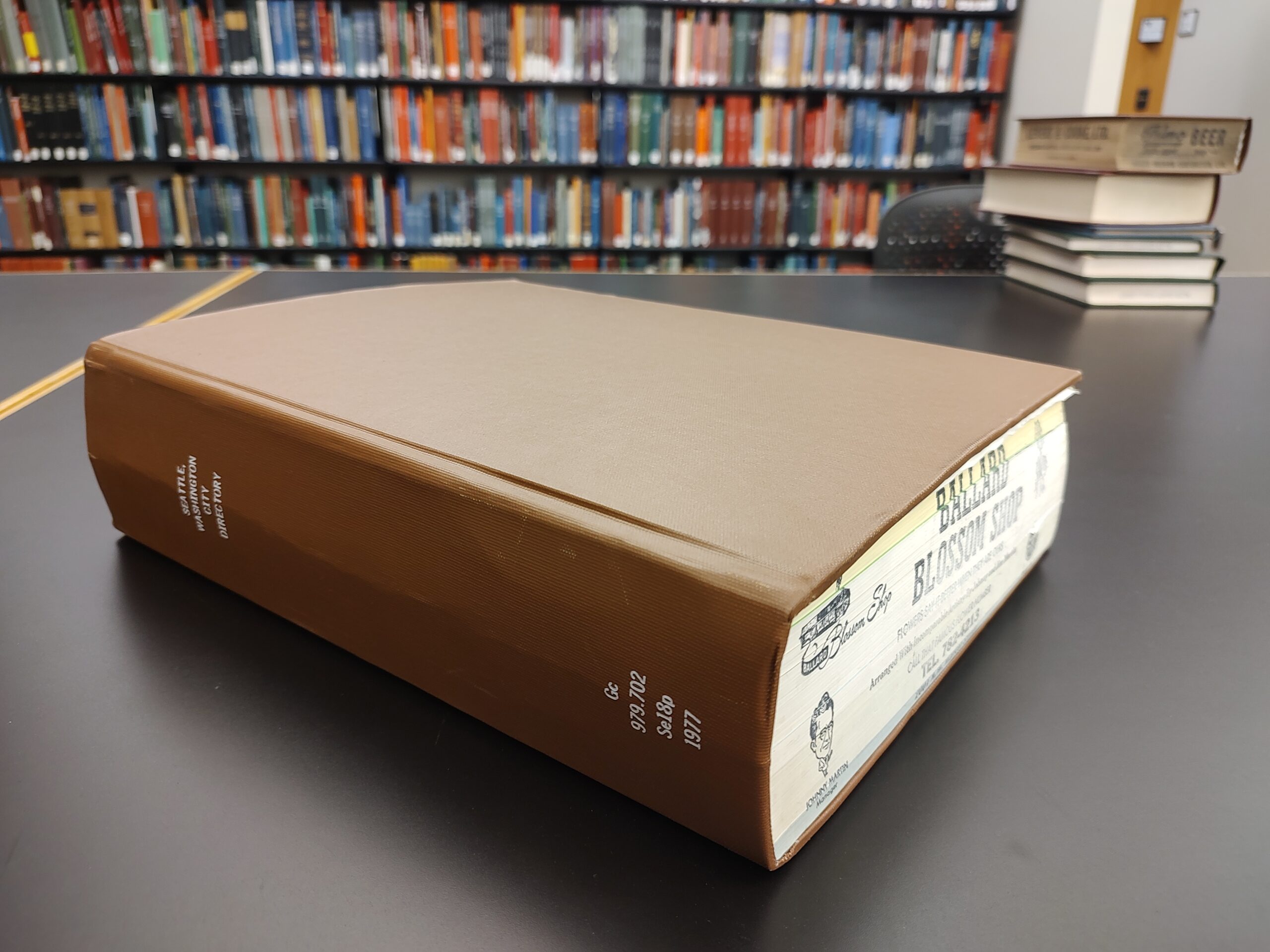
- Seattle, WA 1977 Directory
-
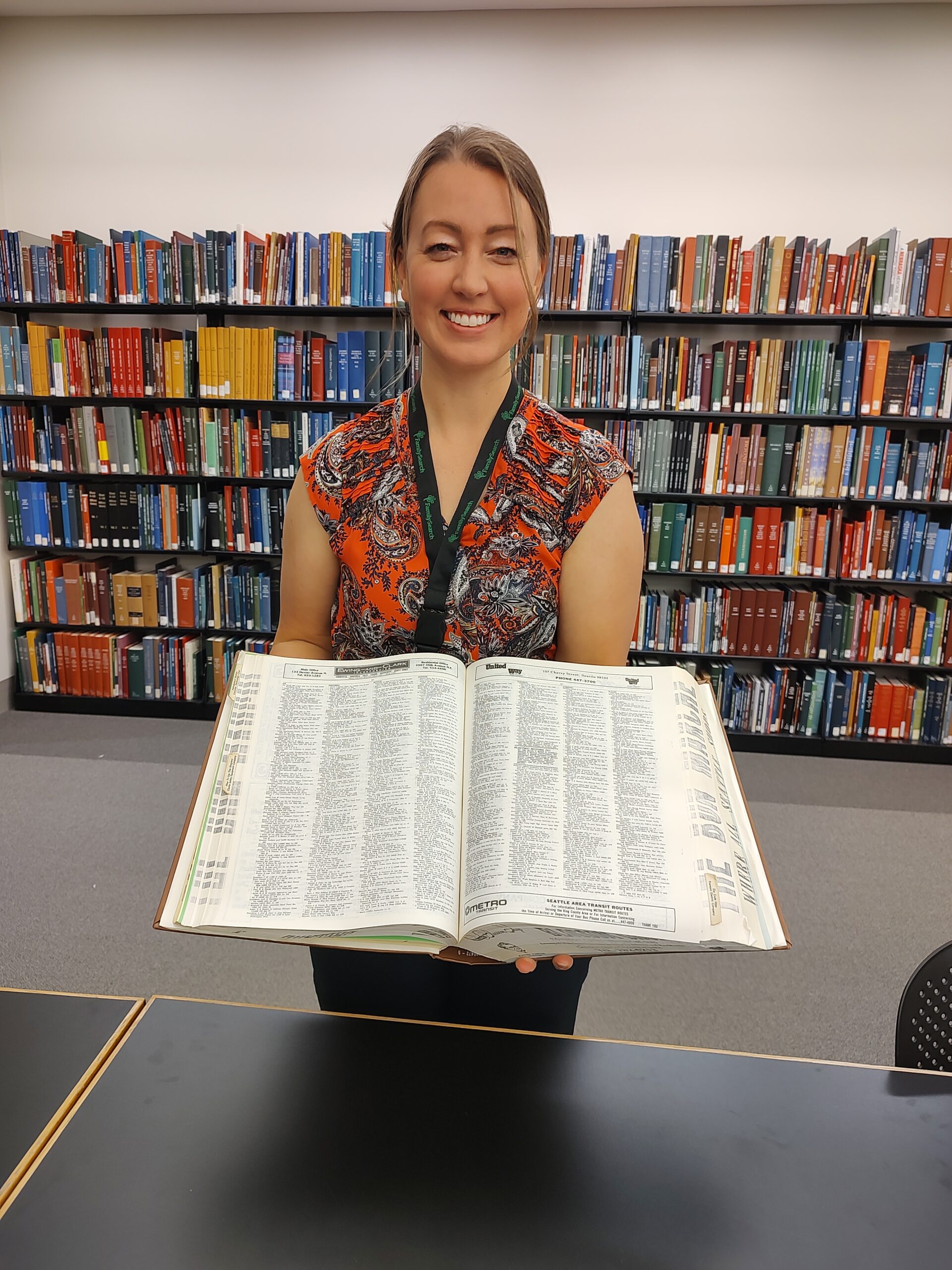
- Nicole and Seattle Directory
-
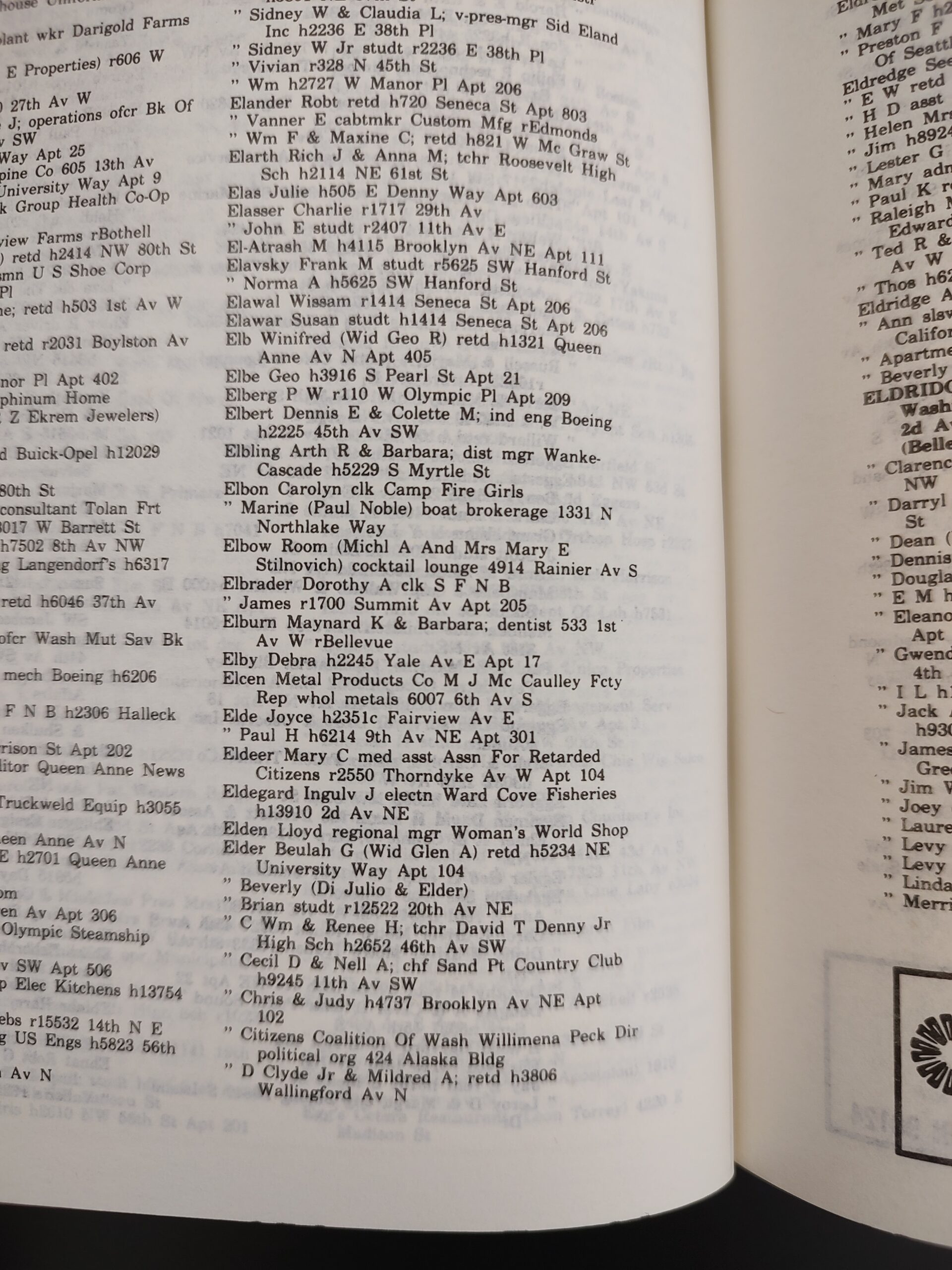
- Entry for Bill and Renee Elder
Family Histories and Genealogies
Like every good genealogy library, the ALCP holds thousands of volumes of family histories and genealogies, arranged by surname. These can be published and available in many libraries, or they could be one of a kind books that have been compiled by a family member and donated to the library.
These genealogies range from those compiled during the Colonial era all the way to the present. Just like online trees, they range from those having very good research and sources to those with questionable connections and few if any sources.
How can you use these books? First, check to see if any of the families are those you’re researching. If the genealogy does contain your ancestors, look for sources that could provide the original source documentation or perhaps clues. You might see a reference to a family Bible, a deed, will, etc. In this case, make a list of records to locate with the date and possible repository to search.
You might also find absolutely no documentation, then you’ll need to examine the genealogy for clues as to publication and author. Some volumes could contain a preface or introduction explaining the compiler’s methods of gathering family information. They may have interviewed living family members decades ago who provided their own or close relatives birth and death dates. Perhaps they scoured cemeteries or perused town records.
Also look at the date of compilation and compare that with the dates of information. If the genealogy was compiled in 1880, then the information for family members in the 20 or 30 years preceding could be firsthand and fairly accurate. However, a book compiled in 1980 on those same family members would not be relying on first-hand information and could introduce errors.
Locality Based Books
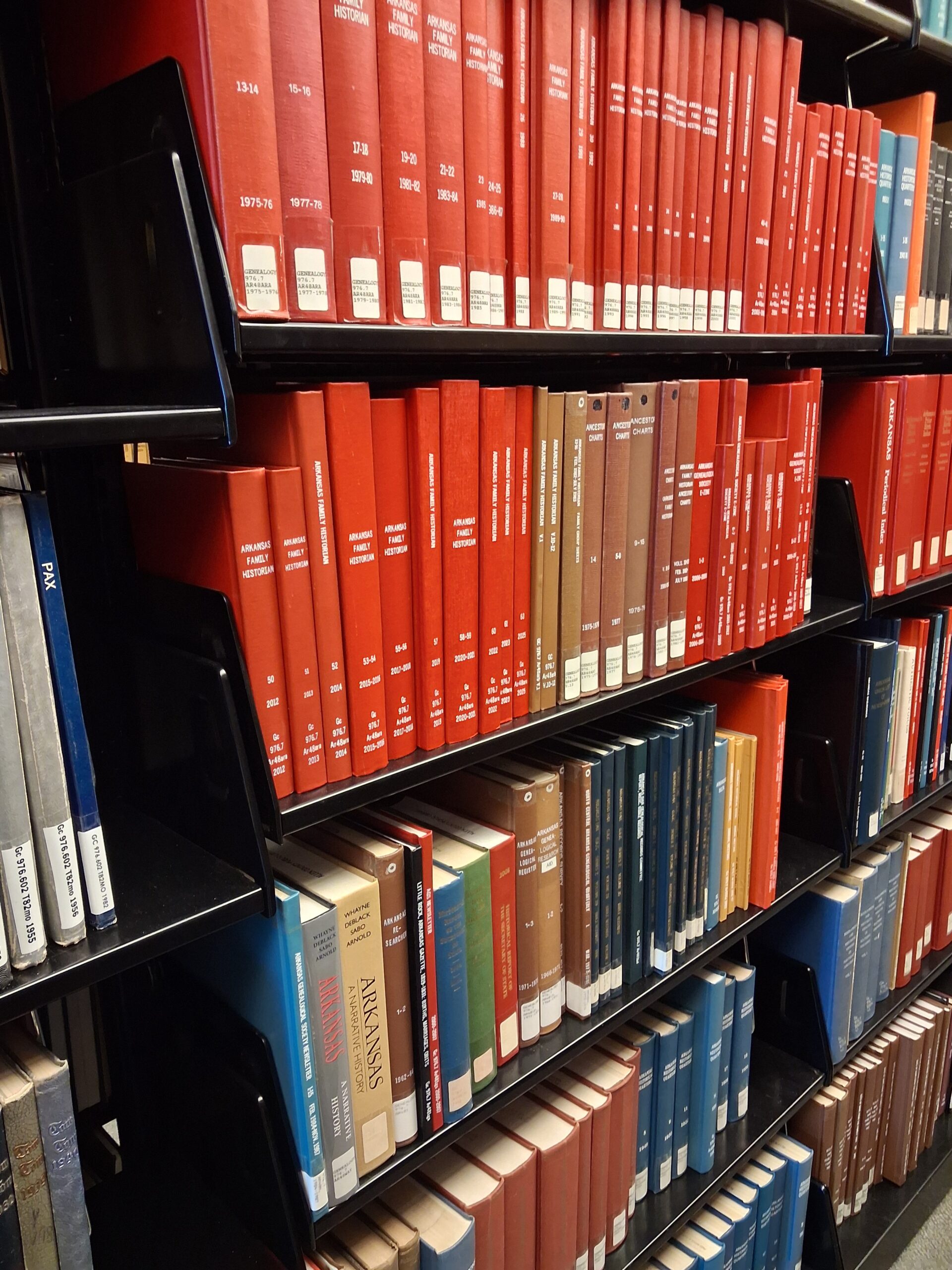
The ACPL has shelves filled top to bottom with books of all kinds. The periodicals are bound into books and shelved in the geographical area – either by state or county. Here you might find books filled with cemetery abstracts, county histories, and more. If you create an account you can make a list before your visit through the library catalog and use it to find specific volumes. Or you could simply locate the area of interest and browse the books.
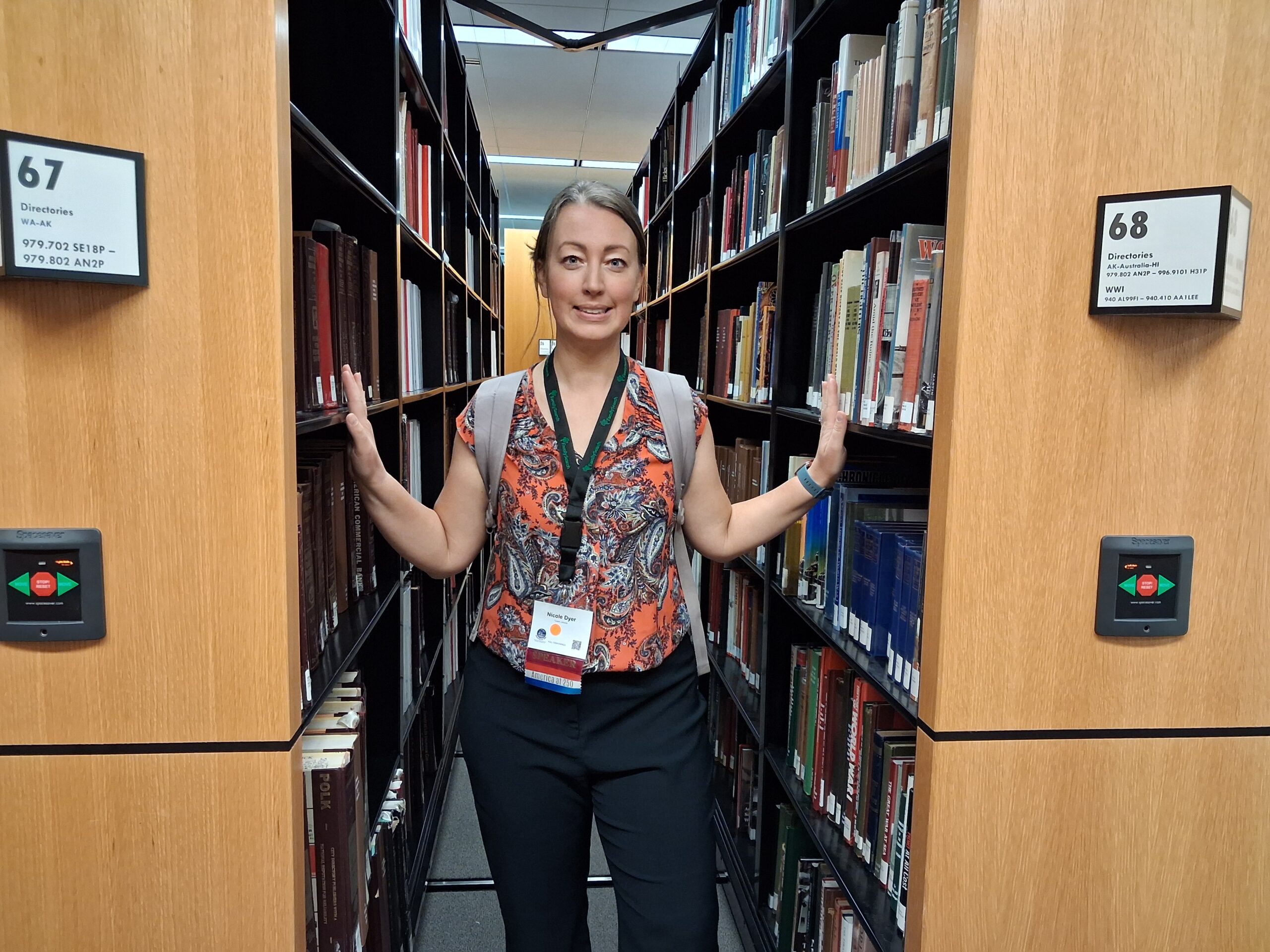
To make room for all of these books, the ACPL has moveable shelves. With a click of a button you can open up a new aisle. We were glad to discover that the shelves won’t close if a person is standing in the aisle!
How To Books
A section of the library focuses on methodology books teaching how to research in a certain area, or how to conduct research. Organized by author surname, we were excited to find copies of Research Like a Pro and Research Like a Pro with DNA. Both were hardbound books which was impressive as we don’t offer those options and the library must have had them rebound. This speaks to the library’s mission to collect books that will last!
-
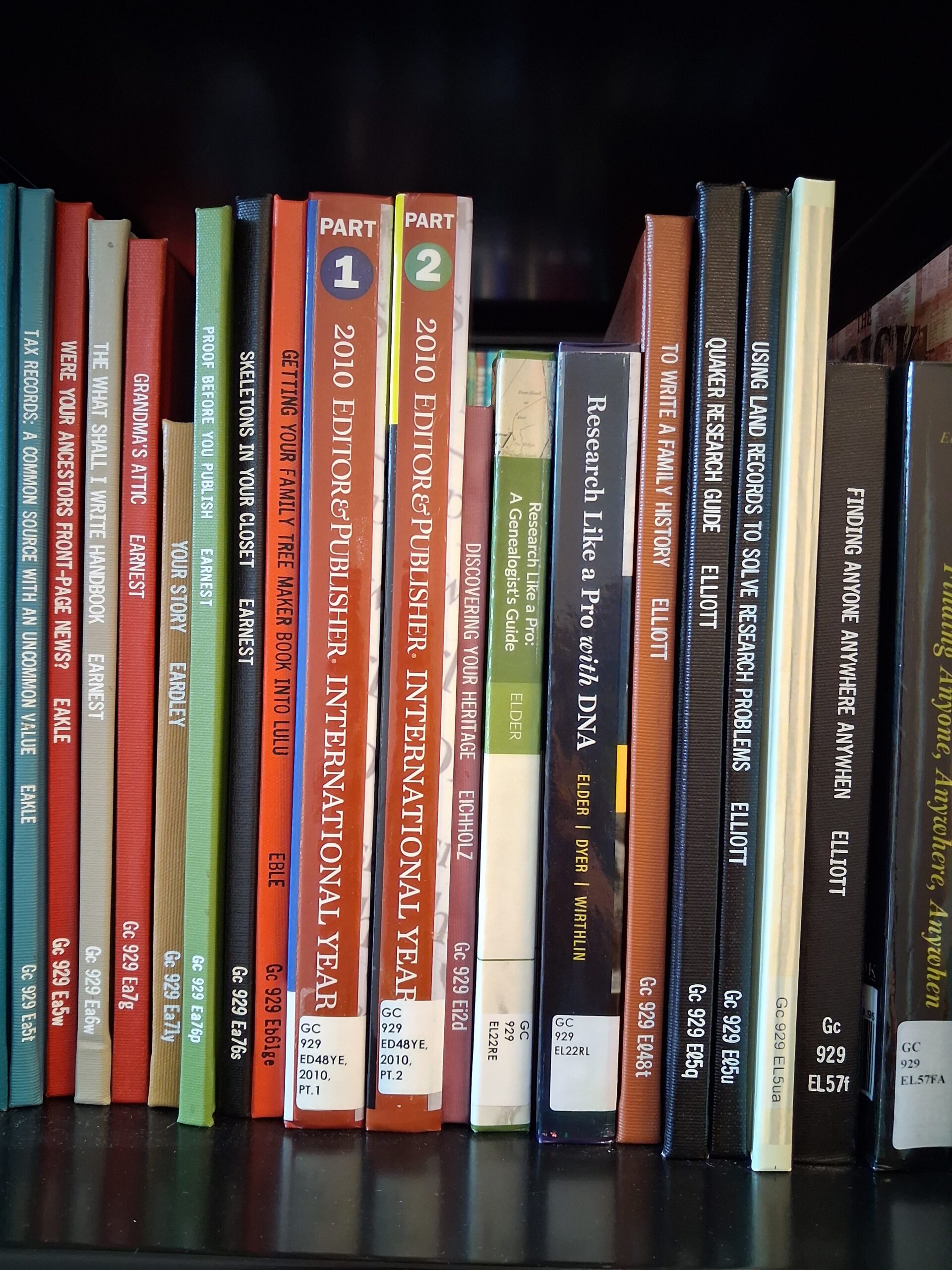
- RLP books on the shelves
-
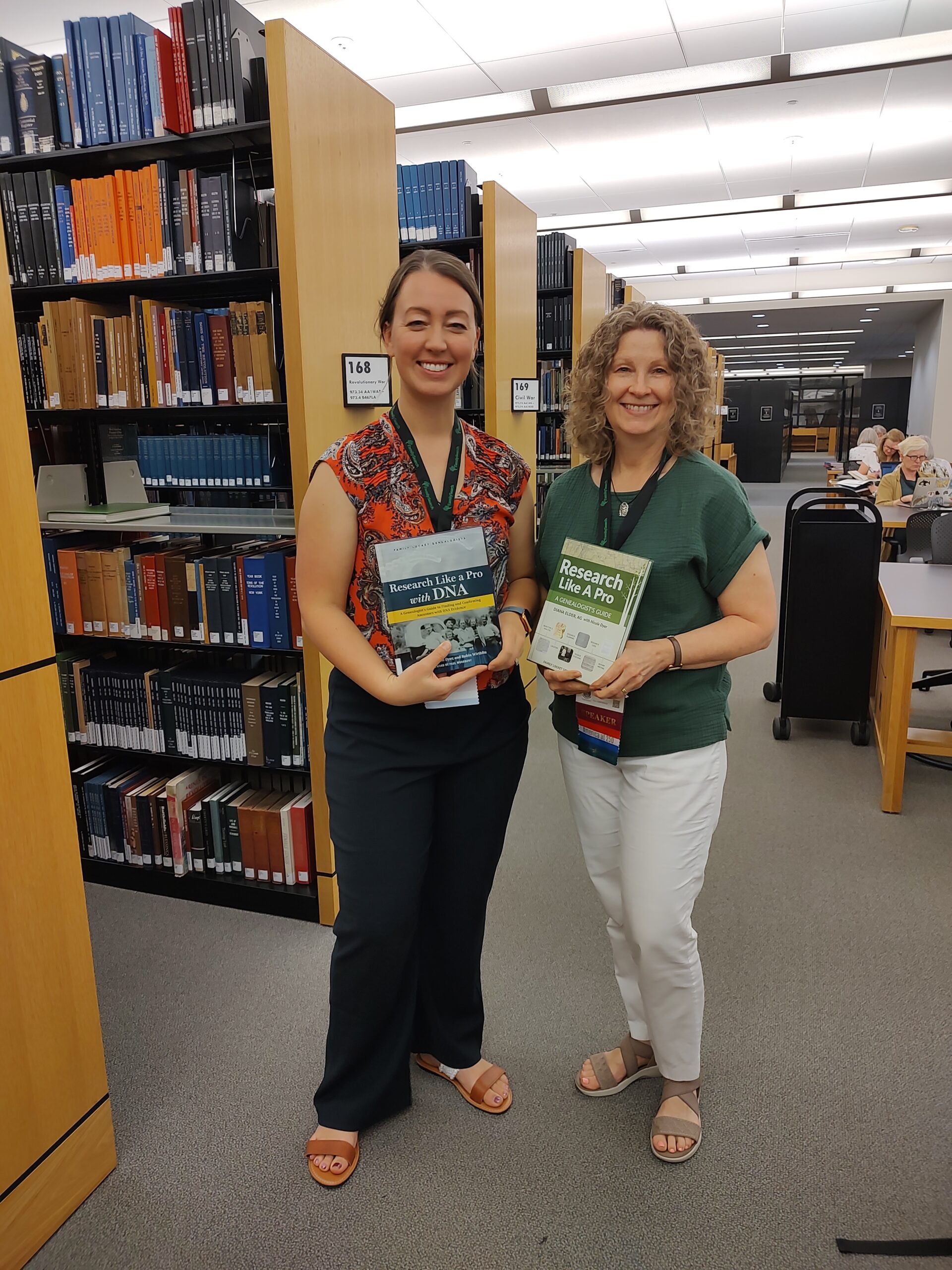
- Nicole and Diana
Digital Collection
The ACPL has access to many genealogy databases – both those which are free and those subscription based. Since genealogists don’t necessarily want to subscribe to every database available, this is an excellent opportunity to try out some of the paid sites like My Heritage, Find My Past, or the full Ancestry subscription. There are also databases for African American, Indigenous, Jewish, Japanese, and Chinese research, plus much more.
As a FamilySearch affiliate, the ACPL has access to most of the locked collections that need to be viewed at a FamilySearch center or the FamilySearch library in Salt Lake City. This is a huge benefit for those researching in Fort Wayne.
Microfilm
The room full of microfilm readers is now vacant as those films are now digitized and view by computer. However, the films are still housed on the floor and can be accessed if you want to view a record that way.
We loved our visit to the Genealogy Center and would gladly return someday. There are many treasures for our family history research there and the center is constantly adding to the collection. Director of Special Collections, Curt Witcher, works tirelessly to acquire materials that will help us all further our family knowledge and we’re very grateful for his efforts and that of the staff.
-
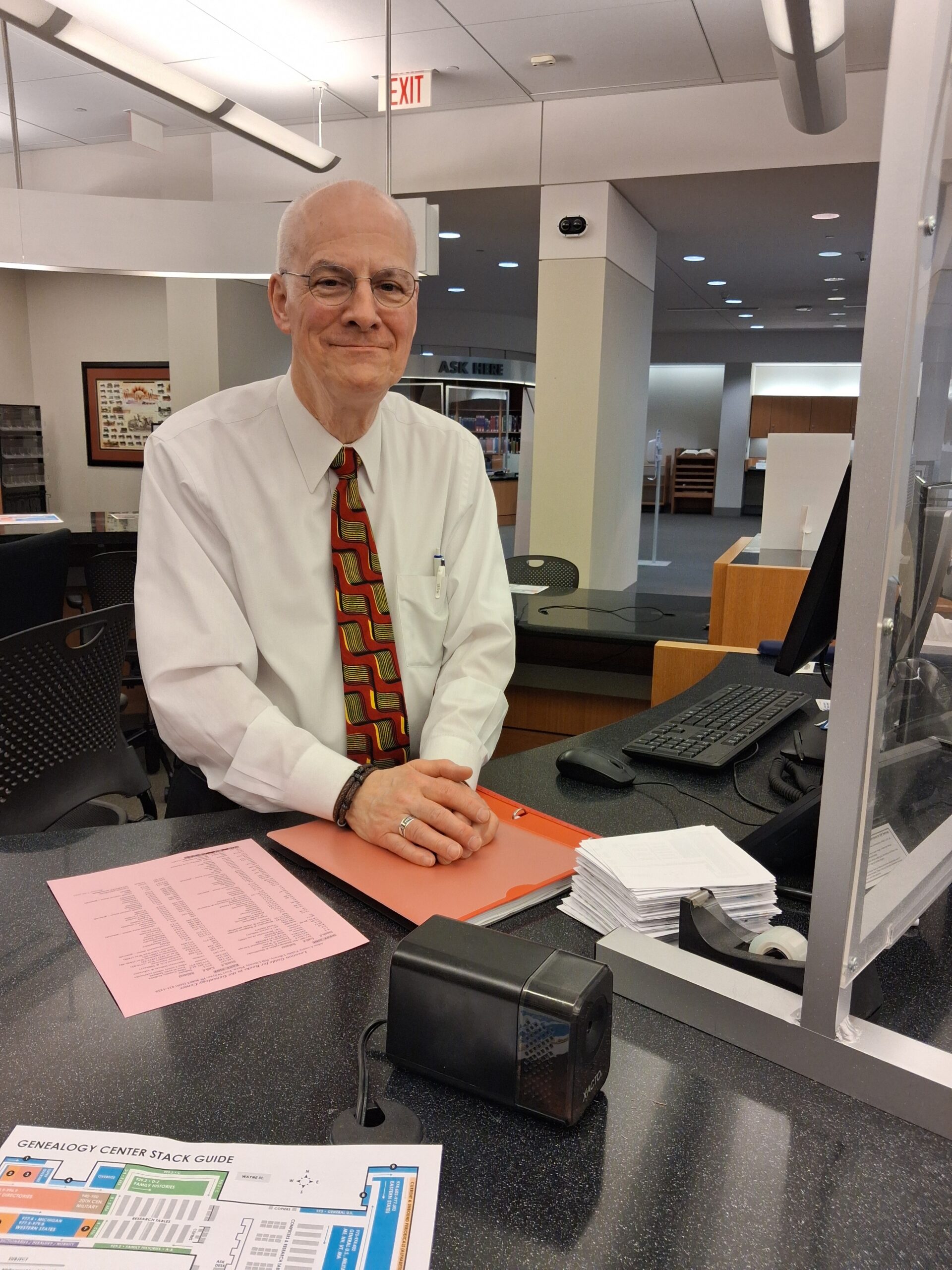
- Curt Witcher – Director of Special Collections
-
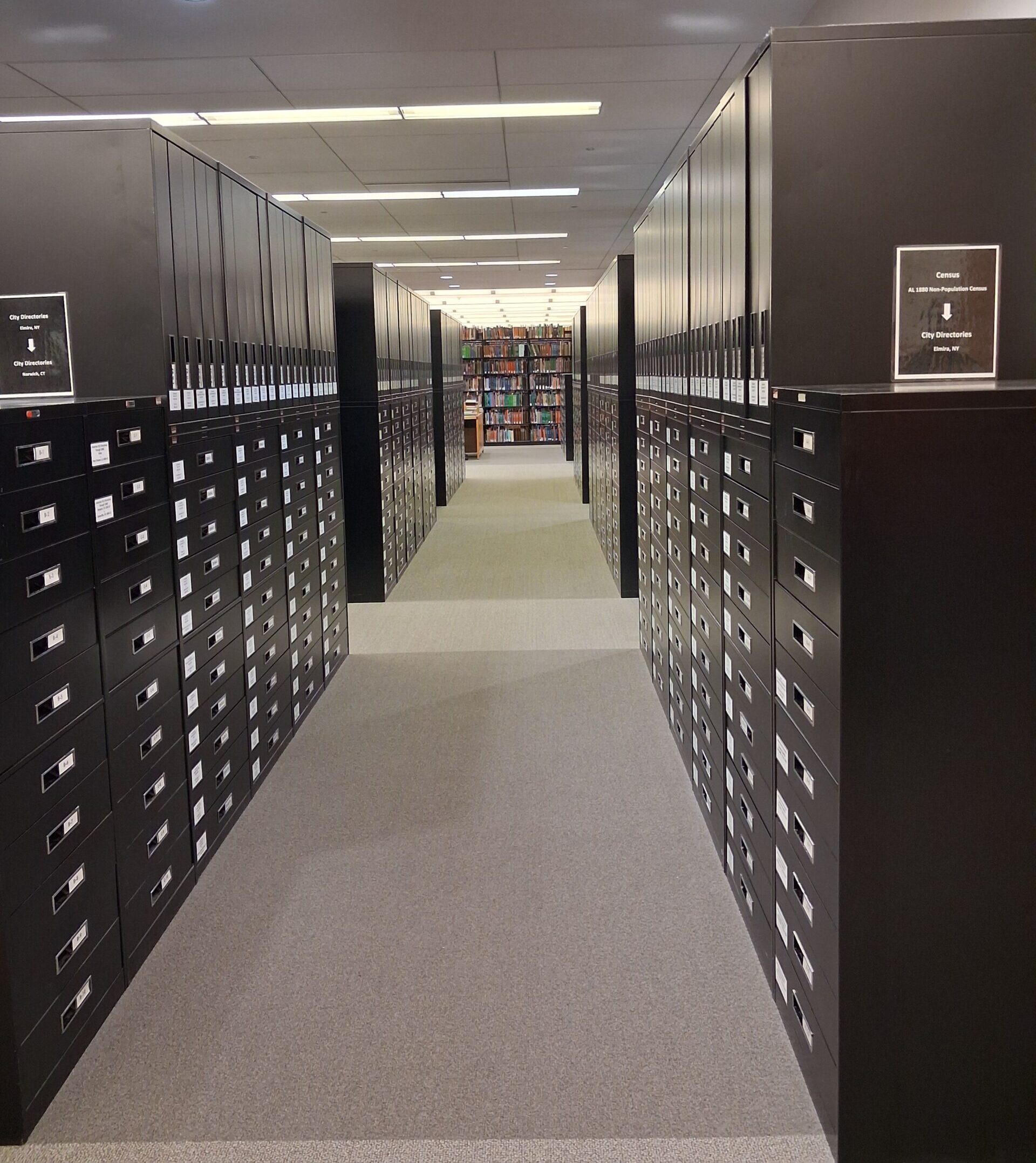
- Microfilm collection
If you’re ever in the neighborhood, be sure to plan a few hours or days at the ACPL Genealogy Center!
Best of luck in all your genealogical endeavors!
Sources
- Izard County Historical and Genealogical Society, Izard County Historian, Vol. 47, Issue 1 (Jan 2022); Allen County Library, ACPL Call #: 976.701 Iz1ich





Leave a Reply
Thanks for the note!